
Shabbat is supposed to create rest, dignity, memory, and belonging. But for many Jews, the lived experience of Shabbat also includes friction: Hebrew they cannot follow, rooms they cannot physically navigate, sensory overload, unspoken social rules, lack of confidence, and the quiet fear of doing it wrong. For some people, the barrier is physical. For others, it is social, emotional, or spiritual. That is where I think Shabbat UX begins: not by abandoning ritual, but by asking how Jewish ritual can better serve real human beings.
When I say “UX”, user experience design, I am talking about the human-centered digital interface design that I do, but I do not mean flattening Judaism into an app or turning ritual into a consumer product. I mean taking seriously the fact that rituals are experienced by actual people in actual homes, synagogues, schools, and communities the way the UX designers do with their audience of users. If a ritual is meant to help people encounter holiness, belonging, care, and memory, then the experience of that ritual matters. I like calling it a Jewish Experience Design.
Where This Comes From
In my day job, I spend a lot of time considering how people actually move through the experiences I build, whether those are digital interfaces, learning environments, or art installations. I have worked as a professional UX designer and college professor of graphic design for more than 23 years, and since 2015, I’ve been building a body of Jewish futurist work and scholarship alongside that practice. Across that time, my research and teaching have focused heavily on systems thinking and scaleable strategy design. For my job and my self, I genuinely want to know where people feel welcomed, where they get confused, where they hesitate, and what helps them connect.
Feedback is not the final step in that process; it is part of how the work becomes meaningful in the first place. I also work with deep respect for accessibility and usability standards, including WCAG and the disability-rights framework behind laws like Section 504. In one sense, these standards are the digital parallel to the accessibility features people already recognize in physical space: wheelchair ramps, braille signage, clear wayfinding, and other accommodations that have become more standard through disability-rights law and advocacy.
Over time, that empathy-driven design mindset crossed over into my Jewish life. When I began noticing barriers and challenges in ritual spaces, it felt natural to ask whether design could help address and improve them. The more I worked this way, the more I found myself asking similar questions about Shabbat. Who is actually trying to enter this experience, and what do they need in order to feel oriented, included, and spiritually present?
Shabbat is not a one-size-fits-all experience. People arrive with different bodies, different backgrounds, different levels of knowledge, different emotional states, and different relationships to Jewish practice. If we take those differences seriously, then thoughtful ritual design is not about watering anything down. It is about enriching the experience so that more people can meaningfully connect, especially those who are currently held at a distance by barriers, confusion, or discomfort.
Teaching It Publicly
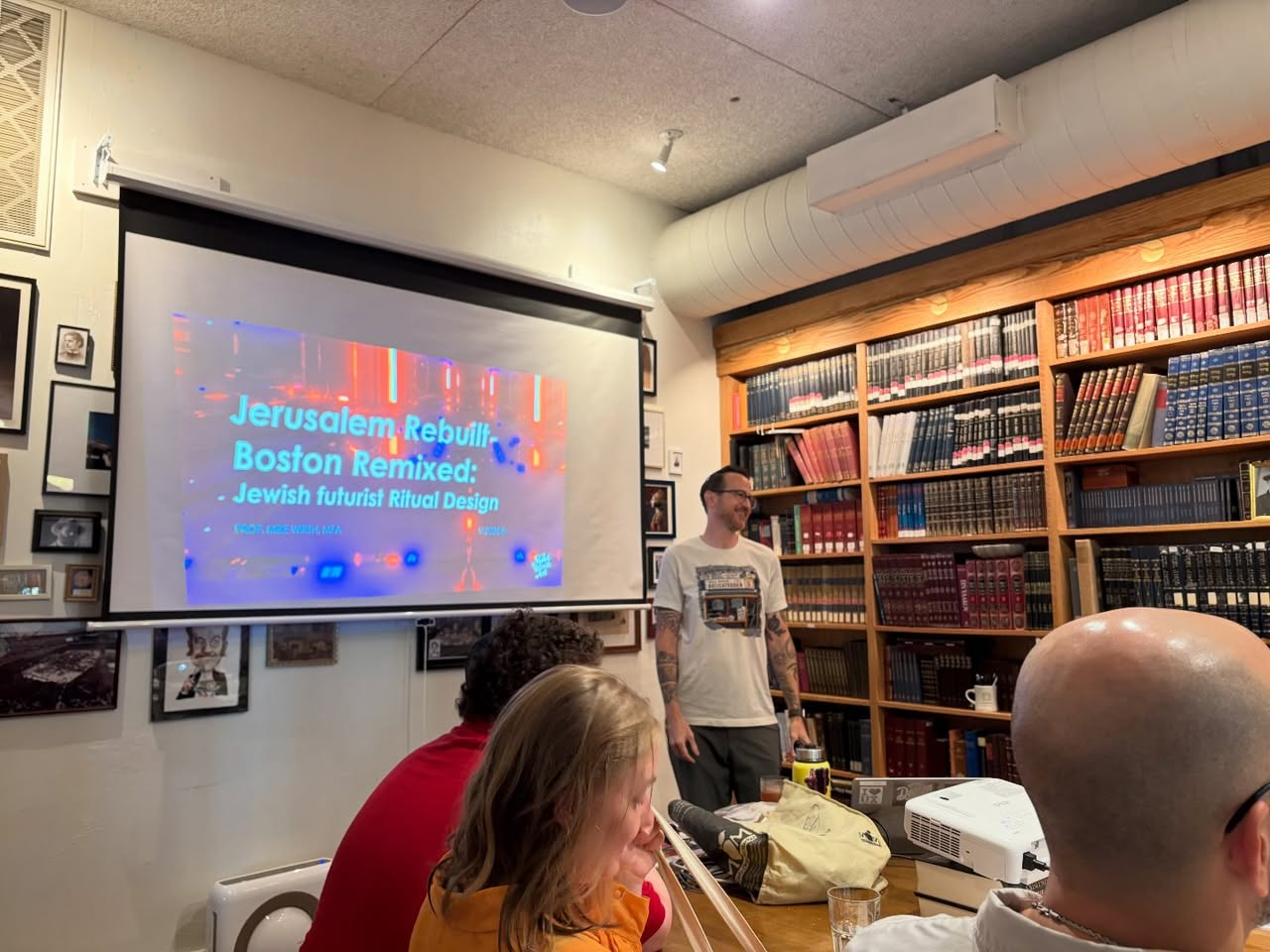
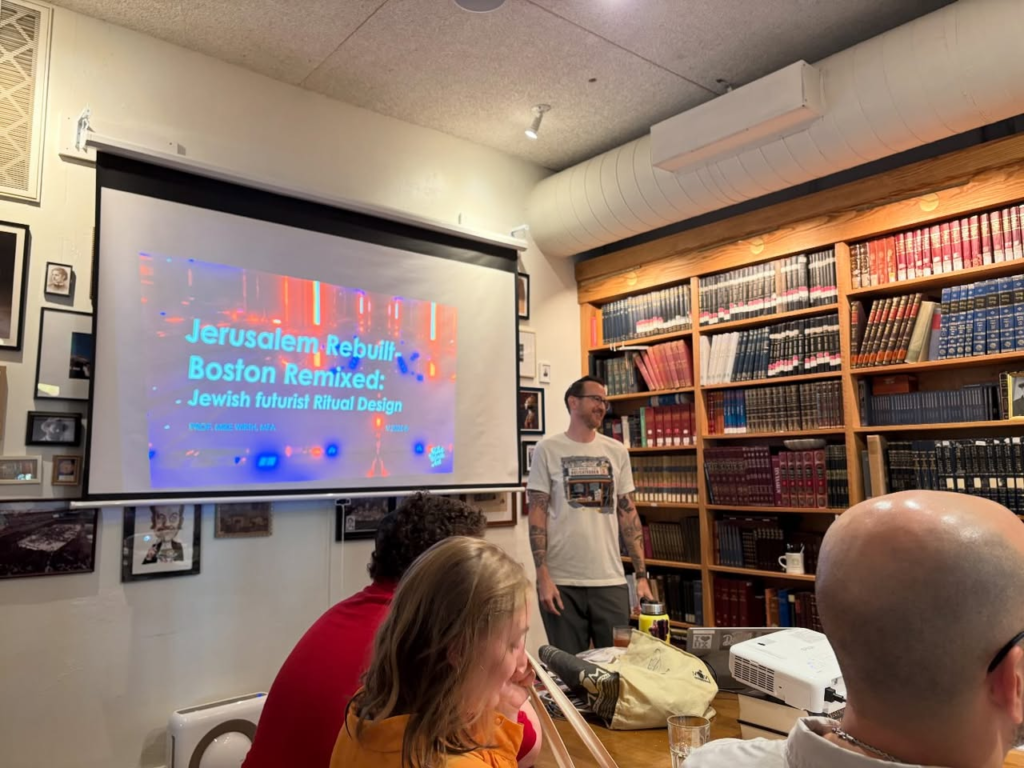
I’ve taught versions of this Shabbat UX framework at Lehrhaus in Boston and virtually through UnYeshiva in 2026, where participants were excited not just to talk about ritual, but to work on it as a living design problem. At Lehrhaus, that took the form of Jerusalem Rebuilt, Boston Remixed, a hands-on workshop that turned the space into a pop-up Jewish futurist lab and asked participants to sketch practices and objects they might actually try in 2026. Through UnYeshiva, I brought similar ideas into a virtual learning space where ritual design could be explored across distance and different kinds of Jewish experiences.
If you want to explore those teaching contexts, you can find the Lehrhaus workshop here, the UnYeshiva/Shavuot Live session here, and the Greensboro Contemporary Jewish Museum Social Practice Institute here.
Jewish Futurism in Action
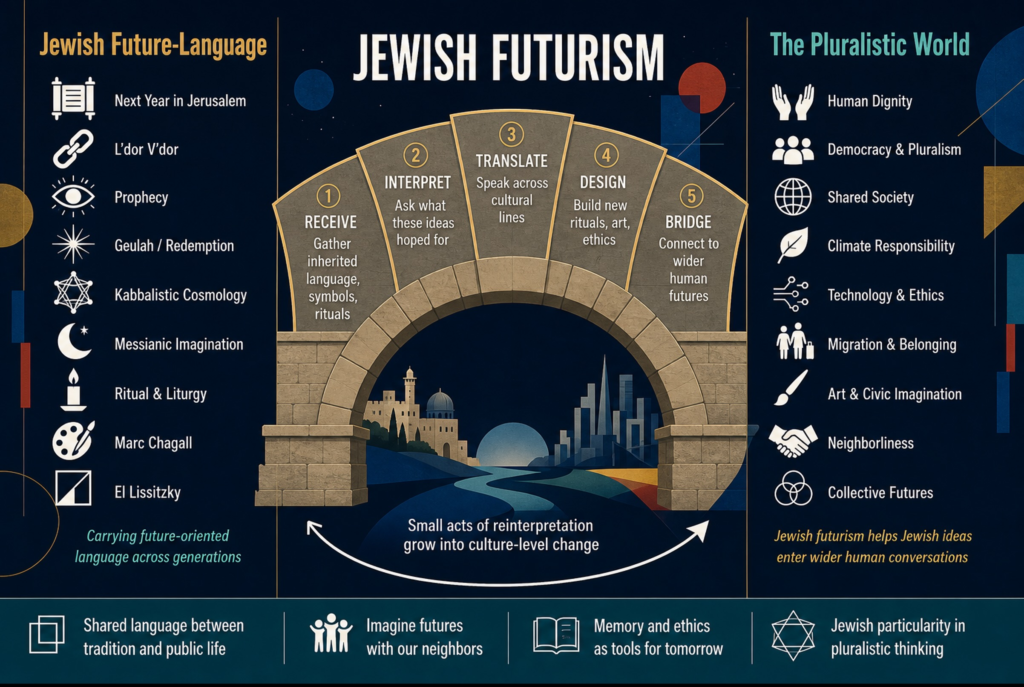
For me, Jewish Experience Design is Jewish futurism in action. It is not only about speculative art or imagining distant worlds. It is a real practice of ritual design in the present tense. It combines Jewish ritual, halakha, minhagim, UX design, accessibility, and Mussar. It asks how Jewish people can work within the living tradition to improve access, deepen dignity, and develop better ritual experiences inside safe and thoughtful parameters. In that sense, it aligns with tikkun olam as a practice of repair through design, care, and communal imagination.
Futurism here does not only mean imagining distant Jewish worlds. It means designing more livable Jewish futures in the present tense. And I care that this work not remain theoretical philosophy or communal strategizing with no output. Jewish futurism, as I practice it, has to include making, doing, and building. It has to result in prototypes, new language, new tools, and real experiments in Jewish life. Mussar matters here because it keeps asking not only what works, but what kind of person and community a ritual intervention is helping us become.
Why Ritual Still Matters
Ritual is not ornamental in Jewish life. Ritual makes memory active. It embodies values. It marks time. It creates belonging. It teaches identity. It helps us rehearse the kind of world we want to inhabit together. That is why the question is not only whether we preserve ritual. The question is whether our rituals are functioning well enough to carry the meanings we say they carry.
If a person comes into a Shabbat space and feels lost, physically excluded, socially judged, spiritually overwhelmed, or unable to participate with dignity, then the issue is not marginal. It is structural. A ritual may still be technically present while being experientially inaccessible. That gap matters.
What Shabbat UX Means
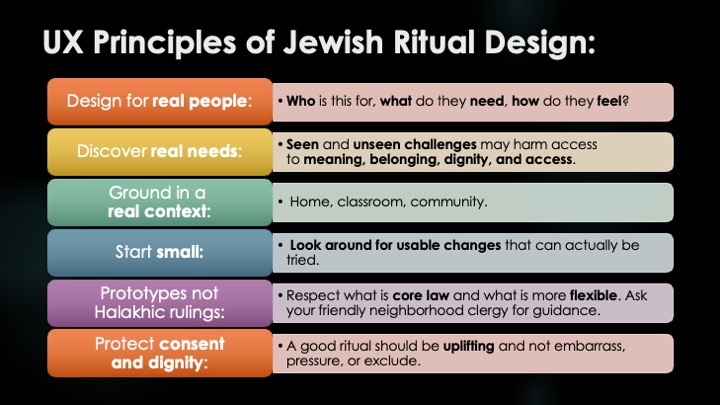
At the center of my approach is a simple design principle: design for real people. In my classes, I ask the kinds of questions a UX designer would ask: Who is this for? What do they need? How do they feel? What barriers are visible, and which ones remain invisible until someone simply stops showing up?
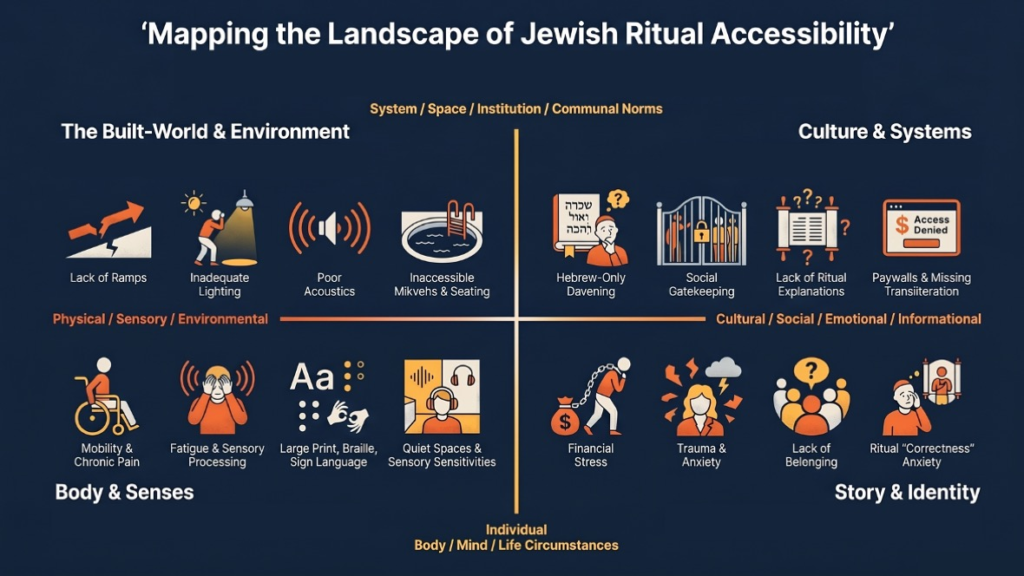
Some barriers are built into physical environments: lack of ramps, poor acoustics, inaccessible seating, sensory overload, hard-to-read materials, or rooms that are difficult to navigate. Some barriers are cultural or informational: Hebrew-only davening, missing transliteration, paywalls, unexplained ritual norms, or social gatekeeping. Others are more interior and spiritual: anxiety about ritual correctness, lack of background knowledge, uncertainty about when to stand or sing, or the feeling that everyone else understands something you never learned.
This is why I want to talk about accessibility broadly. Accessibility is not only about physical disability, though that absolutely matters. It is also about emotional access, spiritual access, and cultural access. A ritual should not embarrass, pressure, or exclude. A good ritual should help people enter Jewish life with dignity.
As I’ve continued developing this work, I’ve also been encouraged by projects like Universal Design for Ritual, which point toward a similar question: how do we shape Jewish ritual so more people can enter it with dignity, clarity, and belonging? For me, that connects directly to Shabbat UX. Accessibility is not a side feature added after the fact. It is part of the ritual’s integrity. If a ritual is meant to gather people into sacred time, then the design of that experience matters, from language and pacing to embodiment, onboarding, and emotional safety.
I do not see these frameworks as competing systems fighting for control of Jewish ritual. I see them as cooperative frameworks that provide guidance in complementary ways. Halakha helps define the guardrails. Minhag carries communal memory and texture. UX helps me think about how people actually experience the ritual. Accessibility helps me notice where people are excluded or disoriented. Mussar keeps the process ethically grounded, and Jewish futurism helps me ask what kind of future our present ritual choices are building. The goal is not to collapse these systems into one another, but to let each one do its work in relation to the others.
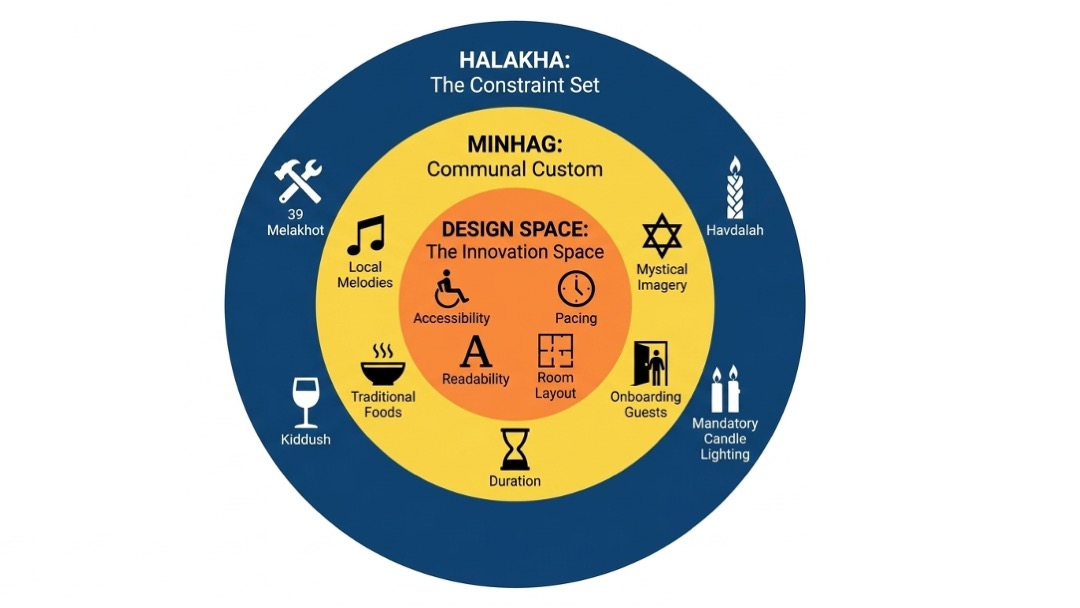
Halakha, Minhag, and Design Space
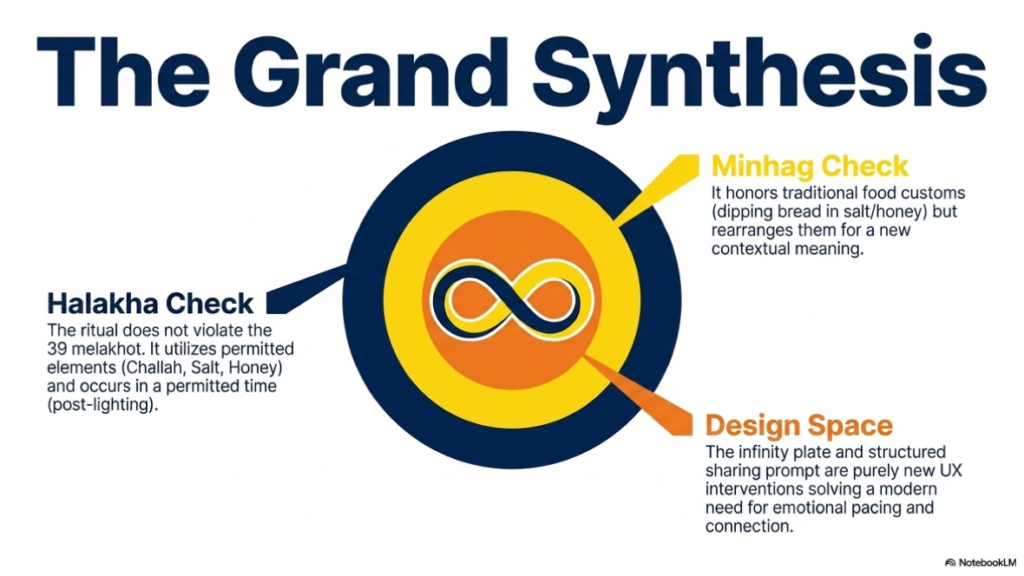
To explain how I think ritual change works, I use a three-layer model: halakha, minhag, and design space. Halakha is the constraint set: the legal and structural boundaries that define what needs to be honored. Minhag is the communal fabric: the local customs, melodies, foods, images, pacing, and rhythms that communities inherit and develop over time. Design space is the area where innovation is not only allowed, but often needed: accessibility, readability, timing, room layout, pacing, onboarding guests, and the overall flow of experience.
Not every part of a ritual is equally redesignable. My working assumption is that the mitzvah core and explicit halakhic boundaries are not mine to dissolve or casually replace. That is why studying halakhah and minhag matters so much in this work. The question is not whether everything can change. The question is what kind of thing we are looking at. Some elements belong to the core obligation. Some belong to inherited custom. Some belong to pedagogy, environment, and experience.
One system I return to comes from my creative world: parametric design. In parametric design, you set boundaries and conditions, and then let creativity run wild inside the system. That is how I think about ritual design. Halakha is the outer wall, the boundary that defines the space and keeps the process within mitzvah territory. Inside that are the minhagim: the inherited tools, like shovels, buckets, and sandcastle molds, that communities have developed over time. Then there is the design space, the sand itself, the material people can shape. That is where ritual design happens. It is not a free-for-all. It is creative work inside a bounded space, with parameters that help define the values of the process.
Ritual design is not just about creativity. It is about responsibility. You are not designing in a vacuum. You are designing in relation to a tradition, a community, and a human being who may be vulnerable, new, anxious, disabled, spiritually searching, or unsure if they belong.
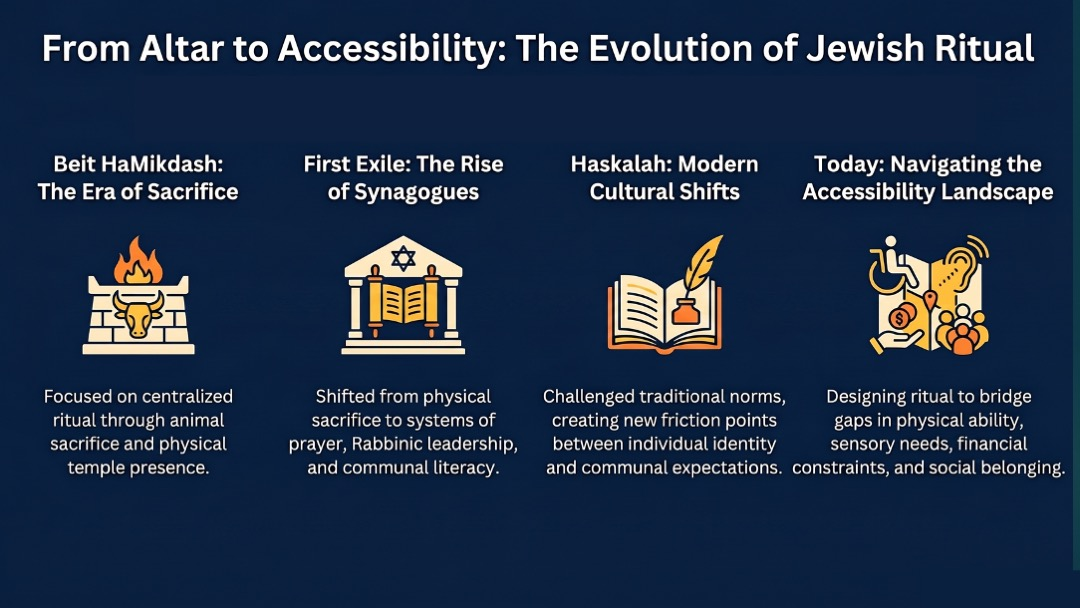
A Brief History of Ritual Evolution
Jewish ritual has never been frozen in time. Across history, communities have reworked how mitzvot are lived, taught, and embodied, while staying accountable to halakhic frameworks. What I am calling “ritual design” is a way of naming that adaptive process more consciously.
One major shift came with the destruction of the Second Temple in 70 CE. Sacrificial worship in a single sacred center gave way to a system focused on prayer, Torah study, mitzvot, and communal life in synagogues and homes. Rabbinic Judaism built a new ritual architecture that could survive exile.
Later, rabbinic and medieval codifiers deepened that structure. Figures like Maimonides, through works such as the Mishneh Torah, systematically organized Jewish law, including ritual obligations, into clear categories and everyday guidance. His code did not invent new mitzvot, but it did redesign how people could access and perform them, reducing local confusion and creating more shared practice across disparate Jewish communities.
At the same time, local minhagim diversified the “tools” in the sandbox: different nusach, festival customs, piyyutim, and synagogue choreography developed in Ashkenazi, Sephardi, and other communities. The halakhic walls stayed in place, but communities experimented with melodies, order, and symbolic emphases inside them.
The Haskalah, the Jewish Enlightenment of the 18th and 19th centuries, introduced new approaches to education, language, and culture, especially in Europe. Movements like Reform Judaism responded with explicit ritual redesign: shortening services, translating and editing liturgy, changing musical settings and seating, and rebalancing which parts of the inherited ritual architecture still spoke to their communities. Later Reform liturgies reintroduced more Hebrew and classical texts while pairing them with contemporary readings, designing prayer books that could serve different kinds of belief and experience in one space.
Orthodox and Haredi communities also practice constraint-based innovation. Eruvin, Shabbat elevators, and Shabbat ovens are examples of parametric ritual design: halakhic walls remain in place, but within those constraints, communities build solutions that let Jewish life function in modern environments without transgressing Shabbat or other core prohibitions.
More recently, feminist and inclusion-focused innovations have added new symbols in the design space: Miriam’s cup, alternative readings, and the orange on the seder plate. Susannah Heschel’s orange, for example, was developed as a Passover-safe symbol of solidarity with marginalized Jews, including gay and lesbian Jews and others on the margins. Many liberal communities have adopted it as part of their ritual vocabulary; others see it primarily as art, protest, or commentary rather than as universally binding practice. Not every meaningful ritual-adjacent act becomes mitzvah law, but these gestures show how symbols can enter the design space.
In other words, Jewish practice has changed significantly across time, exile, and historical circumstance. I am not arguing that Jews only now have permission to adapt. I am arguing that we can become more conscious, ethical, and skillful about how we do that work.
What I have sketched here is illustrative, not historically exhaustive. The moments like the shift from Temple sacrifice to rabbinic prayer, Maimonides’ codification of halakhah, Haskalah and Reform liturgical changes, halakhic technologies like eruvin and Shabbat elevators, and feminist innovations like the orange on the seder plate, all contain deep debates, variations, and complexities that deserve their own careful study. I am not trying to minimize, gloss over, or fully resolve those topics here. I am pointing to them as examples of how Jewish people faced design ritual needs and adapted across time, while acknowledging that this essay sits at the level of a personal, creative reflection, not a comprehensive history.
A Test in the Field: High & Low
One of the Shabbat prototypes I have developed is a ritual I call High & Low. I developed it while participating in the Greensboro Contemporary Jewish Museum’s Social Practice Institute, a residency and training program for Jewish-identifying Southern artists working at the intersection of socially engaged art practice and Jewish thought. That context mattered. It pushed me to think about ritual not just as private symbolism, but as something designed in relationship to real people, lived needs, and public Jewish life.
The brief was simple: reinvent a family Shabbat tradition collaboratively to improve relevance. The constraint was equally important: the ritual had to happen within the existing flow of Shabbat, after candles and blessings. I was not trying to replace Shabbat. I was trying to design within it. The output became a physical kit, a sense-based food symbol, and a bilingual prayer that could help a family hold joy and struggle in the same shared space.
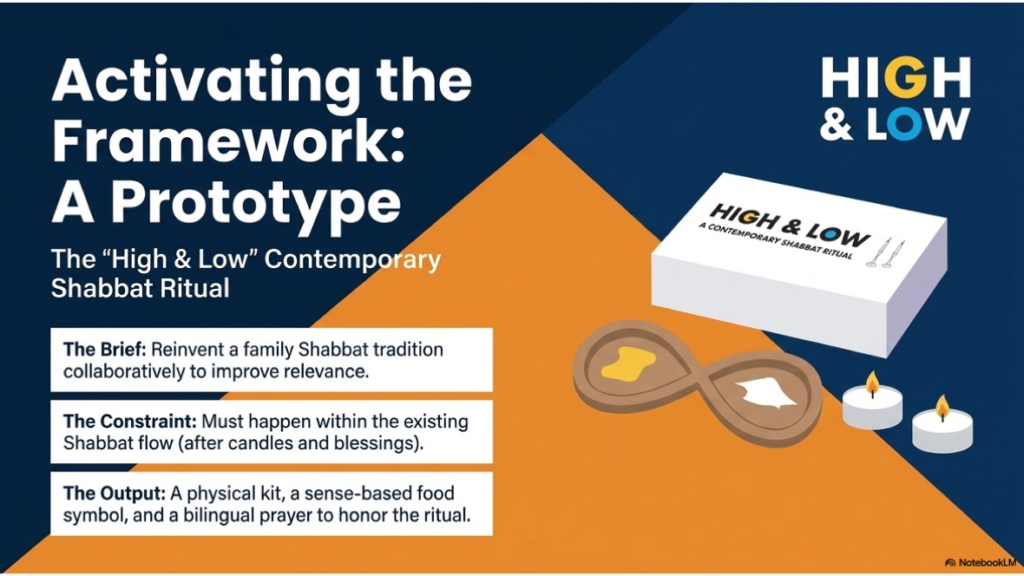
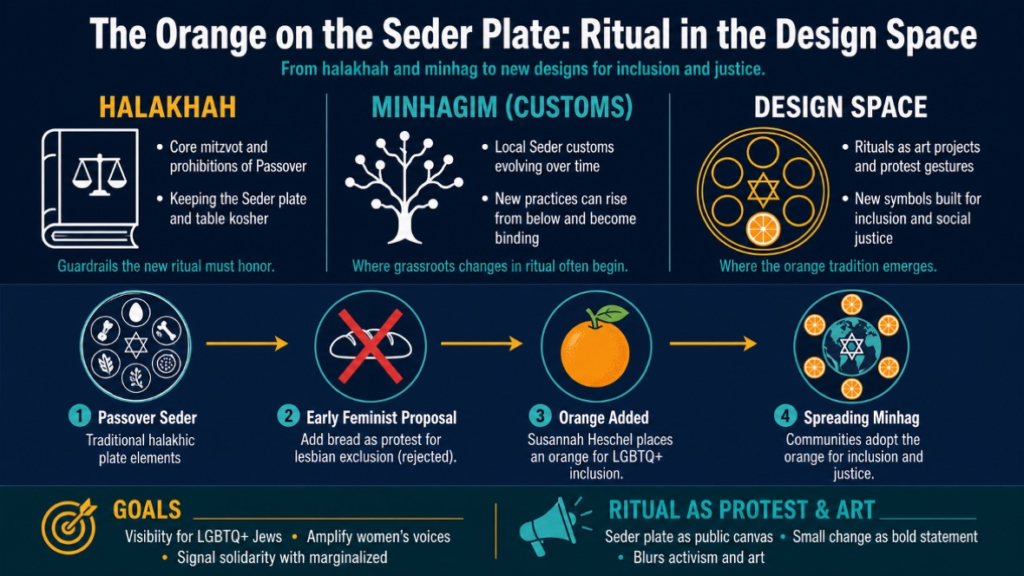
The choreography is simple. After lighting candles, participants place a small amount of honey and salt onto an infinity-shaped dish. A piece of challah is dipped first into the honey, representing sweetness or redemption, and then into the salt, representing grief, tears, exile, or difficulty. Then each person shares one high and one low from the previous week. The ritual uses sensory input to support emotional output. It creates a repeatable structure for connection.
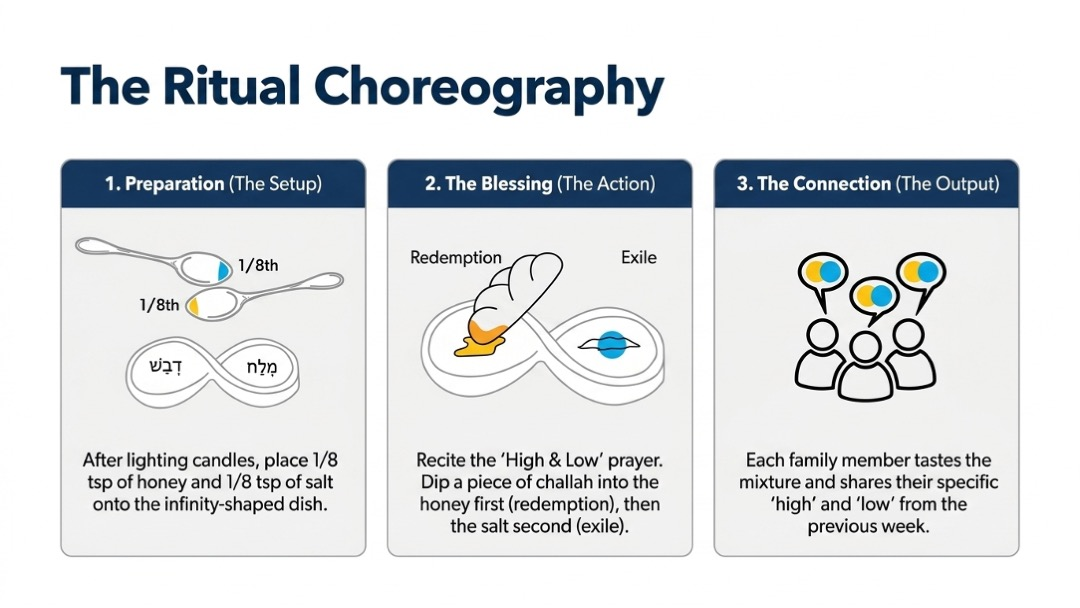
What makes this ritual meaningful to me is not novelty for its own sake. It is that it allows a family to normalize holding both joy and pain in the same physical and temporal moment. That is already a deeply Jewish move. The ritual does not erase difficulty. It gives it a dignified container.
In my own family, one of the clearest outcomes has been better communication. The structure makes it easier for each person to speak and easier for the rest of us to listen. It slows us down. It creates room for the kinds of things that often go unsaid during a busy week: fears, anxieties, social stress, school pressure, moments of loneliness, and the challenge of carrying hard feelings quietly. It also makes space for joys, excitements, funny moments, small wins, relief, gratitude, and the kinds of happiness that deserve to be named out loud.
That is part of what I value most about the ritual. Vulnerability is not extracted. It is invited, held, and shared.
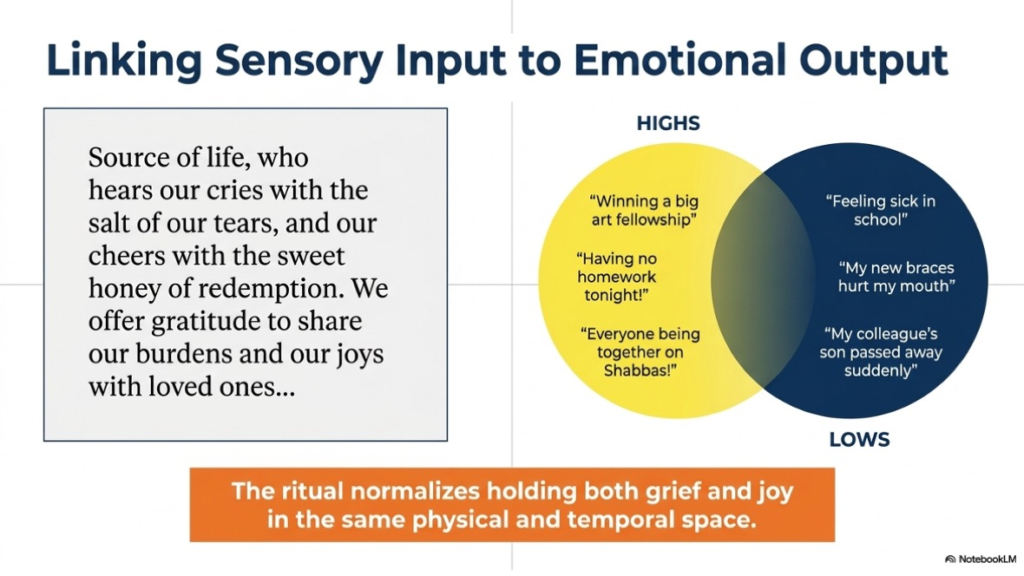
The orange on the seder plate is a useful case study for Jewish Experience Design, because it shows that not every community receives ritual innovation in the same way. In some liberal Jewish communities, the orange became a symbol of inclusion, visibility, and social conscience within the symbolic design space of the seder. Other communities never adopted it, or would see it more as commentary, art, or protest than as ritual norm. Not every meaningful ritual-adjacent act becomes mitzvah practice. At the same time, Jewish communities across the spectrum have long found ways to live modern life within halakhic boundaries. Tools such as eruvin, Shabbat elevators, and Shabbat ovens let observant Jews remain within halakhic systems while responding to lived conditions. Constraint-based innovation is already part of Jewish life. The real question is not whether adaptation happens, but how it happens, where it happens, and what kind of authority and care it requires.
Ritual as Content: When Artists Borrow the Form
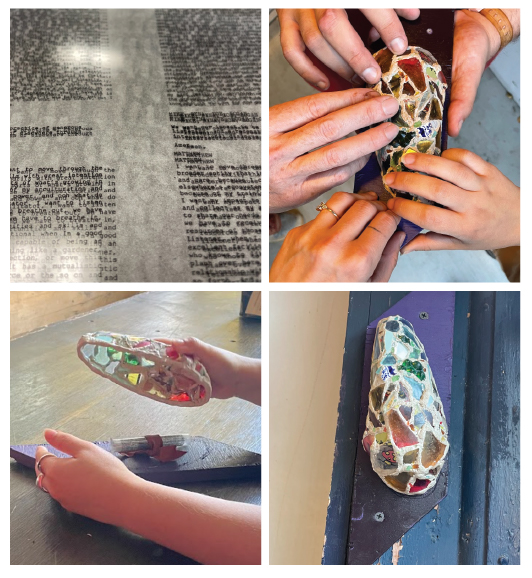
The orange on the seder plate lives inside the seder’s symbolic design space, but a lot of contemporary Jewish art goes further; it borrows ritual form and even ritual placement while stepping outside ritual function. Artists have long used ceremonial Jewish objects as material for identity, memory, and commentary rather than as functioning mitzvah objects. Contemporary reimaginings of the mezuzah, for example, have turned a biblical, covenantal object into a canvas for questions about belonging, exile, and continuity, often displayed publicly without being kosher or intended to fulfill the mitzvah of mezuzah.
I contributed a mezuzah to a piece like this myself, made in collaboration with other Jewish artists for an exhibition at the Elsewhere museum. It was affixed to a doorpost as part of the installation, so it lived in the physical position a mezuzah occupies and asked viewers to encounter it the way they would encounter a real one, at a threshold. But it was not koshered, did not contain a kosher scroll, and was never intended to fulfill the mitzvah. It was a piece about the idea of the mezuzah: covenant, threshold, protection, memory, made as art in conversation with other artists, not as halakhic practice.Why This Still Feels Jewish
I want to be careful that ritual design is not mistaken for improvisation without boundaries. In my classes, I stress that ritual prototypes are not halakhic rulings. Part of the design process is asking what the core law is, what minhag is already doing in the community, and where there is meaningful room to innovate without violating the structure that gives the ritual its Jewish integrity.
Not every friction point is a design failure. Some forms of ritual difficulty are intrinsic to discipline, obligation, repetition, or sacred encounter. Jewish ritual is not always meant to feel frictionless. But there is a difference between a difficulty that serves the mitzvah and an accidental barrier that keeps a person from reaching it. That distinction matters to me. I am not trying to erase depth or demand. I am trying to notice where needless exclusion has attached itself to sacred form.
The High & Low prototype passed my own internal layer-check in three ways. First, it did not violate the basic constraints I was working within. Second, it honored existing Jewish food practices rather than inventing an entirely disconnected symbolic language. Third, it addressed a real contemporary need: emotional pacing, family connection, and spiritual accessibility. That combination matters.
A Ritual Design Cycle
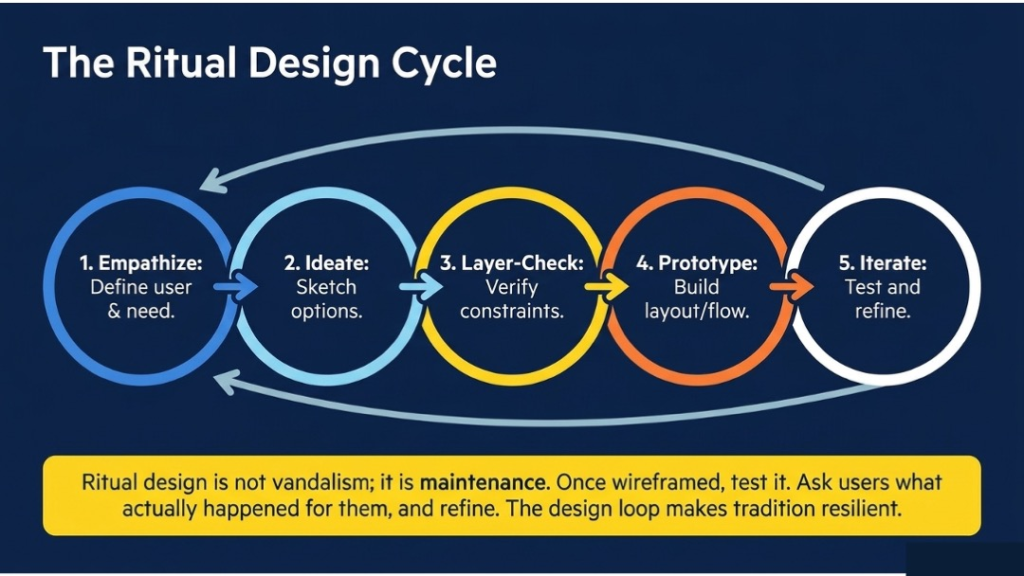
The process I teach is simple enough to use in a classroom, a synagogue, or at home:
- Empathize: Define the user and the need.
- Ideate: Sketch options without rushing to finalize.
- Layer-check: Verify halakha, minhag, and user dignity.
- Prototype: Build the flow, object, or prompt.
- Iterate: Test it and refine it based on what actually happened.
A ritual experiment is not successful just because it feels novel, moving, or aesthetically satisfying. It needs a defined problem, a clear hypothesis about which barrier is being addressed, and a way to evaluate whether the intervention actually improves access, dignity, clarity, participation, or connection. In other words: define the problem, identify the barrier, prototype the change, and test it against a visible metric of success. That is beta testing for ritual.
The Larger Jewish Futurist Picture
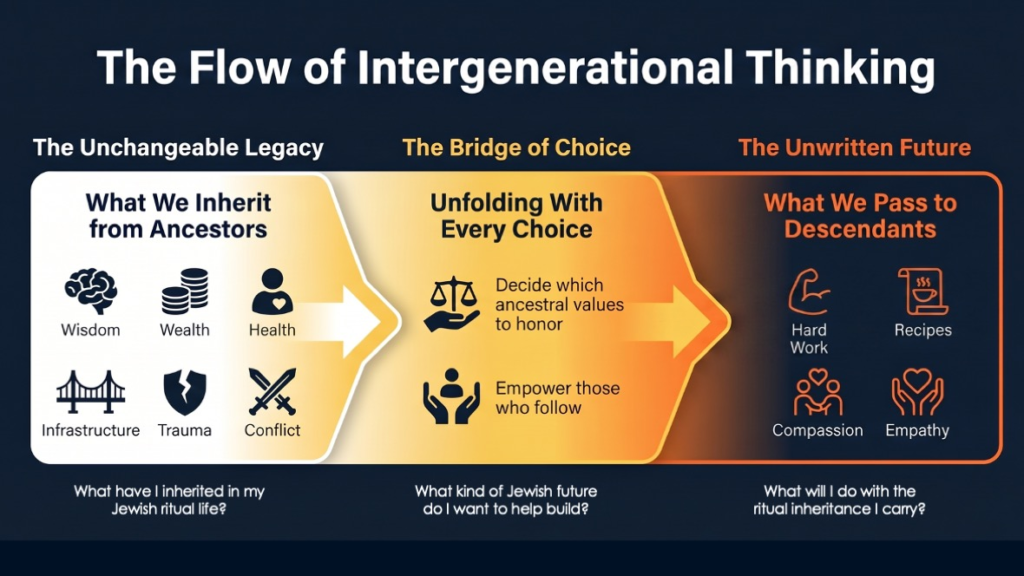
For me, Shabbat UX is part of a larger Jewish futurist project. Jewish futurism is not only about distant speculation. It is also about building bridges between inherited Jewish wisdom and emerging human needs. When we redesign ritual with care, we are doing future work. We are asking what kind of Judaism people can actually inhabit, and what kind of Jewish future we want to pass on.
That work scales outward. A small ritual shift can affect the self by creating more presence and openness. It can affect a family by building rhythm, trust, and care. It can affect a community by making belonging more possible across difference. And in time, it can affect Jewish civilization by teaching us that continuity does not mean freezing practice in place. It means carrying memory forward in a form people can still enter.
None of this is meant as an exhaustive history or final verdict on any of the topics I have referenced. It is a designer’s reading of Jewish practice as one lens among many and offered to invite more careful, ethical, and imaginative thinking about how we build Shabbat today.
What Participants Have Designed
These ideas do not come only from me. Every time I teach Shabbat UX, whether at Lehrhaus, through UnYeshiva, or in other workshops, I ask participants to do the same exercise you’re about to see below: name a barrier in a shabbat ritual, sketch an intervention, and test it against real needs of people.
The slide images below are a small sample of what groups have actually generated in those sessions. Some are playful. Some are half-formed. Some are more fully designed. All of them show what happens when people are given permission to treat ritual as something they can think about, not just inherit.
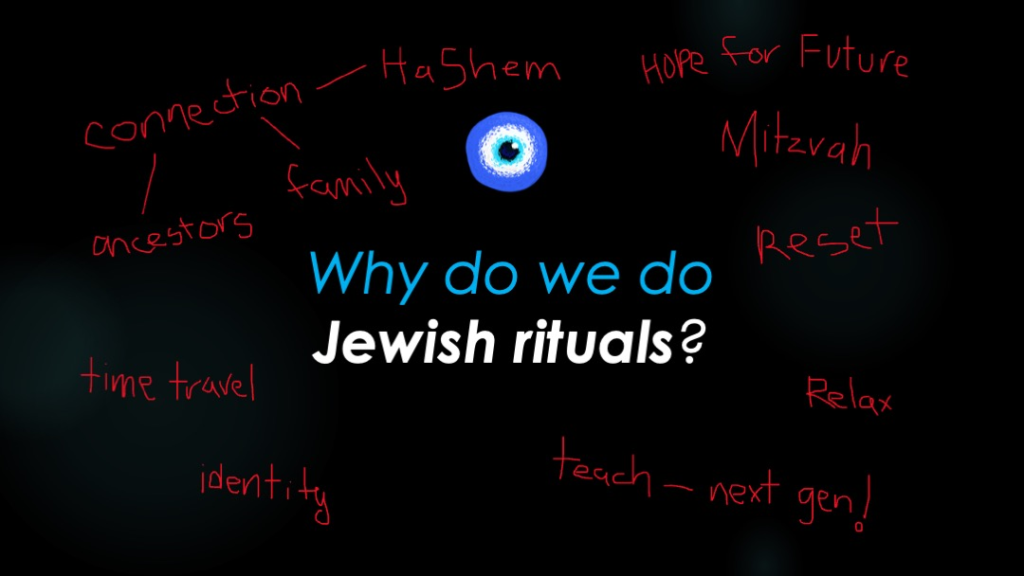

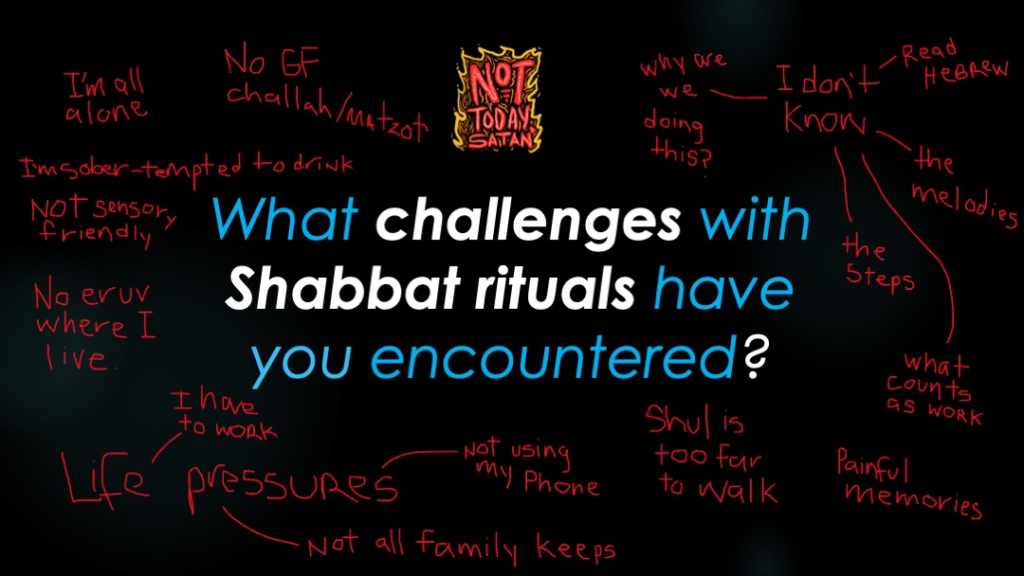
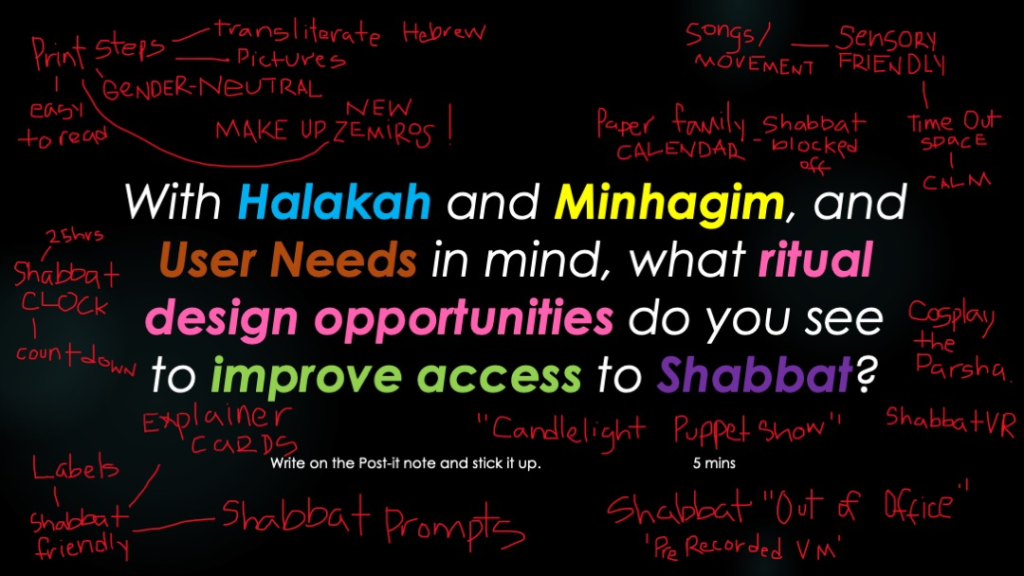
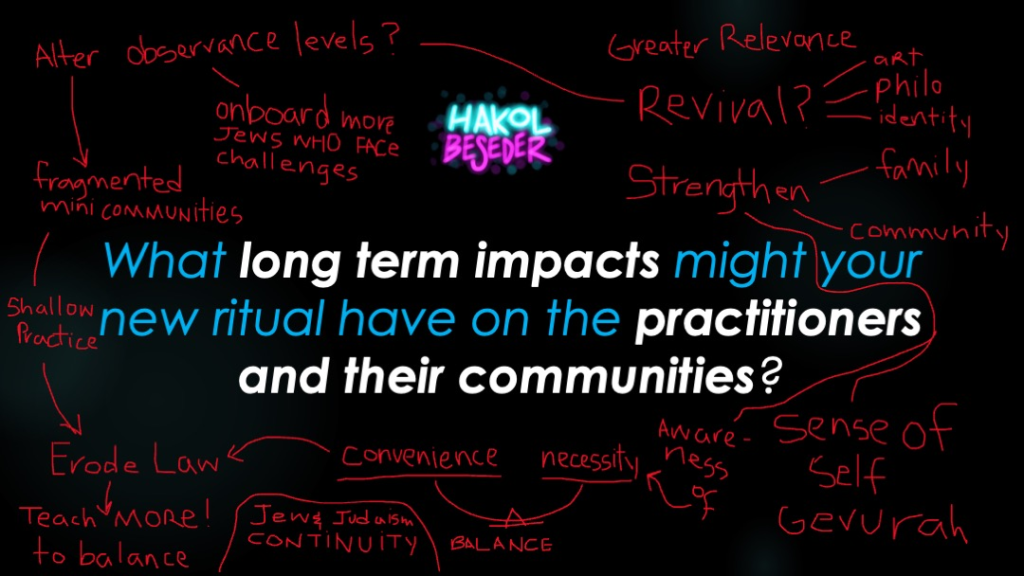
I’m including these images not as finished proposals, but as evidence of process. Shabbat UX is a way of thinking framework that other people pick up quickly, often surprising themselves with how much creative room already exists inside a tradition they assumed was fixed in place.
Try This at Home
If you want to explore Shabbat UX in your own life, try a simple Shabbat SWOT before next Friday night:
- Why do you we do Jewish rituals?
- Strengths: What already feels meaningful, beautiful, or connective in your Shabbat practice?
- Weaknesses: Where do people get confused, excluded, exhausted, or disengaged?
- Opportunities: What small change could improve access, dignity, clarity, or connection?
- Threats: What habits, assumptions, or constraints keep the ritual from serving people well?
Then ask one more question: What is one small ritual design intervention I can test this week?
Keep it small. Add a transliterated card. Change the pacing. Create a clearer welcome for guests. Add a reflection prompt. Rearrange the table. Adjust the lighting. Explain a blessing before saying it. Build from what is already there.
Shabbat does not need to become less Jewish or altered to become more accessible. It needs more thoughtful care. That, to me, is the promise of Shabbat UX, Jewish Experience Design, and one real expression of Jewish futurism in practice.