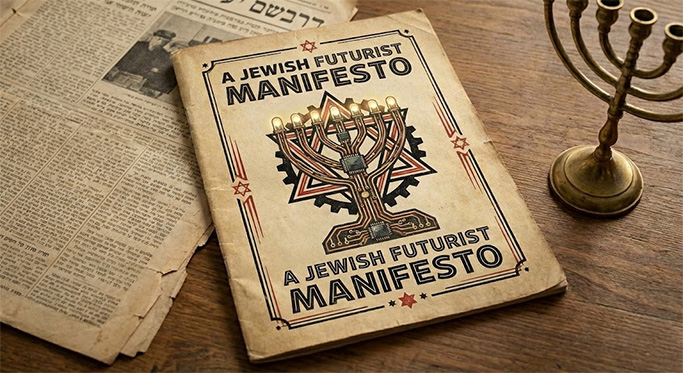
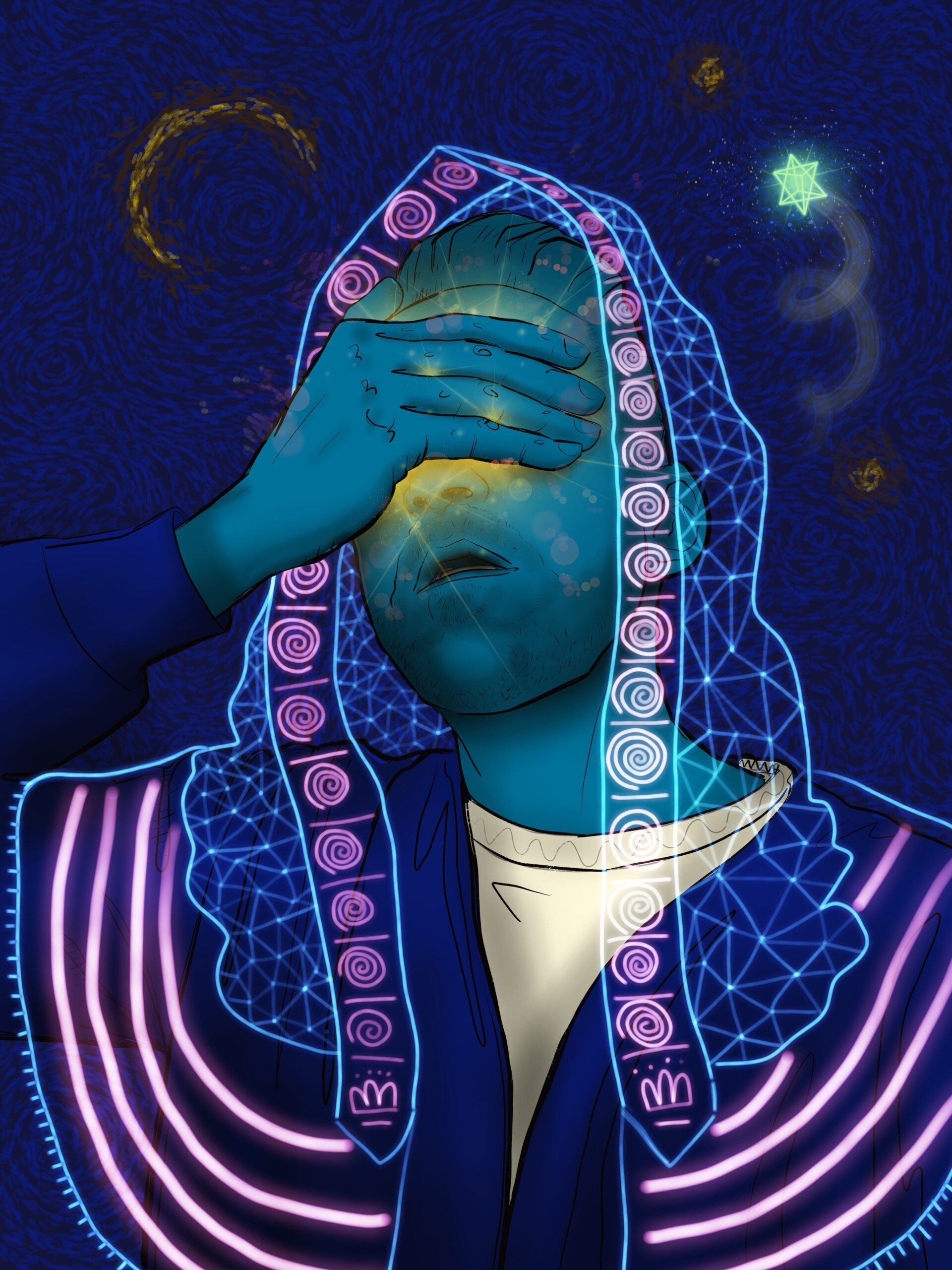
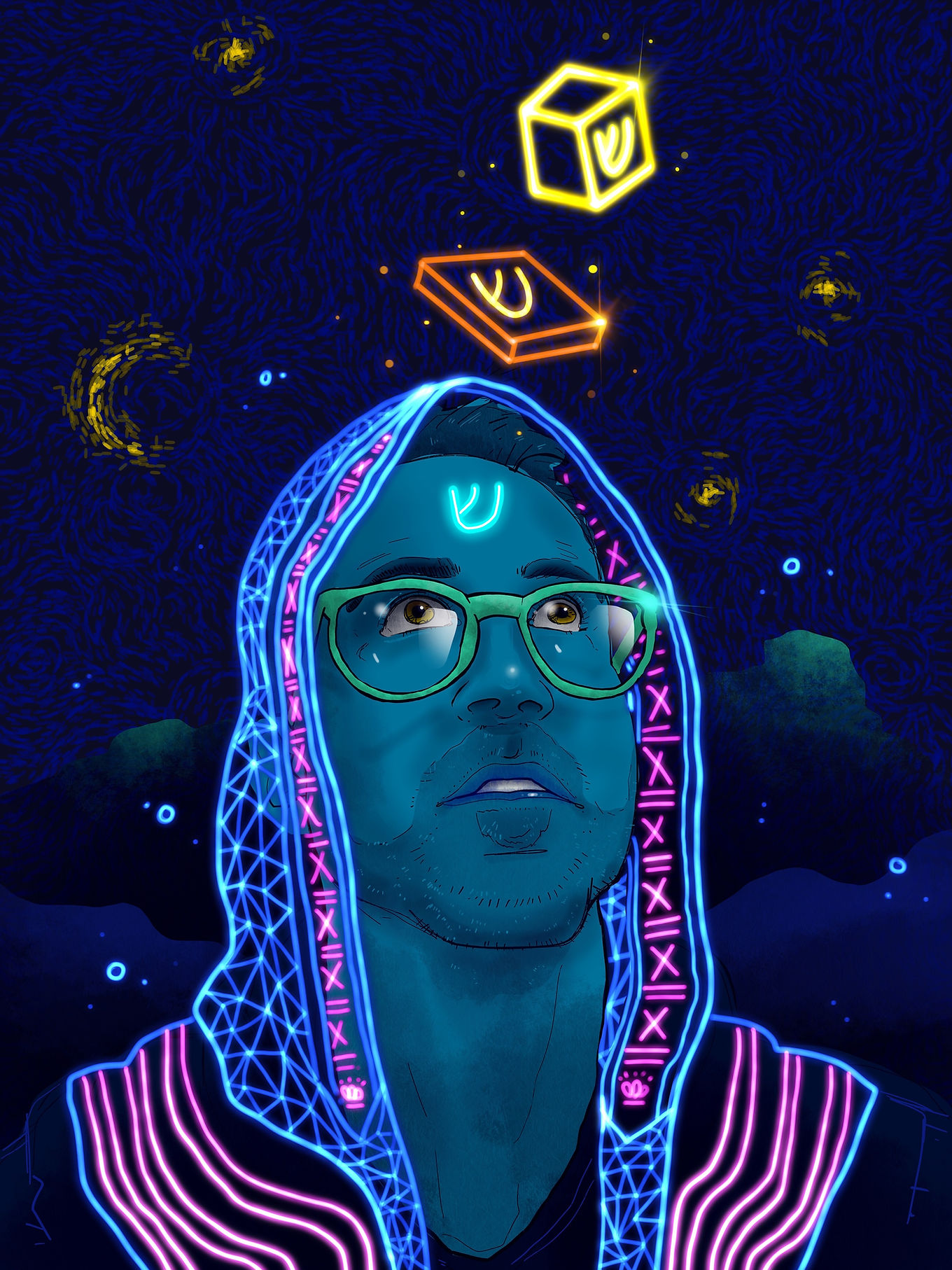
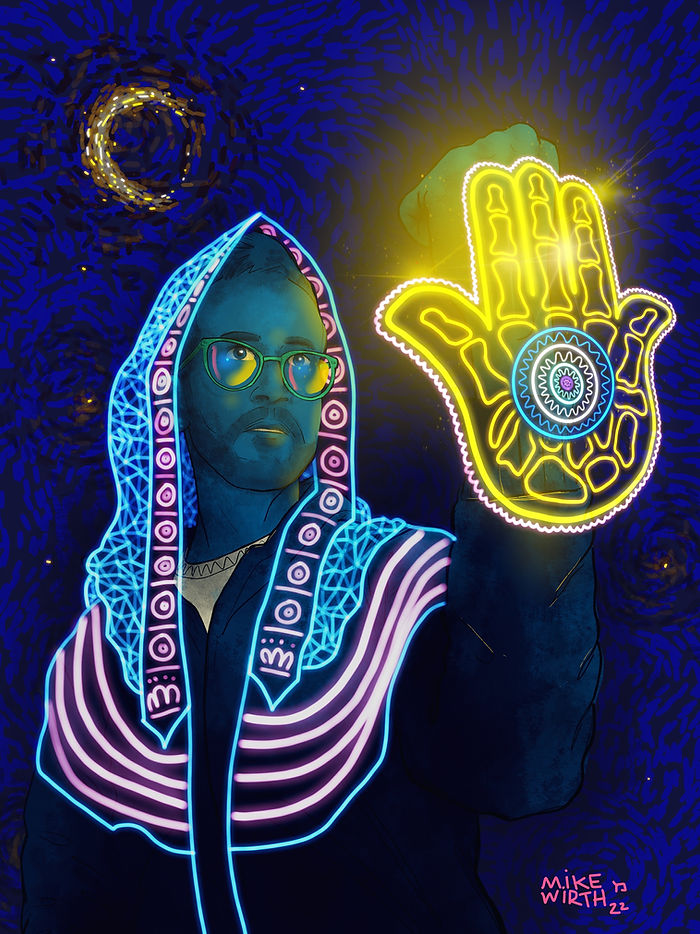
Images included are used solely for commentary and academic analysis under fair use provisions of U.S. copyright law.
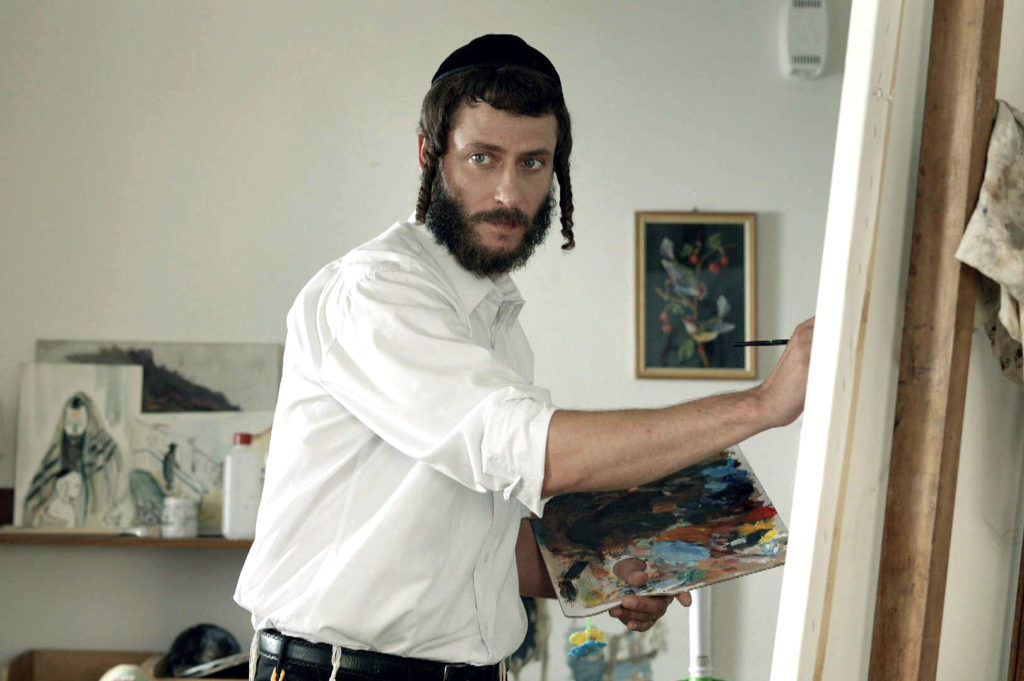
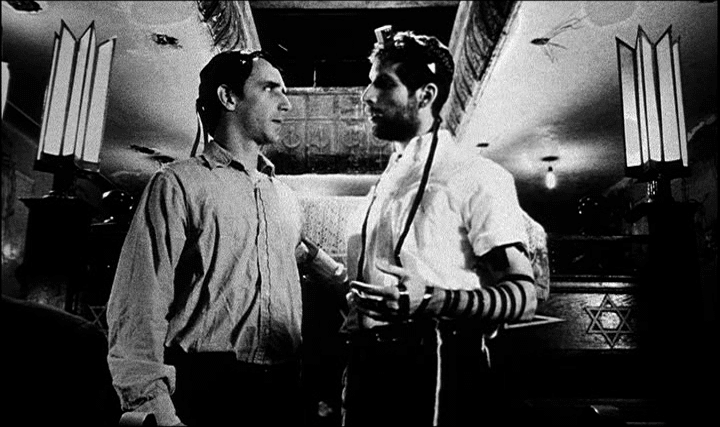
During the first year of the pandemic in 2020, a friend recommended I read My Name Is Asher Lev. We had just finished watching Shtisel, the Israeli drama about a Haredi family in Jerusalem. Akiva, the show’s painter protagonist, is gentle, passionate, and deeply conflicted between his community’s expectations and his need to create (Lyons; Mazria Katz; “The Art and Politics of Desire”). His journey is like Asher Lev’s and raises a still-vital question, what makes art Jewish?
Promotional still from Shtisel. Copyright Yes TV. Used for academic commentary.
Our connection of Asher Lev to Shtisel illuminated an ongoing continuum of reinvention in Jewish storytelling and ritual. Originally a novel, Asher Lev’s journey was adapted for the stage by playwright Aaron Posner, premiering at the Arden Theatre Company in 2012 and later finding success Off-Broadway, where it won several awards including the Outer Critics Circle Award for Outstanding New Off-Broadway Play (“My Name Is Asher Lev – Dramatists”; Broadway.com; Fountain Theatre). The adaptation brings Potok’s exploration of art, faith, and family into the lived immediacy of theater, allowing new audiences to encounter and interpret these questions on their own terms. In this way, Asher Lev’s/Akiva’s conflict with tradition, creativity, and communal belonging, continues to inspire and reshape Jewish art in every new medium.
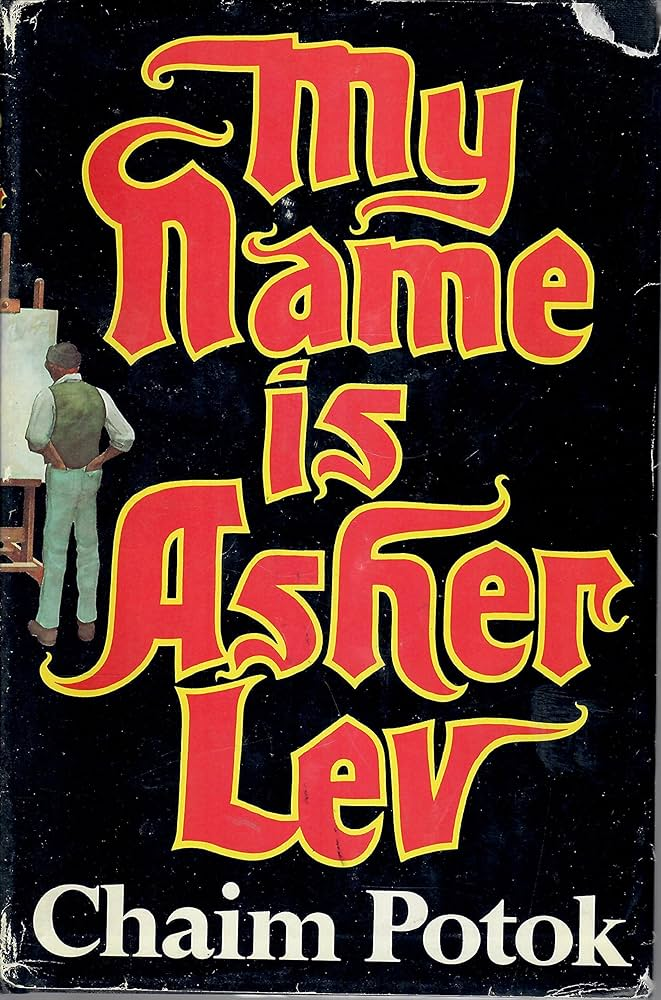
Cover of My Name Is Asher Lev. Copyright Anchor Books, 2003. Used here under fair use for purposes of scholarly analysis.
Reading Asher Lev reframed the question for me. Both Akiva and Asher are artists negotiating communal obligation and personal inspiration, risking nearly everything to remain true to their gifts. Their stories trace a path toward sacred creativity, providing a foundation for what can be called Jewish futurism.
When Chaim Potok published My Name Is Asher Lev, he gave Jewish artists an enduring guide. Potok’s Hasidic protagonist struggles to reconcile tradition and creative drive. As Potok writes, “…an artist is a person first. He is an individual. If there is no person, there is no artist” (My Name Is Asher Lev). This tension between individuality and belonging is a persistent theme in Jewish artistic life. Jewish futurism affirms that Jewish art isn’t fixed in the past; rather, it unfolds with every creative act, no matter the medium.
Potok’s novel contends that creative instinct itself is sacred. Asher paints not out of pride, but from necessity, a need that is intertwined with spiritual purpose. Potok argues, “A life is measured by how it is lived for the sake of heaven” (Potok, Goodreads). For Asher, creative intuition becomes a form of ruach elohim, the divine breath of creation.
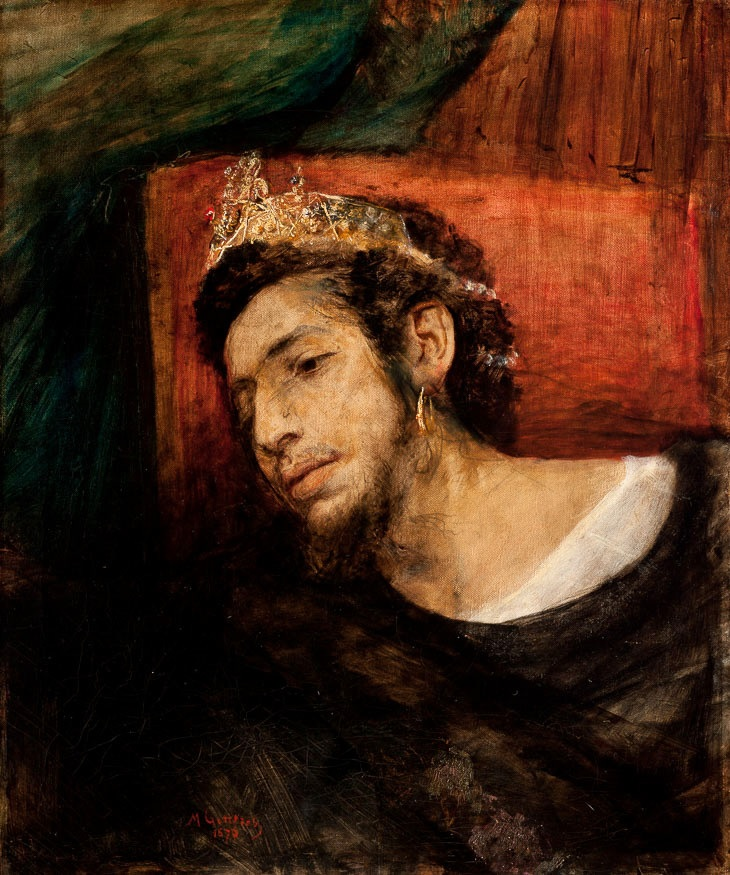
The narrative of Asher Lev is rooted in the idea of Tzelem Elohim, the belief that each person is made in the image of God. When Asher paints The Brooklyn Crucifixion, he is not betraying his Judaism. Instead, he translates personal anguish into communal compassion (SparkNotes; LitCharts). This ability to turn emotion into understanding reflects a hallmark of Jewish artistic practice. Maurycy Gottlieb, the nineteenth-century Jewish painter, struggled in similar ways. His art often explored the tensions between personal identity, Jewish tradition, and the surrounding culture (YIVO Encyclopedia; Culture.pl; Jewish Virtual Library; Brandeis).
Maurycy Gottlieb – Ahasuerus wandering (Self portrait) – 1876, Oil on Canvas. Image is in the Public Domain. Used here under fair use for purposes of scholarly analysis.
Like Asher Lev, Gottlieb faced societal expectations and pressures from family, peers, and the broader Jewish community. He frequently channeled his own pain and longing into works that resonate with empathy and universal dignity (YIVO Encyclopedia; Jewish Virtual Library; Brandeis; Segula Magazine). Their creative journeys illustrate how Jewish artists inspired by the concept of Tzelem Elohim bring individual and collective experience into dialogue, turning private struggles into forms of connection and healing.
Akiva’s journey in Shtisel parallels Asher’s in many ways. He transforms his family and grief into paintings, using creativity as a form of tikkun, or repair (Lyons; Mazria Katz; “The Art and Politics of Desire”). Despite resistance from his world, Akiva, like Asher, brings faith and creativity together, refusing to separate the two.
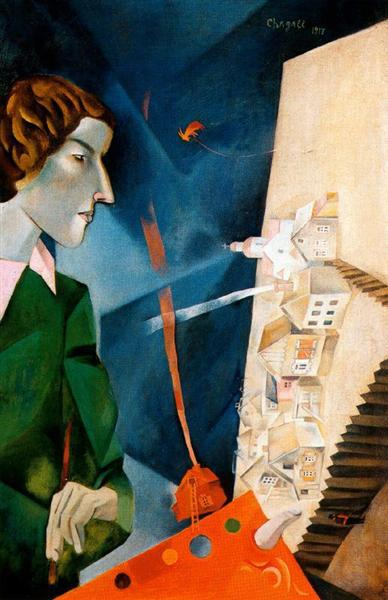
Jewish modernism’s dialogue with tradition is exemplified by Marc Chagall, whose paintings fill modern art with Jewish memory and mysticism. As Chagall observed, “If I create from the heart, nearly everything works; if from the head, almost nothing” (Chagall qtd. in “Analysis of Marc Chagall”; Grad). Chagall’s career models how Jewish creativity can look forward while remaining emotionally and spiritually grounded.
Self portrait with palette 1917, Marc Chagall, Liozna, near Vitebsk, Belarus, Image from source. Used here under fair use for purposes of scholarly analysis.
This same process of transformation is reflected in Potok’s exploration of art’s creative and destabilizing power. “Art is a danger to some people… Picasso used to say, art is subversive,” Potok reminds us (Bookey). In both modern and traditional contexts, Jewish artists risk pushing boundaries in order to offer new interpretations of spiritual experience.
Jewish spiritual practice teaches that every action gains significance through intention, or kavanah. Potok mirrors this sentiment: “Creativity, self-expression, and truth…emerge from honesty about oneself” (LitCharts). Jewish futurists apply this mindset to every new creative medium, continually asking if their work reveals more goodness and light.
Today, artists like Deborah Kass and Archie Rand carry these values forward as Jewish artists fully integrated into the mainstream art world. Kass’s OY/YO at the Brooklyn Museum and Rand’s The 613both embody the creative tension between reverence and innovation (Brooklyn Museum; Rand).
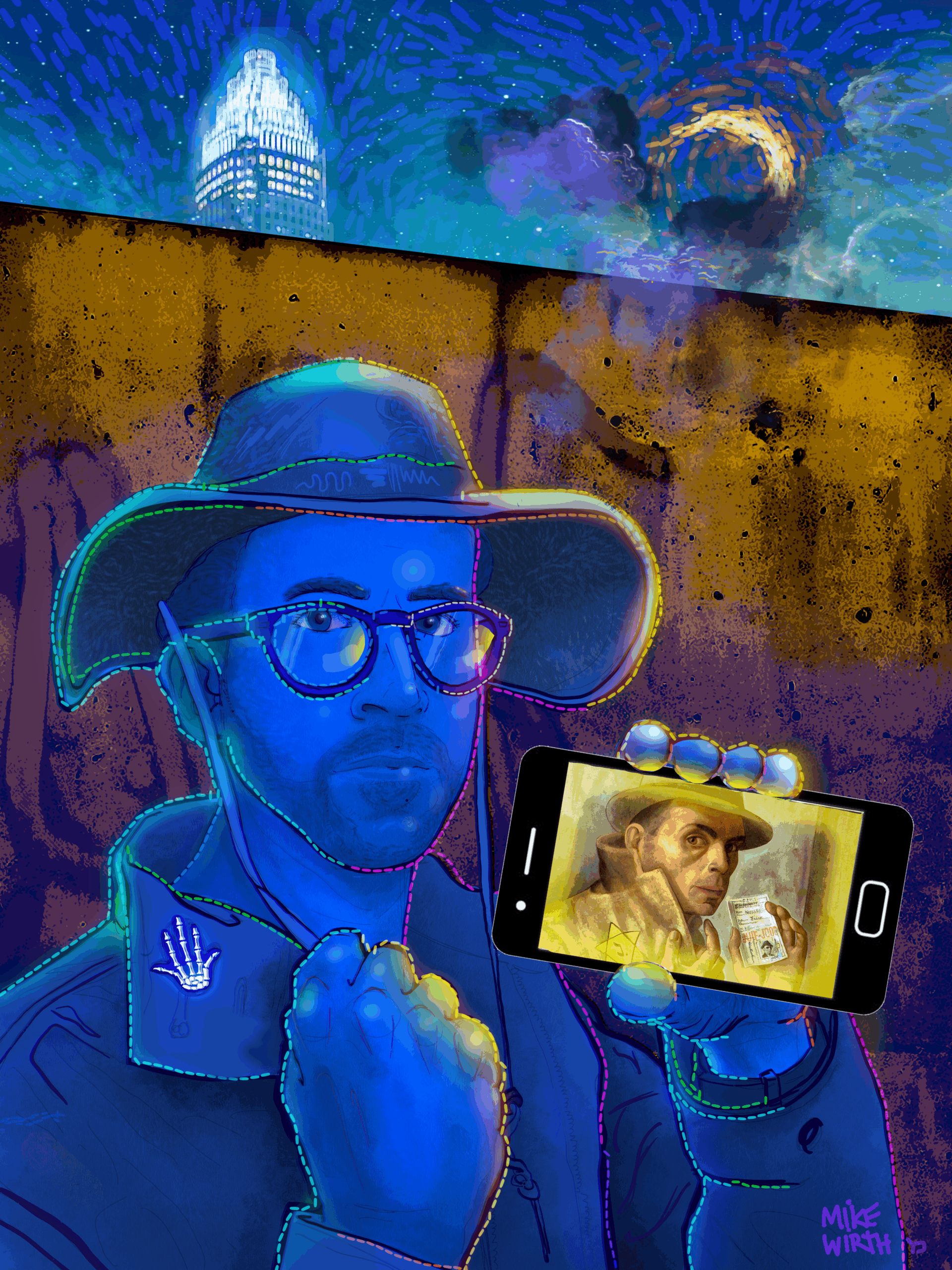
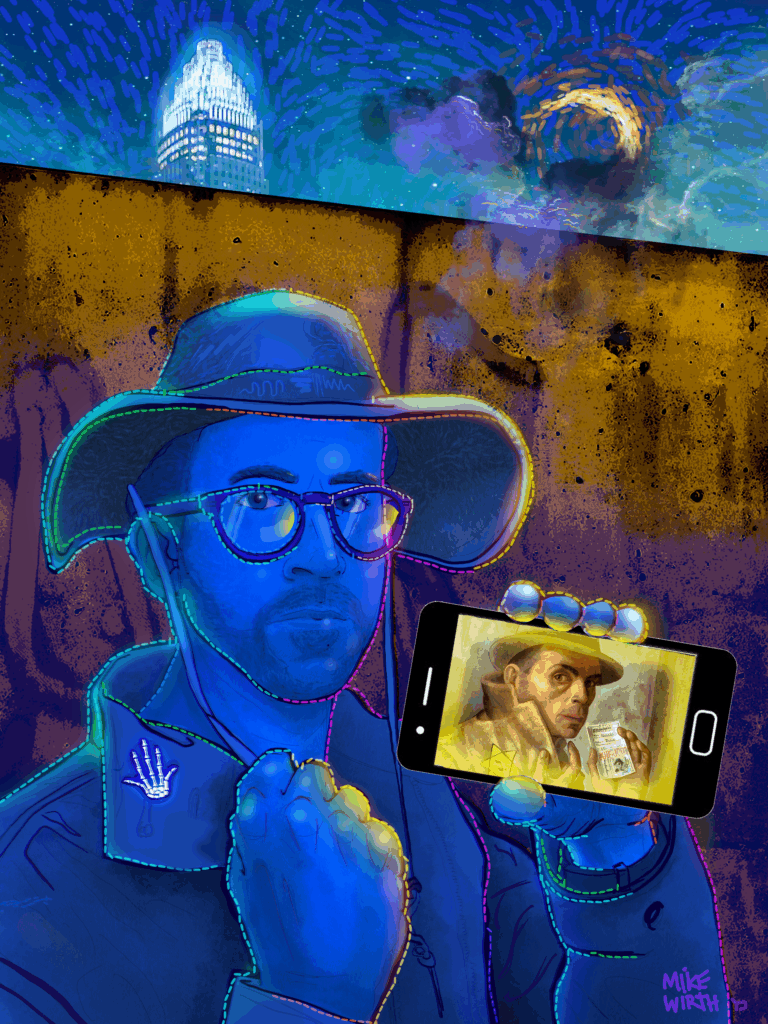
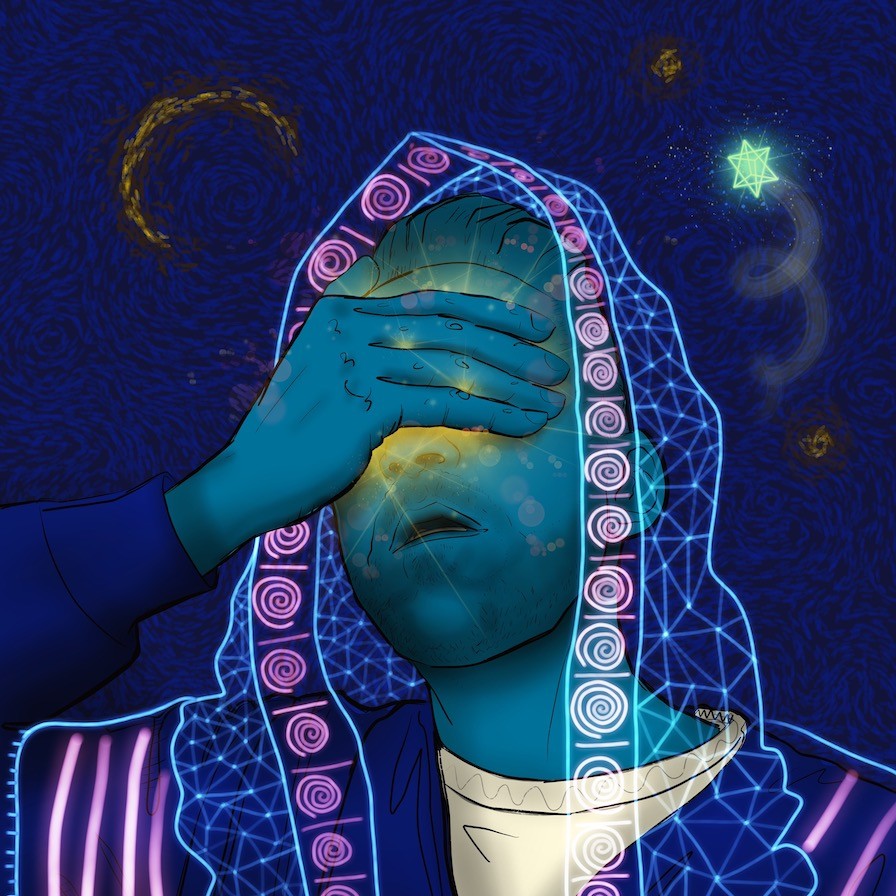
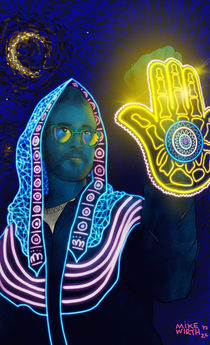
Silent Remembrance (self-portrait), 2024, Mike Wirth, Digital Illustration. Image property of artist.
My own contemporary Jewish work was inspired by these characters. In my digital illustration piece, Silent Remembrance, I restaged a self portrait by Felix Nussbaum, a Jewish-German painter who perished in the Shoah (Holocaust).
All of our artwork is apart of a has a legacy and reaffirms the idea that beauty and sacredness can and should coexist.
The journeys of Asher Lev (page and stage), Akiva from Shtisel, Maurycy Gottlieb, Marc Chagall, and many Jewish contemporary creatives illuminate a vibrant continuum of Jewish artists who, across generations and media, confront the tension between personal inspiration and communal tradition (Morinis; Segula Magazine; YIVO Encyclopedia; SparkNotes; LitCharts; Wullschlager). Each pursues the middah of emet (truth), striving for honesty and authenticity in their creative practice, even when this honesty leads to conflict or alienation within their communities. Asher paints his deepest truths, Akiva wrestles to honor his art within the constraints of Jerusalem’s Haredi world, Gottlieb channels his longing for acceptance and identity into portraits and biblical scenes, and Chagall infuses his canvases with heartfelt reverence, mystical memory, and universal feeling (Grad; Art Prodigy Blog).
Along the way, each artist embodies anavah (humility), recognizing their role as a vessel for creativity, and rachamim (compassion), using their gifts to turn personal struggle and sorrow into works of empathy and communal connection. Their creative processes mirror the stages of Mussar: deep self-examination, engagement with inner and outer conflict, risking rejection or misunderstanding, and ultimately returning to offer artistic repair, tikkun, to their communities and to Jewish tradition itself (Morinis; Mussar Institute; Ritualwell; My Jewish Learning).
Through these acts of creative repair and ethical growth, their art becomes a conduit for goodness and revelation. Their stories remind us that Jewish artistic futurism is not static but unfolds wherever artists grapple honestly, humbly, and compassionately with the tensions of their lives. Revelation and healing do not end in moments of exile or struggle; rather, they continue through every artist who brings fresh insight and loving repair to their people.
If you’ve not read My Name is Asher Lev, watched Shtisel, or viewed Gottlieb’s work, I highly recommend all three. I’m excited to see the stage production, myself. I hope you find kindred souls in these stories, like I have.
When I teach Design history courses, my students love how similar events, people and milestones are neatly packaged into movements and eras with interesting names, usually with an “ism” thrown in for good measure. One of our favorite thinking exercises is to try and apply a movement or era name to the art happening today. We mostly think of Frankenstein-like names, following the contemporary trend of making combinations of specific cultural groups, places, with older movement names. Like Jewish and futurism, we learned that every movement has its ancestors, both good and bad, even if they didn’t call themselves by the same name. I can say that as teacher and artist in this story, the feeling of placing oneself into the continuum of creative history is inspirational and revealing of purpose.
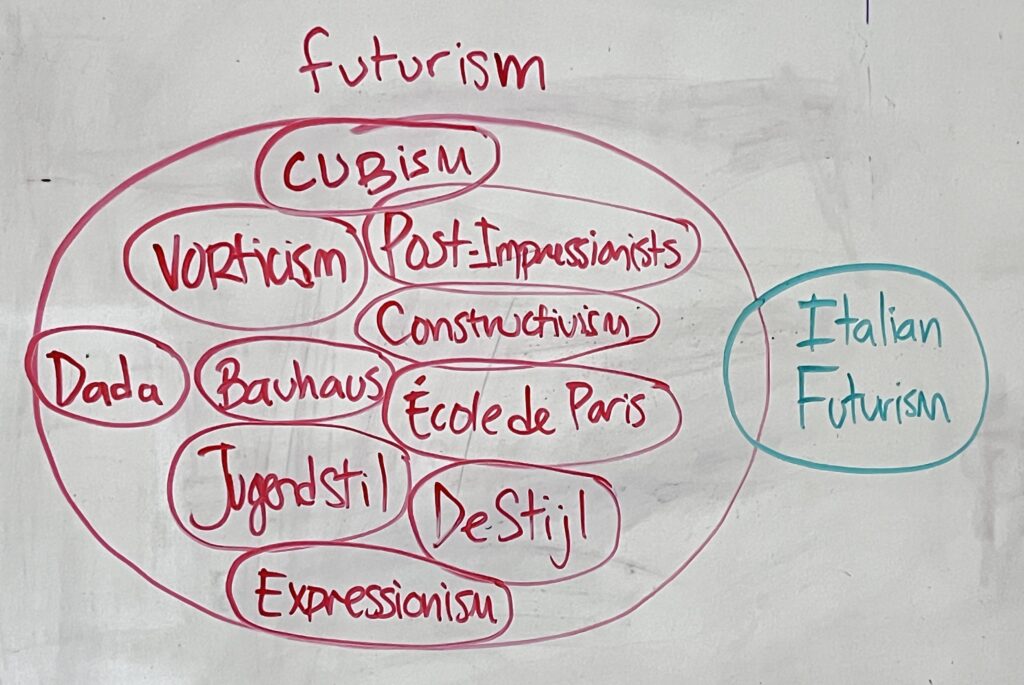
Before “Jewish futurism” was a modern phrase, there were lowercase “f” futurists in Biblical prophets, medieval mystics, modern artists, inventors, and one rejected capital “F”, Futurist (Italian), who for better for for worse, all had dreams with variegated mixtures of optimism and pessimism of the world ahead. Jews who were in awe of speed, energy, and light- imagined boldly and used creativity to repair what was they saw as broken in their time. They were asking the same or similar futurist questions we ask now, but with varying intentions:How do we sanctify technology? How do we balance innovation with ethics? How can art and design deepen our connection to our values rather than distract from it?
But unlike other futurist movements, Jews were rarely gathered under one banner. In the eighteenth through twentieth centuries, they were often distributed participants within the world’s avant-garde movements.
Photo of futurism vs Futurism notes on whiteboard 2018, Queens University of Charlotte, Photo by Mike Wirth
They were scattered across modernism, abstraction, and science fiction. Jewish artists and thinkers helped define of futurist leaning movements like Cubism, Vorticism, Constructivism, Art Nouveau (Jugendstil), the Bauhaus, comics, science, cinema, and technology, yet they entered these movements as outsiders, navigating exile, assimilation, and the tension between belonging and vision.
In contrast, Jewish futurism, then, is a reunion of that diaspora. It’s a collective recognition that Jewish creativity has always been dispersed, but futurist. Our task now is to connect those remote sparks into a shared constellation.
Jewish futurism, as I understand it, isn’t about breaking from tradition, it’s about revealing the through line of Torah, design, and imagination. The real work is to dialogue with this evolution together. Our ancestors did it through parchment, pigment, and print. We do it through pixels, algorithms, and immersive light.
This essay is an attempt to trace that lineage by identifying the people and moments, ancient and modern, that carried the qualities of Jewish futurism before we had words for it.
2. Prophets and Visionaries: The First Jewish Futurists
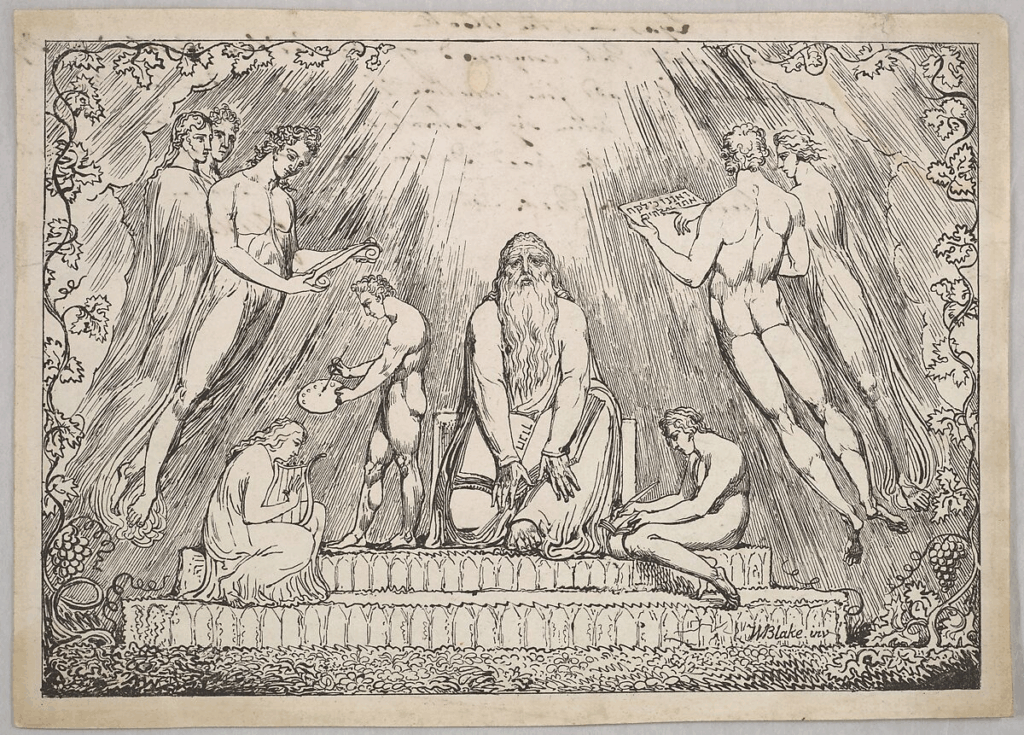
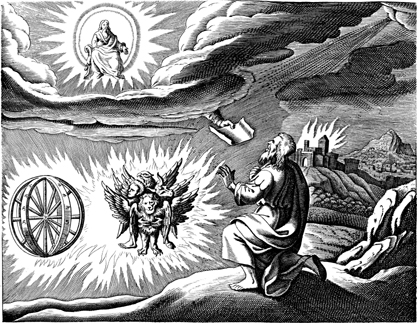
The Jewish imagination has always been forward-looking and possessed the virtues of futurist thought. Many stories in the Torah show characters facing grave challenges who reluctantly, yet diligently, press onward toward many future promises. Isaiah dreamed of a world where swords would become plowshares (Isaiah 2:4), reimagining technology as an instrument of peace rather than domination. The non-canonical, Book of Enoch envisioned the celestial ascent of a very minor Torah character, an early meditation on transformation and transcendence.
Enoch 1806-7, William Blake, Via Wikimedia Commons
These were not myths of escape but frameworks for moral invention and prototypes of a better world.
The Torah itself ends in anticipation when Moses glimpses the Promised Land but never enters. The Jewish story begins by looking at the horizon toward a promise deferred, yet always pursued. That restless hope is also in the DNA of Jewish Futurism.
3. “Next Year in Jerusalem”: Our First Futurist Statement
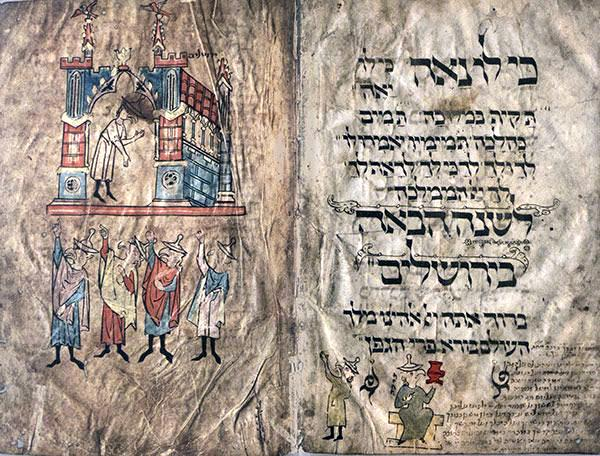
The phrase L’shanah haba’ah b’Yerushalayim, Next year in Jerusalem, has always been the ultimate Jewish futurist phrase. It is both prayer and design challenge. It asks: what will it take, ethically and creatively, to build the world where that hope becomes real?
“Next Year in Jerusalem” translated from Hebrew, Birds’ Head Haggadah, 1296 Image via Sefaria
Jerusalem is not only a city but a symbol of the convergence of heaven and earth, ethics and aesthetics, faith and form. Every Jewish generation has tried to construct its own version of it. Jewish Futurism is our turn to do the same, using the tools and technologies of our age to reimagine what Jerusalem might mean tomorrow.
4. Mystics, Makers, and the Ethics of Revelation
Centuries later, the mystics of the Zohar built the first great Jewish model of complexity. Attributed to Rabbi Shimon bar Yochai, the Zohar describes creation as a system of divine emanations, the Sefirot, a network of energy, feedback, and interdependence that sounds remarkably like a precursor to modern systems or network theory.
An even earlier mystical text, the Hekhalot Rabbati, contains the story of the Sar HaTorah, the “Prince of Torah.” In it, a rabbi summons an angelic teacher to grant him instant divine wisdom. The revelation overwhelms him beyond capacity, leaving him nearly destroyed. The angel warns that knowledge received without readiness shatters the vessel. This is not a warning against study, but a parable about integration, teaching that divine insight requires ethical preparation, humility, and spiritual maturity.
This early mystical story prefigures a central idea of Jewish Futurism: revelation without discipline leads to collapse. Innovation, like wisdom, must be tempered by moral structure.
A few centuries later, in Safed, Isaac Luria (the Arizal) and his circle extended that vision, transforming cosmic trauma into design theology. Their concept of Tikkun Olam, repairing the world, framed healing not as an abstract ideal but as an iterative process of creation and refinement. The Kabbalists turned Divine catastrophe, the shevirat ha-kelim or shattering of vessels, into a blueprint for human creativity, a call to rebuild with intention.
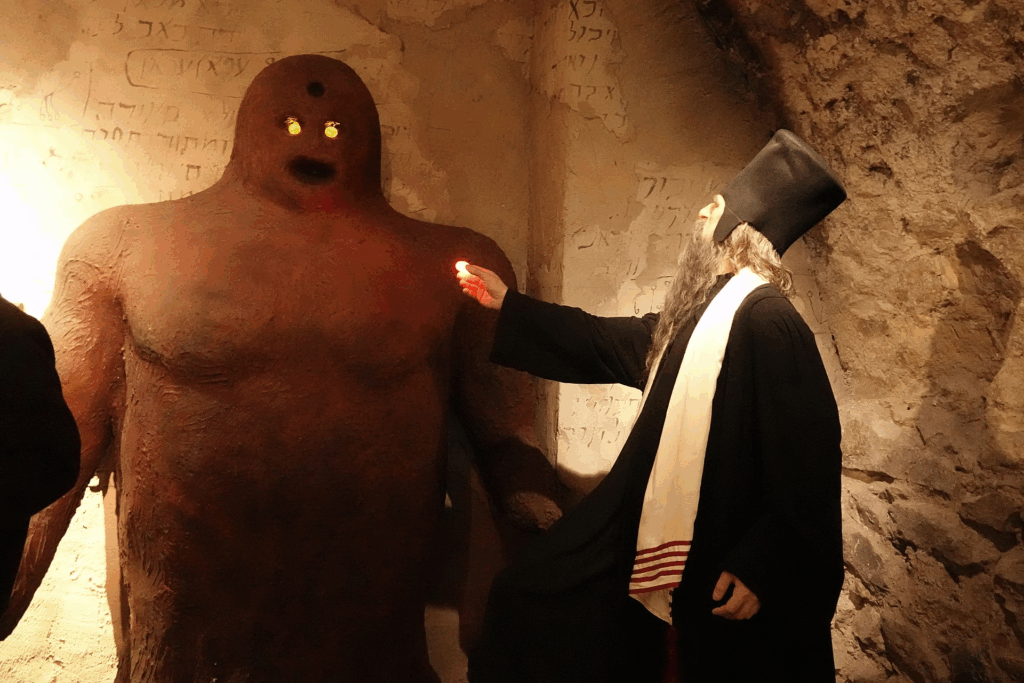
In the same spirit, Rabbi Judah Loew of Prague gave shape to one of Judaism’s most enduring myths of technological creation, the Golem, a being formed from clay and animated through sacred language. The Golem’s body was innovation, its control was halakhah. It remains Judaism’s first meditation on artificial life, automation, and moral limits, what we now call the ethics of technology.
Together, these three sources, the Zohar’s vision of divine networks, the Sar HaTorah’s warning about unintegrated revelation, and the Golem’s lesson in ethical creation, form the foundation of Jewish Futurism. They map the two coordinates that still define our creative practice today: creation as systems design, and ethics as the boundary of holiness.
5. Enlightenment, Utopia, and Early Jewish Design
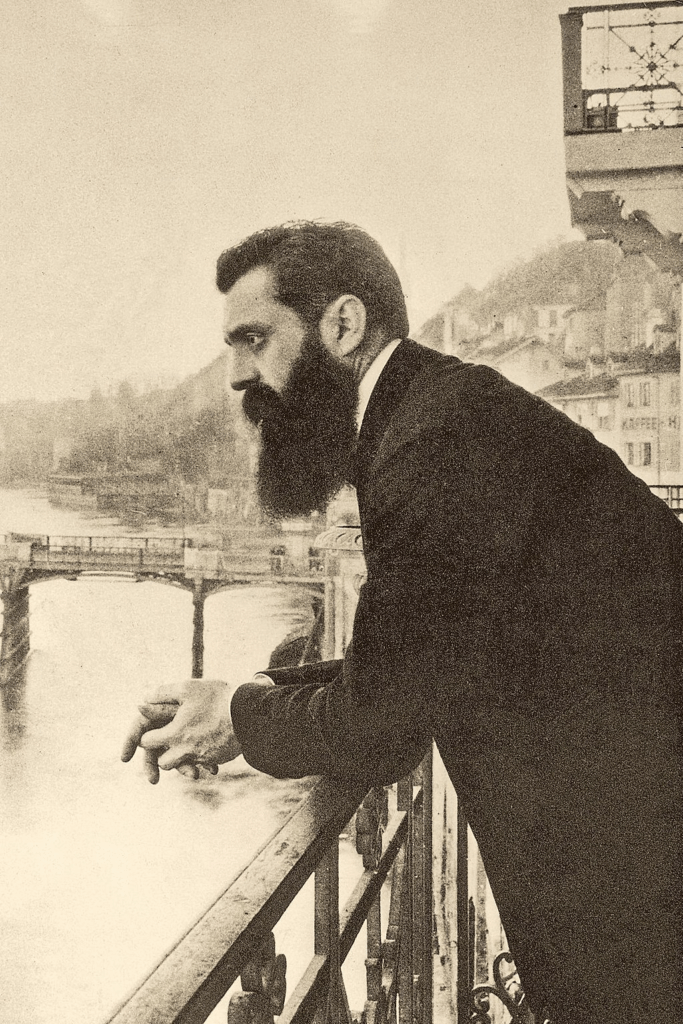
The 19th and early 20th centuries brought the industrial age, and with it, new Jewish imaginings of the future. Theodor Herzl’sAltneuland (1902) offered not just political
Theodor Herzl in Basel, 1901, Photo by EM Lilien via Wikimedia Commons
Zionism but a speculative blueprint of his vision of a technologically advanced society guided by justice. Ephraim Moses Lilien, often called the “first Zionist artist,” translated Herzl’s ideas into visual form, merging Art Nouveau (Jugendstil) beauty with prophetic idealism.
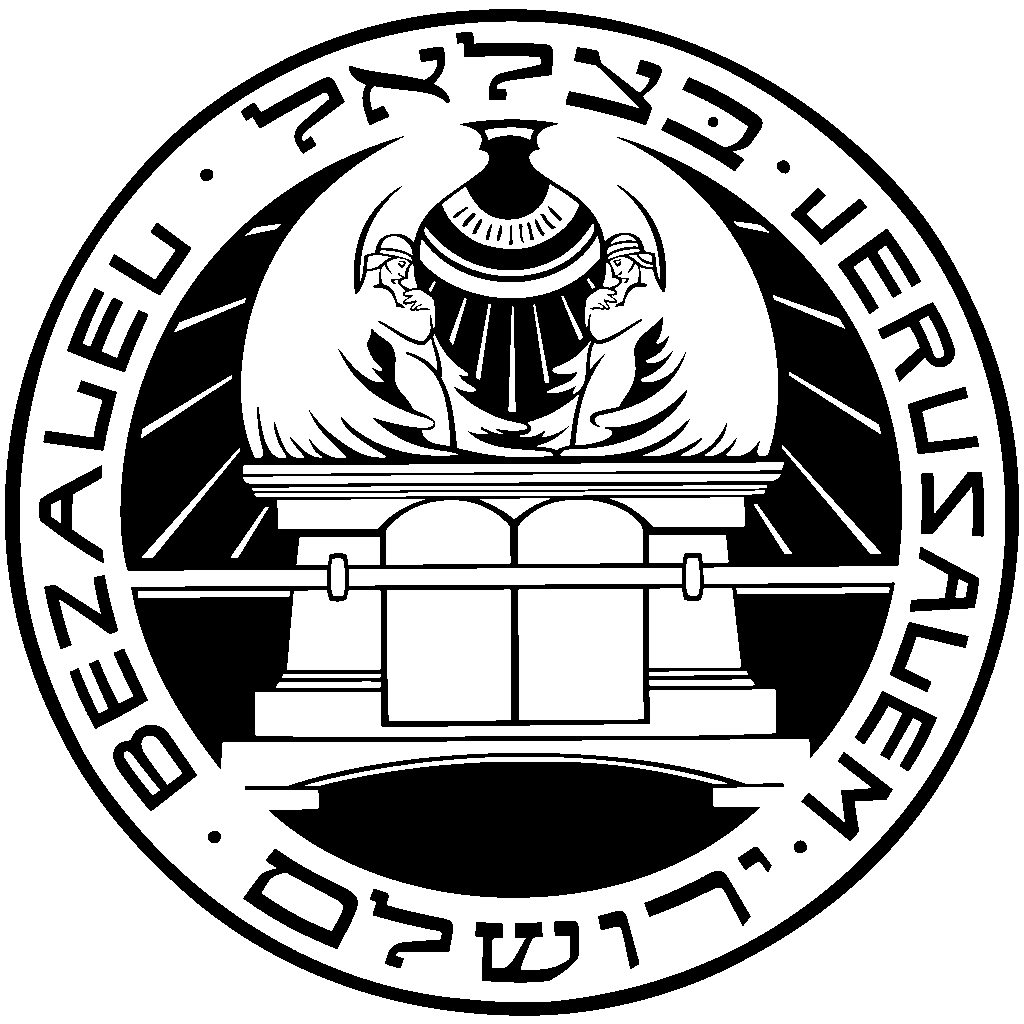
Around the same time during late Ottoman period (1906) and into British Mandate rule, Boris Schatz founded the Bezalel School of Art and Design in Jerusalem.
He believed that Jewish creativity could rebuild both spirit and society and was a major shaper of the Zionist art movement. The school fused European aesthetics, often brought by fleeing Jewish practitioners, with biblical themes, teaching the essence of Hiddur Mitzvah, beautifying the mitzvah.
Logo of The Bezalel School 1906, by EM Lilien. Via Wikimedia Commons
The Bezalel School was the first organized institutional embodiment of Jewish Futurism making art and design as acts of national and spiritual renewal.
1. Futurism vs. futurism: Origins and Overlaps
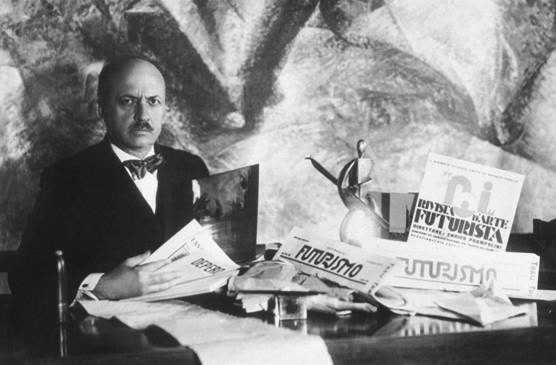
Futurism (capital F) was first coined as an art movement name by Filippo Tommaso Marinetti in 1909. His Futurist Manifesto, published in Le Figaro, announced a radical social ideology backed by an aesthetic devoted to speed, light, energy, and the mechanical beauty of modern life. Artists such as Umberto Boccioni, Giacomo Balla, and Gino Severini sought to capture motion and power in a new visual language for the twentieth century. Yet as the movement matured, its rhetoric of destruction and renewal fused with Italian nationalism and ultimately fascism, turning artistic innovation into ideology.
One adjacent Jewish figure, Margherita Sarfatti, an art critic and Mussolini’s cultural adviser, championed early Futurist ideals while stressing that art must bridge past and future, not obliterate tradition. When fascism hardened, she was expelled from Italy under the racial laws, exposing Futurism’s fatal contradiction — a vision of progress that devoured its own makers.
By contrast, futurism (lowercase f) describes the broader impulse toward innovation that surfaced across Europe under other names: Vorticism in Britain, Constructivism in Russia, and the Bauhaus in Germany. The same fascination with machines, energy, and new media became, outside Italy, a moral and creative language for modern life.
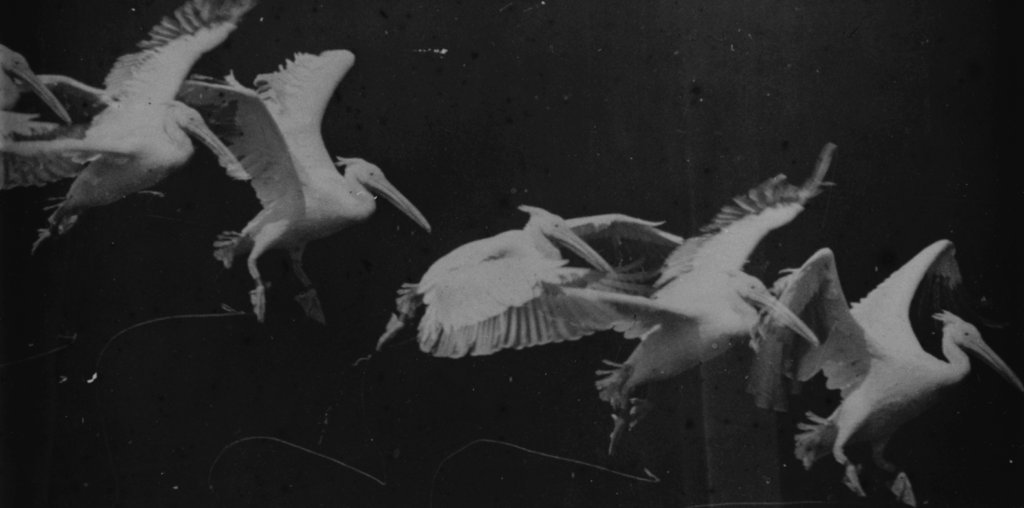
The groundwork for all of these movements was laid by proto-futurists — visionaries who imagined the future before it had a name. Jules Verne and H. G. Wells wrote of flight, electricity, and space travel. Scientists and photographers Étienne-Jules Marey and Eadweard Muybridge dissected motion through sequential imagery.
Photo montage of flying pelican taken by Étienne-Jules Marey 1882, Image is in the Public Domain from source
Philosophers Henri Bergson and Friedrich Nietzsche, along with Symbolist poets, infused culture with ideas of vitality, time flux, and transformation that would animate futurist art decades later.
Although none of these early futurists were Jewish, Jewish innovators shaped the technological world that made Futurism possible.Albert Einstein’s relativity redefined time and space.
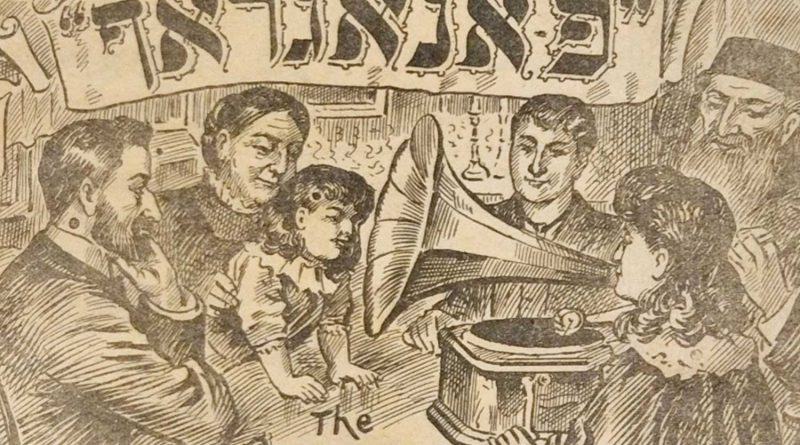
Yiddish language advertisement for Edison’s Phonograph, the competitor of the Gramophone, 1909, Weekly Jewish Bits Newspaper. Image via source
Emil Berliner invented the gramophone making it possible for Jewish sound and oral tradition to be archived and disseminated globally for the first time; Charles Adler Jr. created the traffic-signal system that organized modern cities.
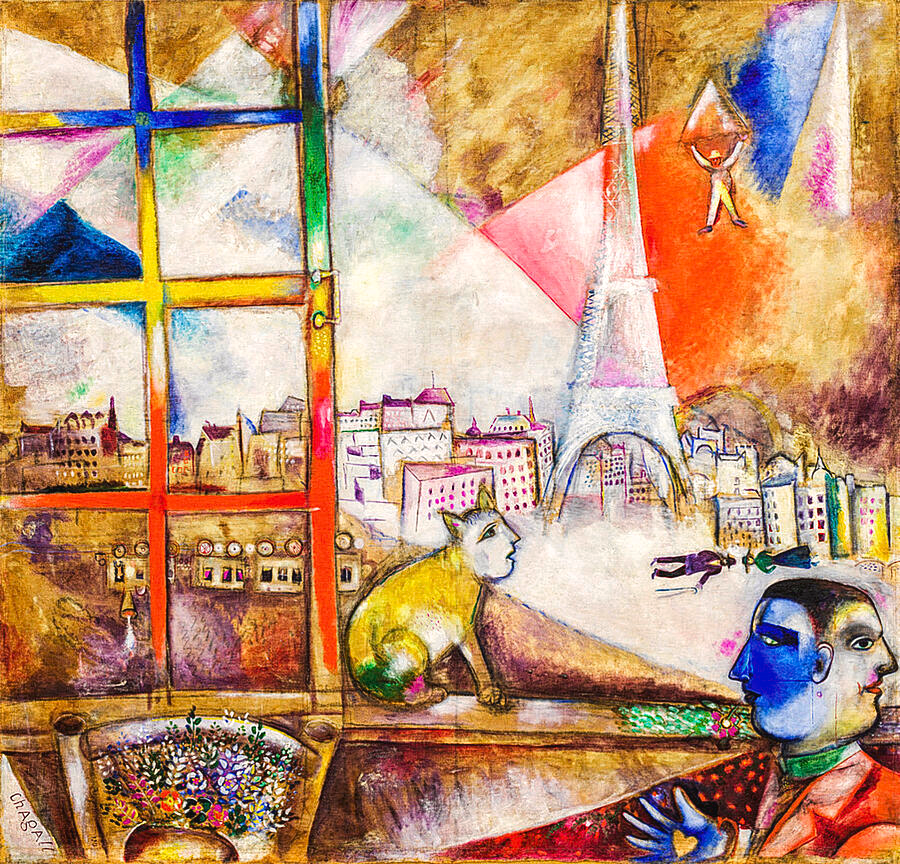
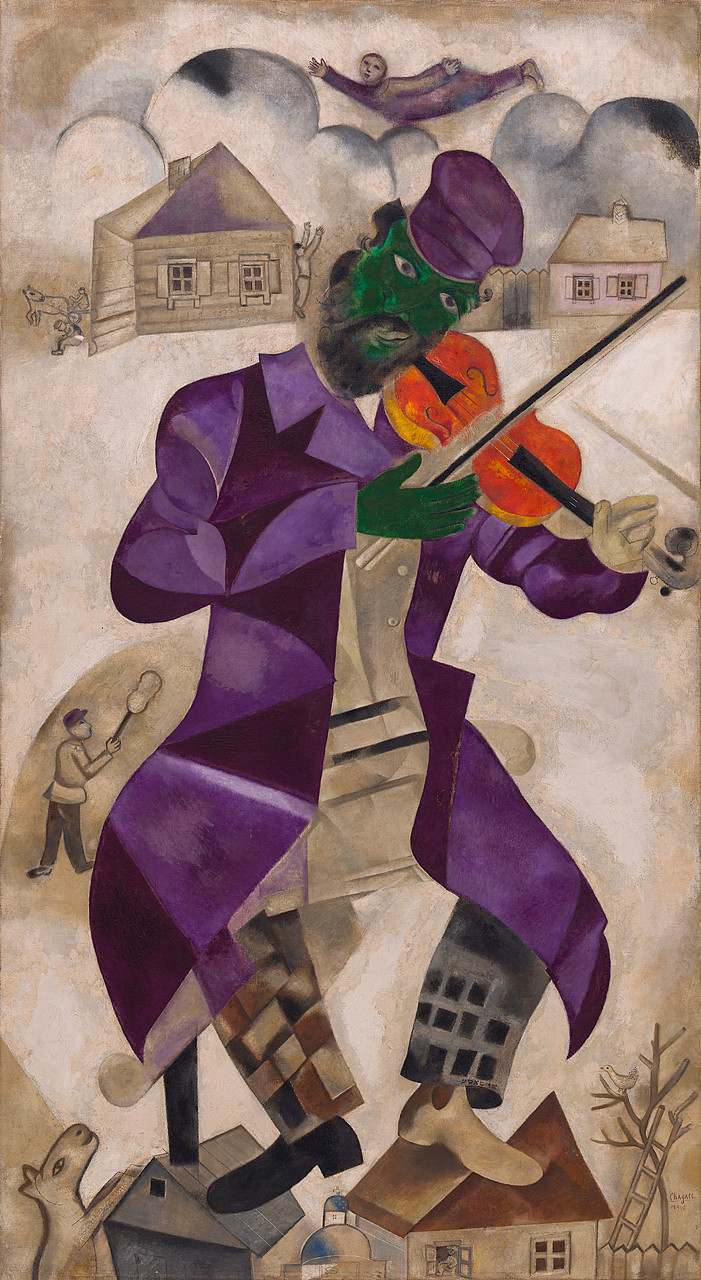
In the arts, Jewish modernists such as Marc Chagall and Jacques Lipchitz extended Cubist abstraction into spiritual allegory, transforming the language of modernism into a vessel for transcendence. Chagall, especially in his Paris period, reimagined futurism not as mechanical speed but as illumination and ascent. I call this mystical futurism. Paintings like Paris Through the Window (1913)
and The Eiffel Tower (1911) shimmer with the chromatic pulse of electric light, fracturing the modern city into simultaneous layers of time, memory, and dream.
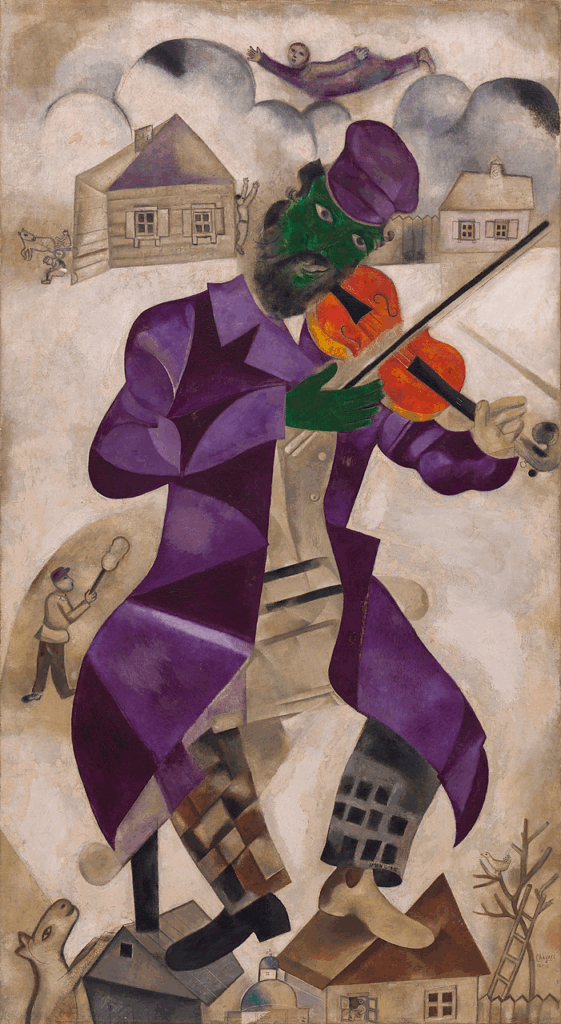
The Green Violinist 1923-24, Marc Chagall, Oil on Canvas, Image in Public domain via source
His Violinist series vibrates with musical energy rendered as color and form, suggesting that sound itself could become a visual current. In Chagall’s hands, the machine age becomes a theater of revelation—modernity recast as a mystical experience of motion, radiance, and spiritual flight.
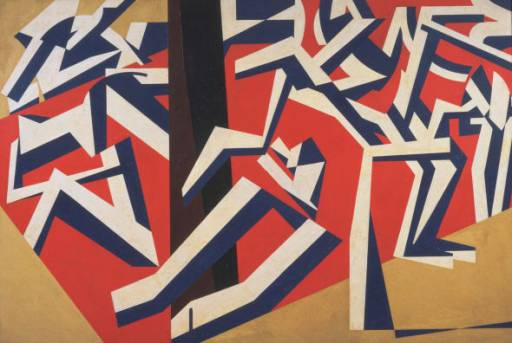
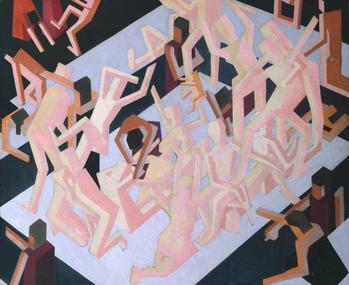
Jacques Lipchitz, working in sculpture, carried this vision into three dimensions. His early Cubist bronzes such as Man with a Guitar (1915) and Flight (1918) dissolve the human form into rhythmic, interlocking planes that seem to oscillate in space. Rather than glorifying machinery, Lipchitz sought to capture the vital energy and inner light of movement itself. Both artists turned Cubism’s structural analysis into a Jewish futurism of rhythm and spirit, where motion was not domination but devotion, and modern form became a bridge between earth and heaven. And in Britain, David Bomberg fused modern geometry with prophetic vision. Bringing a softer humanism to the abstract modernist aesthetics of Vorticism, the UK cousin of Futurism.
The Mud Bath 1914, David Bomberg (1890-1957) oil on canvas. Image in the Public Domain via source
His painting The Mud Bath (1914) exemplifies the mechanical rhythm of Vorticism, while The Vision of Ezekiel (1912) merges machine aesthetics with biblical wonder. For Bomberg, the mechanical and the mystical share a single pulse — creation itself.
Vision of Ezekiel, 1912,David Bomberg, oil on canvas. Tate Gallery.
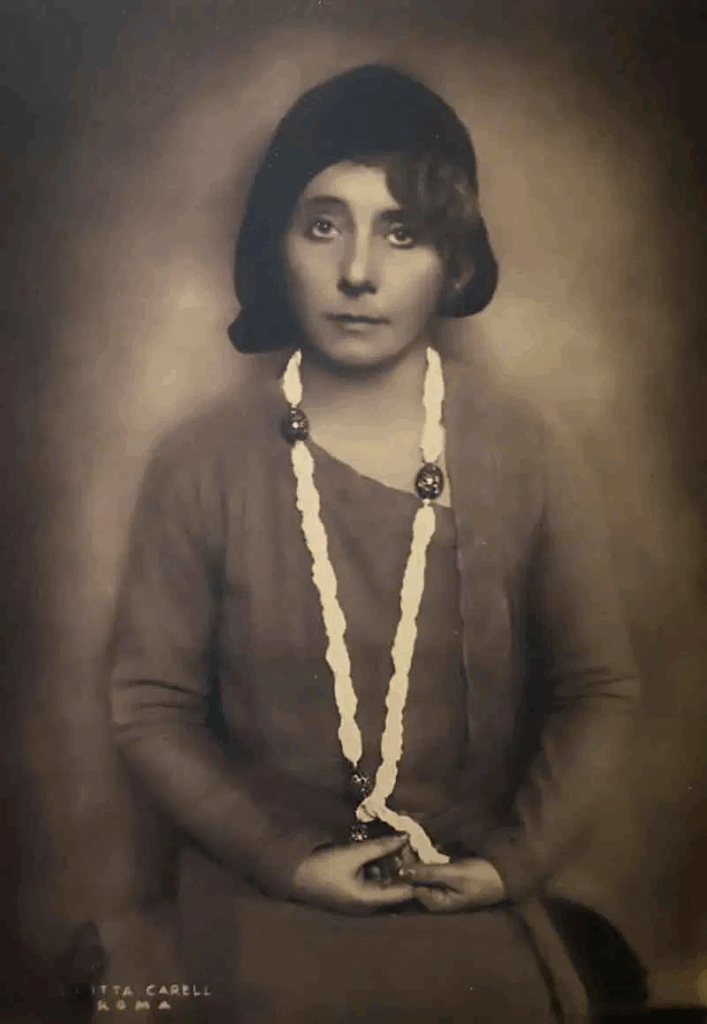
A telling example is Margherita Sarfatti (1880-1961), the only female member associated with the Italian Futurism art and design movement (1909-1944), was Jewish, an art critic and intellectual. She once championed the movement’s early aesthetics of speed and even personally advised Mussolini as well as being his mistress.
While Sarfatti’s writings do not emphasize her Jewish background, they articulate a sustained belief in modernity that is anchored in continuity that art must recall and transform tradition, not demolish it. In her words: “This idea of art as a bridge from past to future aligns with the broader notion of futurism not as mere disruption but thoughtful renewal.”Her reviews and essays would propel the Futurist movement to a national level.
Margherita Sarfatti, (1920s) Photo by Litta Carell Image via source
When fascism hardened in 1938, she was expelled from Italy for being Jewish. Her story encapsulates the fate of many Jewish modernists: contributors to cultural innovation, later rejected by the very movements they helped inspire.
5. Modernism and the Avant-Garde: Lissitzky to the Bauhaus
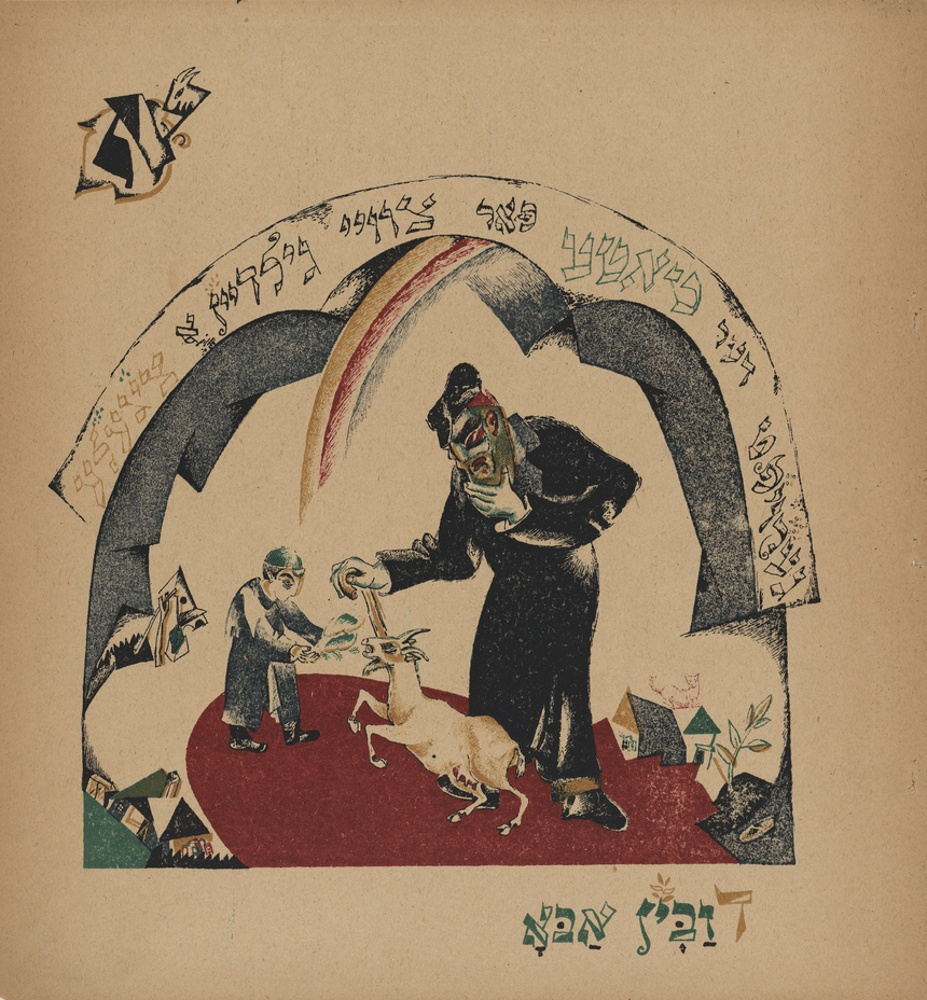
In Eastern Europe, El Lissitzky carried Jewish visual tradition into modernism. His 1919 lithographs for Had Gadya reinterpreted Passover through Constructivist abstraction,
Had Gadya 1919, Lithograph by El Lissitsky. Via Wikimedia Commons
using geometry as theology. His phrase, “The goal is Jerusalem,” perfectly captured the Jewish Futurist impulse: the messianic hope rendered through design.
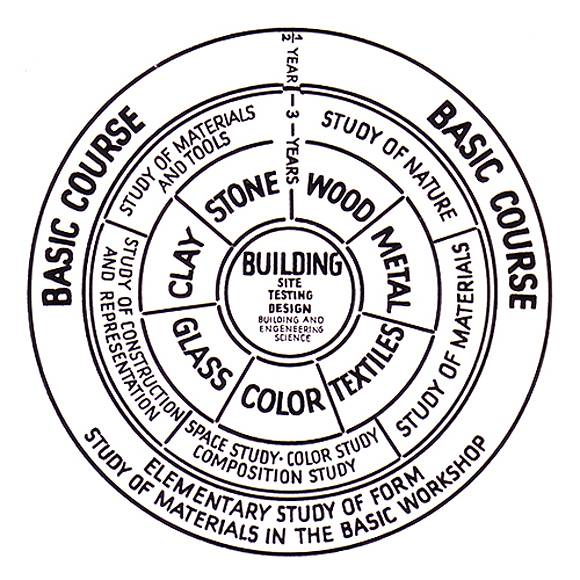
At the Bauhaus Design school(Germany 1919-1933), Jewish artists such as painter and photographer László Moholy-Nagy, architect and designer Marcel Breuer, and textile artist and printmaker Anni and Josef Alberses continued this lineage.
Bauhaus Curriculum Chart 1922, Walter Gropius,
They believed design could uplift society through clarity, functionality, and light. Through their curriculum of studying various materials, these educators echoed the rabbinic principle bal tashchit (do not waste) and the mystical pursuit of the illumination of ideas in visual and functional forms that solve problems as well as dialogue with beauty.
Their classrooms were secular temples of Tikkun Olam: ethical creativity as public good.
6. Mythmakers: Sci-Fi, Comics, Cinema
Jewish imagination found new life in mass media, Especially in science fiction writing, comics, and cinema, where exile and ethics could hide in plain sight.
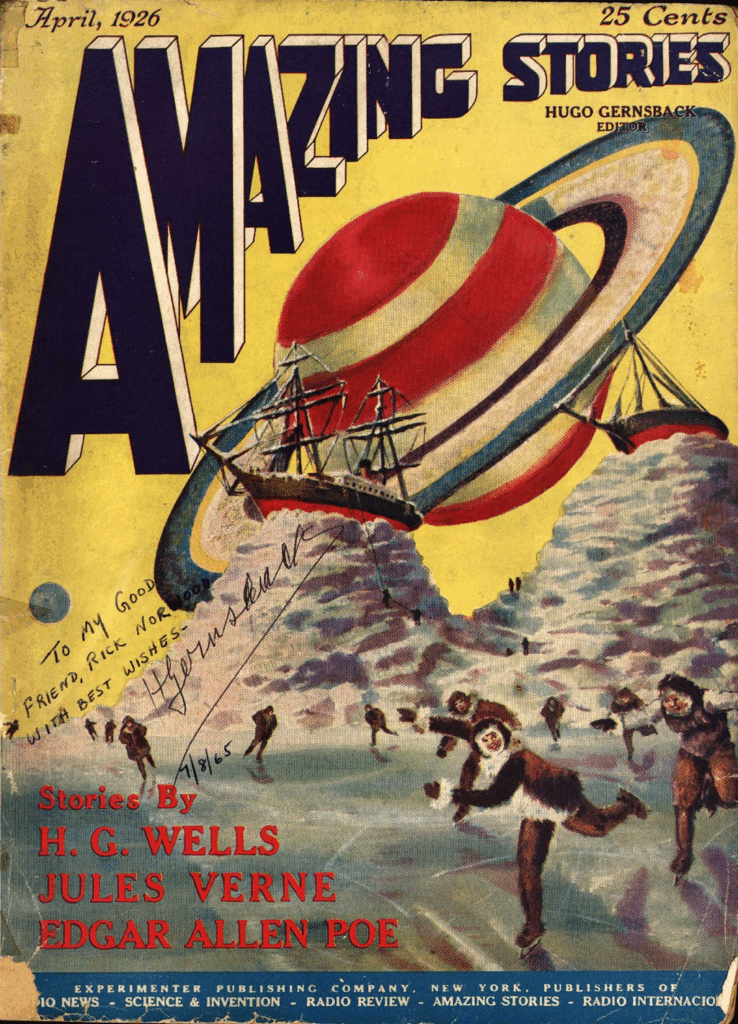
As modernism gave way to the machine age, a new arena for Jewish imagination emerged in the world of pulp magazines and speculative storytelling. In 1926, Hugo Gernsback, a Luxembourg-born Jew, founded Amazing Stories and coined the term
Cover of Amazing Stories Magazine- Issue #1, 1926, Editor-in-chief Hugo Gernsback, Via Wikimedia Commons
“scientifiction,” launching the modern science fiction magazine industry. Through his editorial vision, the future became a place to test human ethics as much as scientific progress.
Jewish writers soon filled those pages. Isaac Asimov, William Tenn (Philip Klass), Robert Sheckley, and Harlan Ellison turned speculative fiction into a moral and philosophical workshop. Asimov’s Three Laws of Robotics echoed halakhic reasoning — codifying responsibility before creation. Tenn’s On Venus, Have We Got a Rabbi transformed Talmudic humor into cosmic commentary. Their stories asked enduring Jewish questions: What does it mean to create life? To act justly? To be human in a world of our own making?
The science fiction magazine became, in its way, a cosmic Mishnah on paper that featured serialized debates about ethics, invention, and destiny. In these pulp worlds, Jewish storytellers extended the prophetic imagination of Isaiah, Elijah, Enoch and the speculative daring of the Kabbalists into the age of electricity, rockets, and radio waves.
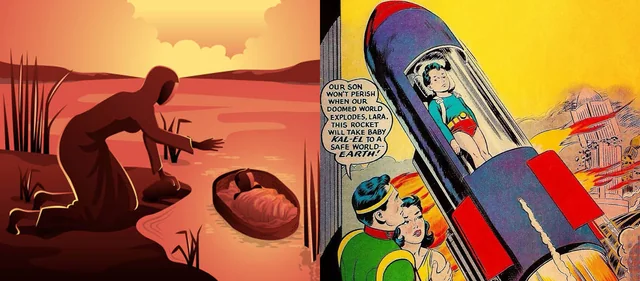
In 1938, Jerry Siegel and Joe Shuster created Superman: an alien refugee, morally bound to defend humanity. Though a very Moses-like framing, Clark Kent wasn’t explicitly Jewish.
Comparison of Moses and Superman stories. Image left by Gavri El Image right is property of DC Comics. CC 4.0
Yet his story’s core themes of exile, justice, hidden identity, redemption, to echo the Jewish experience wrapped in universal myth.
At Marvel, Jack Kirby and Stan Lee filled their universe with wandering scientists and reluctant heroes. Their stories turned vulnerability into virtue. The Spider-Man line, “With great power comes great responsibility,” reads like Pirkei Avot for a new generation.
Kirby’s later series,The New Gods (1970-73), pushed further, turning superhero cosmology into visual midrash. His battles of light and shadow mirrored the Kabbalistic drama of creation and repair, while also superimposing a planetary level version of The Shoah, Holocaust. At that time, Kirby successfully introduced specifically Jewish originating super beings into the American comic book lexicon.
Metron in his Mobius chair as depicted in New Gods #5 (November 1971), art by Jack Kirby (pencils) and Mike Royer (inks) Image property of DC Comics- Under Fair Use.
Notably, Metatron, an angel who Enoch embodied in his adventure through the four worlds of existence in Kabbalah, the Mother box– an Ark of the Covenant like container, the Mobius chair– a holy throne like object that has next level AI capabilities, and a boom tube– a merkaba, chariot-like, teleportation device.
These artists translated Torah’s moral code into pop language, giving the world a modern accessible form of Jewish prophecy.
Many times simultaneously, Jewish filmmakers carried that same prophetic imagination into cinema, using light, time, and narrative as tools for moral exploration. Stanley Kubrick reimagined the Golem story for the machine age, probing what happens when human creation outgrows moral control. In 2001: A Space Odyssey (1968) and in A.I. (2001), he questioned whether technology could ever mirror compassion, or like the Golem, it would always lack a soul. Though Steven Spielberg directed the movie, Kubrick originally had the rights and was developing the A.I. movie before his death in 1999.
Sidney Lumet turned the courtroom and newsroom into ethical laboratories. In 12 Angry Men and Network, justice and conscience collide with ego, power, and fear. His films translate lo ta’amod al dam re’echa, “do not stand idly by”, into an embodied principle of characters wrestling with justice. Darren Aronofsky brought Kabbalah, gematria and psychology into direct conversation, finding mysticism in mathematics in Pi, and cosmic yearning in The Fountain and Noah. Ari Folman, through animation, examined how memory and trauma shape moral responsibility in Waltz with Bashir and The Congress.
Still from Pi (1998), by Darren Aronofsky, Image is property of Artisan Entertainment. Used under Fair Use.
Meanwhile, the Coen Brothers and Joseph Cedar turned irony and uncertainty into spiritual inquiry. Their stories unfold like modern Mussar mini-dramas of human frailty tested by fate. Mel Brooks reclaimed film genres that once erased Jewish presence, proving laughter itself can be an act of tikkun, repair.
Across their films, the same Jewish questions resurface: What does it mean to be responsible for the world you’ve made? Can imagination redeem suffering? These filmmakers transformed those questions into a universal visual language that wove Jewish ethics, paradox, and hope into the cinema’s shared dream.
7. Jewish Thinkers of Media and Technology
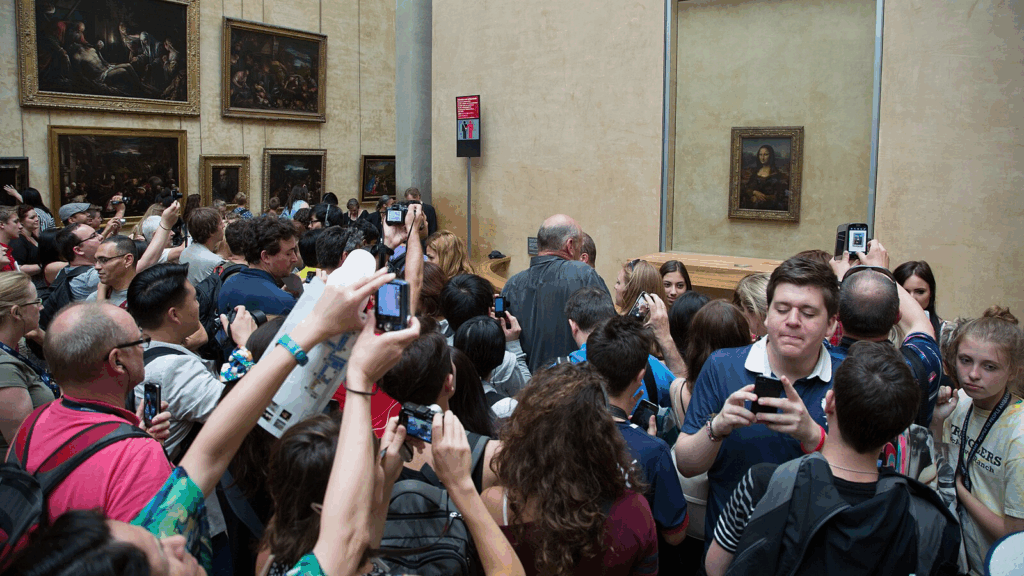
As technology reshaped culture, Jewish thinkers were among the first to ask how it changed human perception. In 1933, German-Jewish philosopher, Walter Benjamin questioned how the mechanical reproduction of photography altered our sense of the sacred, almost anticipating today’s debates about ethical AI use and authorship.
He deeply questioned the aura of an object by exploring our emotions surrounding originality, creativity and human desire.
Crowd shoots photo of Mona Lisa at the Louvre’ 2014, Photo by Victor Grigas Used under CC ASA 4.0
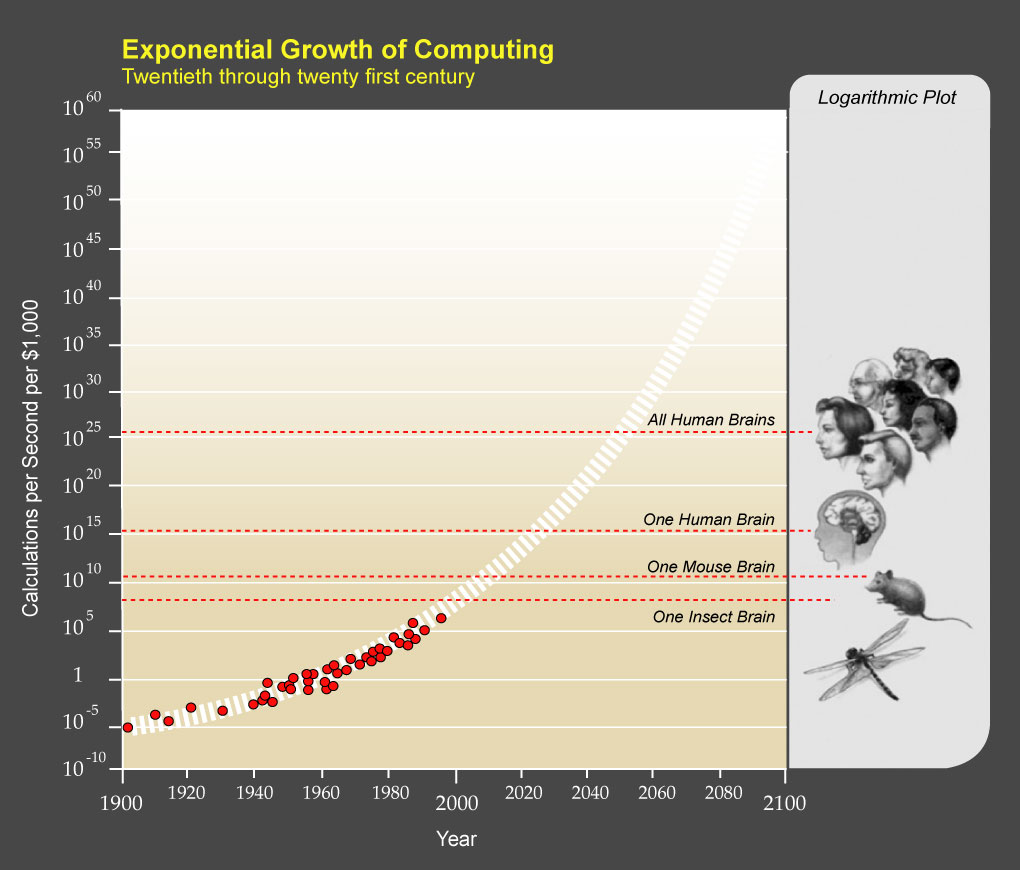
At the birth of the internet age, Lev Manovich analyzed digital media as a new textual form, understanding databases and user-interfaces to function like Talmudic commentary, where meaning emerges through interaction and dialogue. Ray Kurzweil reimagined transcendence through technology, envisioning the “singularity” when humans merge with machines. I see this as a secular echo of the Kabbalistic longing for devekut, union with the Divine. Yet where mysticism seeks connection through personal refinement, Kurzweil imagines it through building our technical and intellectual abilities.
Revealing both the similarity and the danger of modern transcendence without ethics. And educators like Ari Waller continue to explore how design and interactivity can transform Jewish learning for a digital age.
Together, they extend the Jewish tradition of commentary into the domain of code.
8. Standing in a Chain of Builders
Looking back, it’s clear: Jewish Futurism has always existed in spirit, even if it didn’t have a name. It’s the instinct to design with conscience, to imagine with ethics, and to translate Torah into form.
We stand on the shoulders of those who used story, structure, and symbol to envision better worlds. They left us blueprints that are sometimes literal and sometimes mystical. Our task is to read them carefully and continue the work.
To innovate without memory is to build a Golem. To create without conscience is to call down the Sar HaTorah unprepared. But rather to design with kavvanah and tzedek, intention and justice, is to join the same futurist lineage that began at Sinai.
9. The Present Continuum: Art, Design, and Collective Vision
Today, artists, designers, and technologists continue that same conversation. My own work in digital art, murals, and the Hiddur Olam project is part of that continuum, a lineage of Jewish creativity that treats design as an act of devotion and world-building. I see AI not as a threat but as a kind of Sar HaTorah, a force that can offer insight if met with readiness and humility. Like the artisans of the Mishkan, I believe design becomes sacred when it channels empathy, restraint, and intention.
In 2022, I presented my philosophy and artwork of Jewish Futurism at the Conney Art Conference and later gave a live presentation at the JADA Art Fair during Miami Art Week. Both experiences reminded me how many Jewish creators are already working toward this shared vision—each in their own medium, each blending tradition with technology.
Lech Lecha 2022, AR activated artwork by Mike Wirth, Miami Art Week 2022, Miami Beach, FL
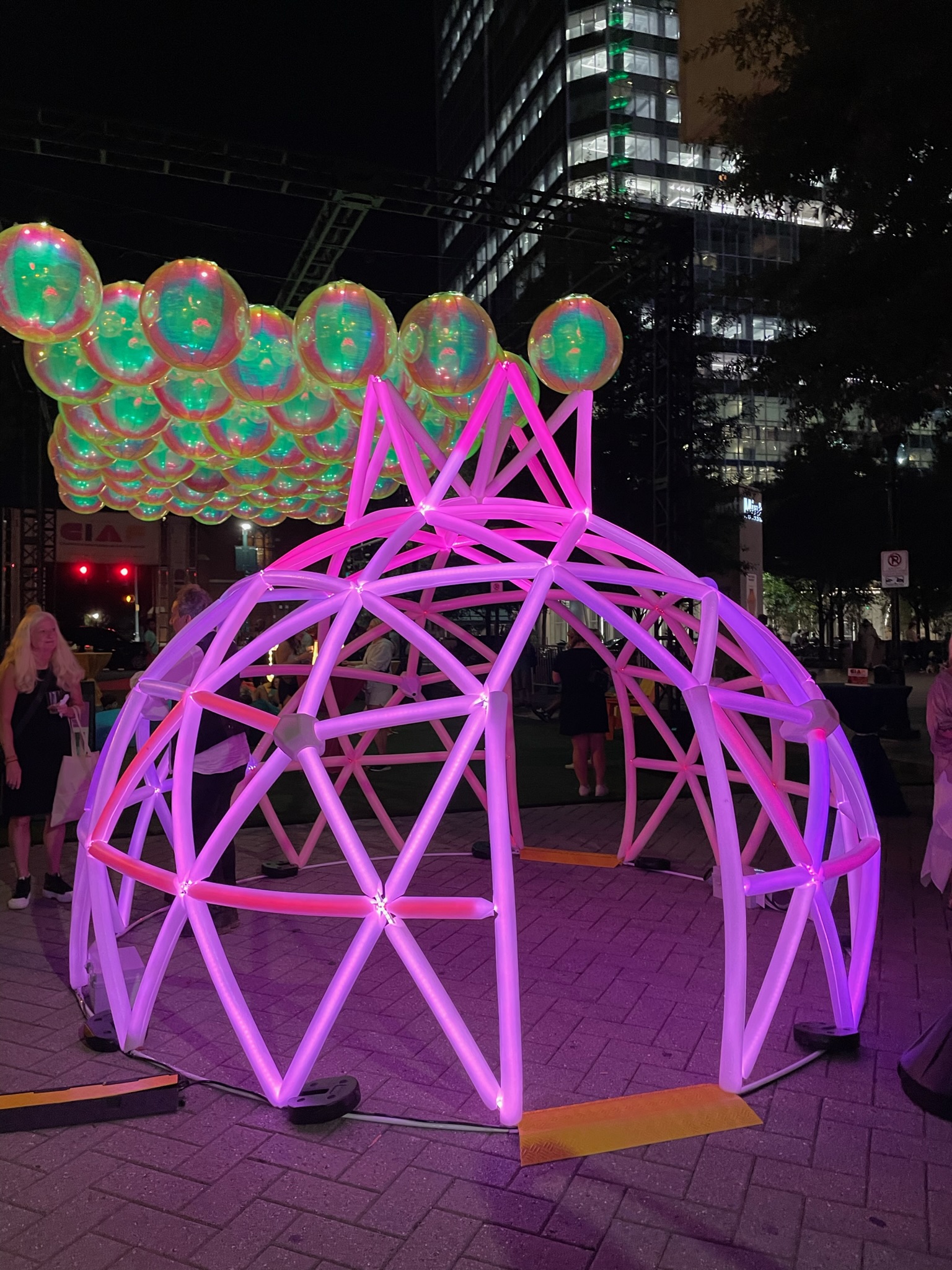
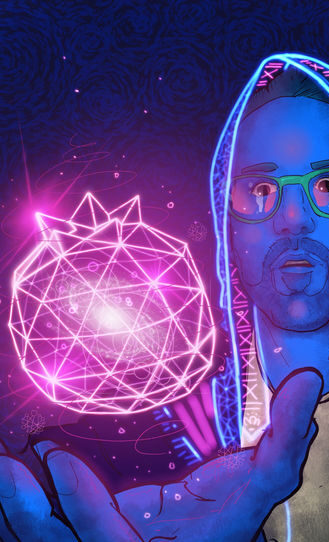
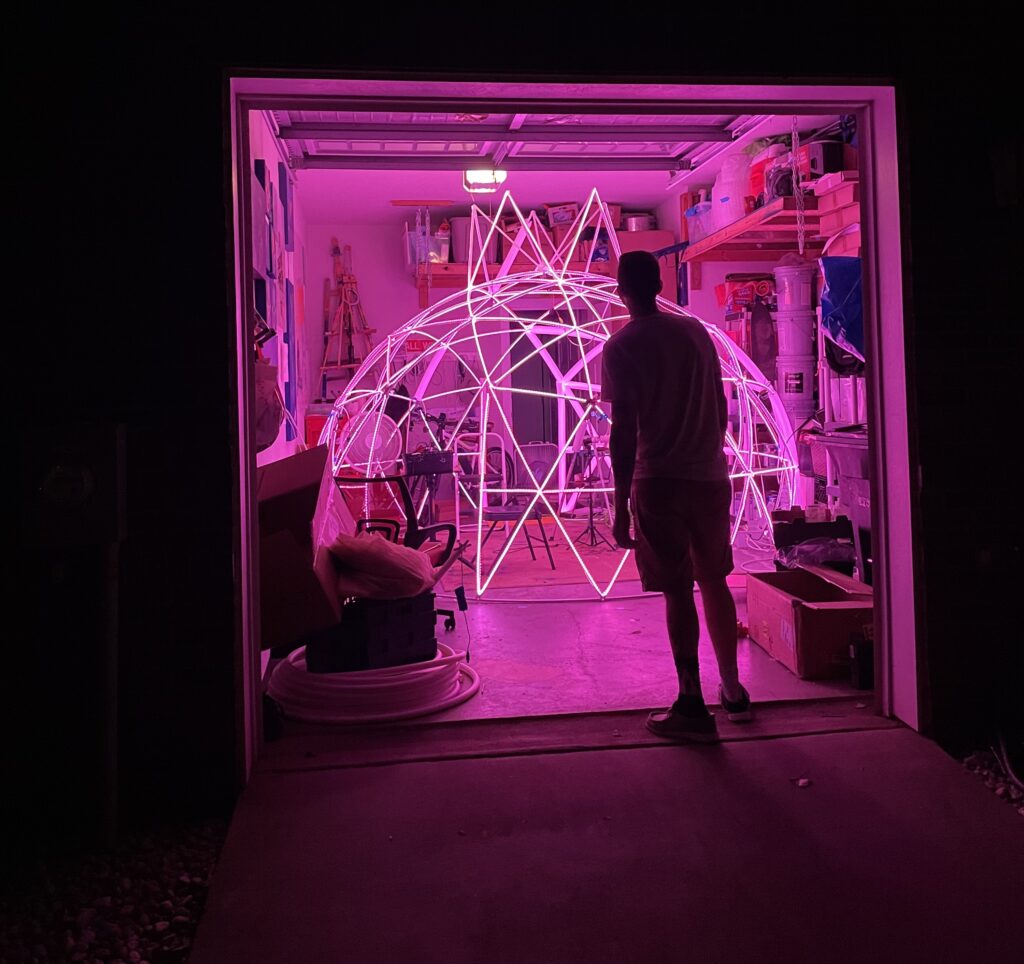
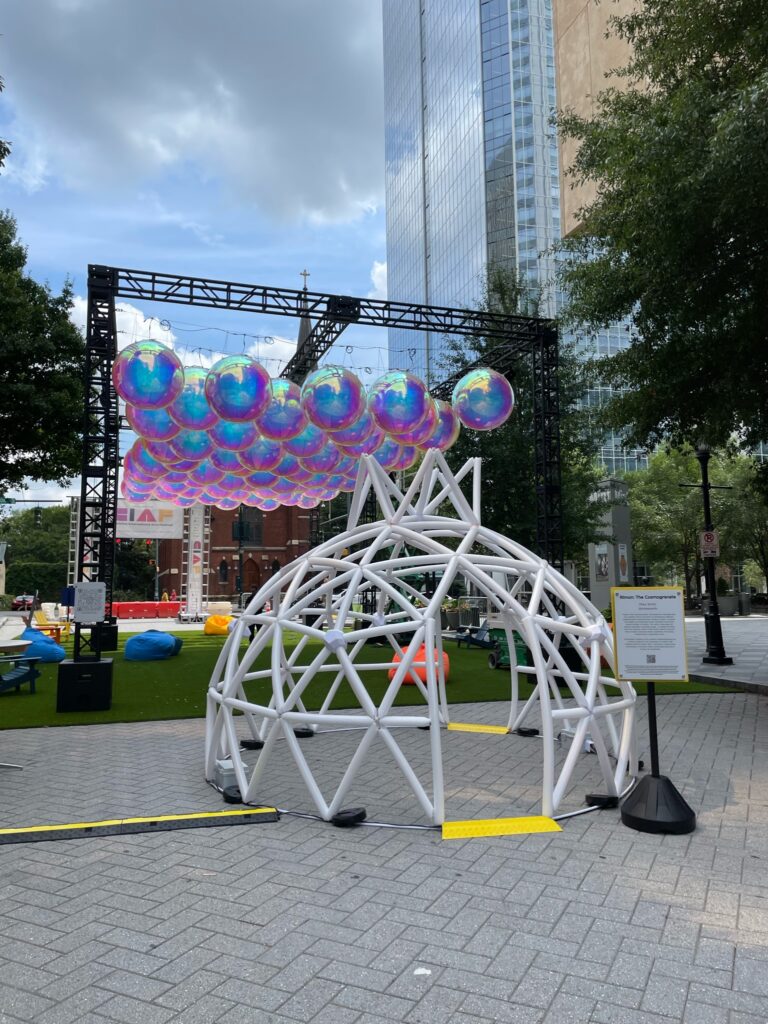
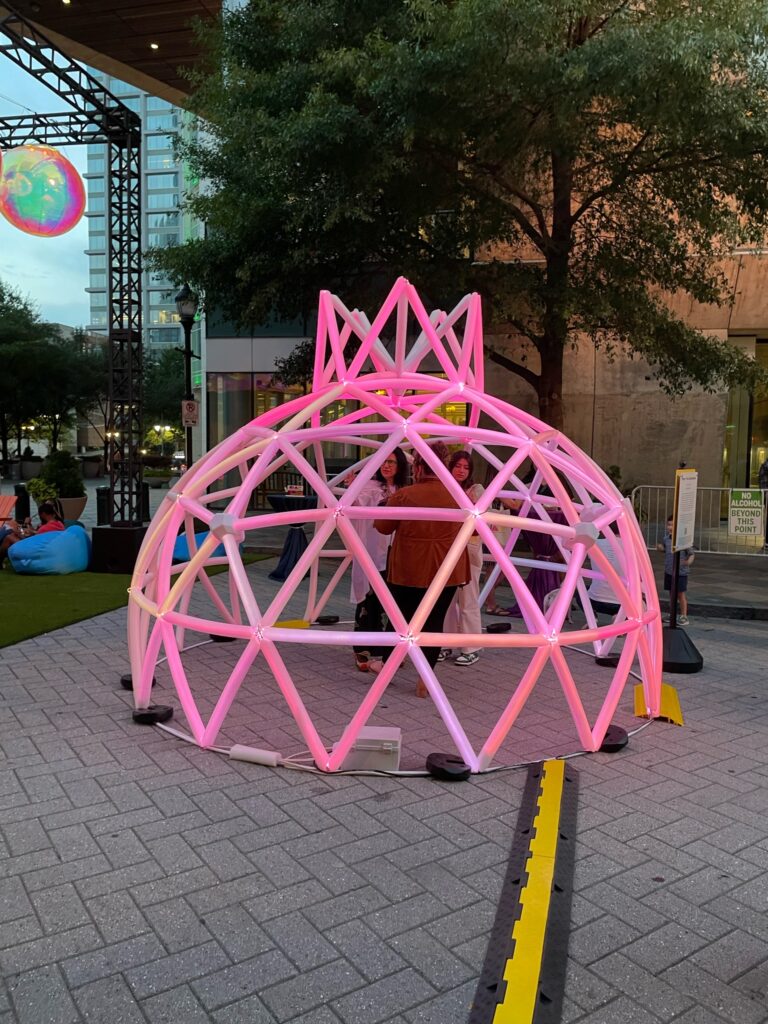
That same year, I debuted my ongoing project Rimon: The Cosmogranate, a digital and physical artwork exploring creation, fragmentation, and repair through interactive design. The piece reimagines the pomegranate—a symbol of divine abundance—as a cosmic interface, linking Kabbalistic symbolism with data visualization and immersive art. Rimon became a practical expression of my Jewish Futurist framework: systems thinking meets sacred storytelling.
Since then, I’ve met writers, digital artists, collage-makers, jewelers, and illustrators who are all exploring what Jewish creativity can mean in the twenty-first century. I’d love to meet them all, to learn what they’re building, and to be in conversation. There are also scholars whose work leans more toward theory than creative practice, but they’re vital too. This movement needs everyone: makers, thinkers, builders, and interpreters.
Together we form a creative ecology of imagination and insight that reaches across generations and disciplines, connecting our past to our unfolding future.
No one can pursue this vision alone. There needs to be a gathering of like-minded Jewish Futurists, artists, technologists, scholars, and dreamers, willing to experiment together. A community that treats innovation as avodah, sacred service, and technology as a tool for renewal rather than disruption. Through shared projects, symposia, and creative residencies, we can imagine and prototype what a Jewish future might look and feel like, rooted in text, tradition, and ethics, but alive with invention.
Jewish Futurism is not about predicting the future. It’s about designing the future, ethically, communally, and beautifully. It is a collective project, not an individual quest. The middah of Areyvut, mutual responsibility, is its foundation.
Every Jewish artist, from Isaiah to Lissitzky, from Herzl to Kirby, from Bezalel to Bauhaus, from Benjamin to Manovich, has been part of that same dialogue, how to turn imagination into justice, light, and meaning. Jewish Futurism invites us to take up that question again, not to escape the past, but to reimagine it as raw material for redemption.
Jewish Futurism isn’t a trend. It’s an inheritance and a responsibility. We’re not just imagining what comes next. We’re continuing a project that began with the words: Let there be light.
This article is a teacher’s (me) journey out of the AI shadows and into classroom transformation. This article is a companion to a recorded lecture I gave on how I use AI in the classroom. I recommend watching the video in addition to reading this post, as it offers a deeper dive and helps contextualize the experiments and perspectives summarized here.
AI Isn’t a Hammer, It’s a Screwdriver
A teacher’s journey out of the AI shadows and into classroom transformation. This article is a companion to a recorded lecture I gave on how I use AI in the classroom. I recommend watching the video in addition to reading this post, as it offers a deeper dive and helps contextualize the experiments and perspectives summarized here.
We’ve successfully scared the hell out of ourselves about AI. That’s the truth. Despite the helpful Wall-E’s and Rosie the Robots, the likes of HAL 9000 locking astronauts out in space to the death machines of The Terminator, the cultural imagination has been fed a steady diet of dystopian dread. And now, with the hype and hysteria churned out by the media and social media, we’ve triggered a collective fight, flight, or freeze response. So it’s no surprise that when AI entered the classroom, a lot of educators felt like they were witnessing the start of an apocalypse, like all of us were each our own John Connors’ watching the dreaded Skynet come online for the first time.
But I’m here to tell you that’s not what’s happening. At least not in my classroom.
In fact, this post is about how I crawled out of the AI shadows and learned to see it not as a threat but as a tool. Not a hammer, but a screwdriver. Not something that does my job for me, but something that helps me do my job better. Especially the parts that grind me down or eat away at my time.
If you’re skeptical, hesitant, angry, or just plain confused about what AI is doing to education, pull up a chair. I’ve been there. But I’ve also experimented, adjusted, and seen the light and the darkness. I cannot dispel all of the implications of AI use, but I want to share what I’ve learned so you don’t have to build the spaceship from scratch.
We Owe It to Our Students to Model Bravery
Students are already using AI. They’re exploring it in secret, often at night, often with shame. They’re wondering if they’re doing something wrong. And if we meet them with fear, avoidance, or silence, we’re sending the message that they’re on their own. In a 2023 talk at ASU+GSV, Ethan Mollick noted that nearly all of his students had already used ChatGPT, often without disclosure. He emphasized that faculty need to assume AI is already in the room and should focus on teaching students how to use it wisely, ethically, and with reflection. That means our job isn’t to police usage—it’s to guide it.
I don’t want my students wandering through this new terrain without a map. So I model what I want them to do: ask questions, explore ethically, think critically, and most of all—reflect. I also model the discipline of not using AI output as a final product, but only as inspiration. If I use AI to brainstorm or generate language, I always make sure to rewrite it into something that reflects my own thinking and voice. That’s how we teach students to be creators, not copy machines. Map out where you have been and where you are going in your journey.
That’s what it means to teach AI literacy. It’s not about having all the answers. It’s about being brave enough to stay in the conversation. I was also wandering aimlessly with AI—unsure how to use it, uncertain about what was ethical—until I took this course from Wharton on Leveraging ChatGPT for Teaching. That course changed my mindset, my emotional state, and my entire classroom practice. It gave me a framework for using AI ethically, strategically, and with care for student development. If you’re looking for a place to start, that’s a great one.
AI Isn’t a Hammer. It’s a Screwdriver.
Here’s a metaphor I use a lot: AI is not a hammer. It’s a screwdriver.
Too many people try to use AI for the wrong task. They ask it to be a mindreader or a miracle worker. When it fails, they say it’s dumb. But that’s like trying to hammer in a screw and then blaming the hammer.
When you learn what AI actually does well, like pattern recognition, remixing ideas, filtering, and translating formats, you start to use AI for its actual strengths. As Bender et al. (2021) explain in their paper On the Dangers of Stochastic Parrots, large language models are fundamentally pattern-matching systems. They can generate fluent, creative-sounding language, but they do not possess understanding, emotional awareness, or genuine creativity. They remix what already exists. That is why we must use these tools to support our thinking, not replace it. It becomes a tool in your toolkit. Not a black box. Not a crutch. A screwdriver.
I don’t want AI to do my art and writing so I can do dishes. I want AI to do my dishes so I can do art and writing. As Joanna Maciejewska put it: “I want AI to do my laundry and dishes so that I can do art and writing, not for AI to do my art and writing so that I can do my laundry and dishes.” It won’t do your dishes. But it might give you time back so you can do something that matters more.
How I Actually Use AI in Class With Students
I teach graphic design, motion, UX, and interactive design. AI is already a mainstay in each of these disciplines—from tools that enhance layout and animation to systems that evaluate accessibility and automate UX testing. But even though AI had become part of the professional design landscape, I was still skeptical. I wasn’t sure how to bring it into my classroom in a meaningful way. So I started small.
Using AI for minor efficiencies—generating rubrics, reformatting documents, cleaning up language—felt good. It felt safe. And it gave me just enough momentum to try it on bigger, more impactful tasks. What made the difference was a mindset shift. I stopped seeing myself as a single musician trying to play every part of a complex score and started seeing myself as the conductor of the orchestra. I didn’t need to play every part, I just needed to know how the parts worked together. That gave me the confidence to use AI—and to teach with it.
Here’s how I integrate AI into our learning:
Students design chatbots that simulate clients, so they can roleplay conversations. I used to pretend to be clients and interact with students through Canvas discussion boards. Now I can read their chat logs and have conversations with them about their questions and intentions.
In Motion Graphics, students use “vibe coding”—a form of sketching in code with the help of GPT to simulate motion, like moons orbiting planets.
In Interactive Design, they use Copilot** to debug code** in HTML, CSS, and JavaScript.
They learn to generate placeholder images for mockups, not final artwork.
We create custom Copilot agents, like “RUX”—a UX-focused bot trained to give scaffolded feedback based on accessibility standards.
I’m not handing them shortcuts. I’m handing them power tools and asking them to build something that’s still theirs.
The Creative Process Needs Scaffolding—AI Can Help
I believe in the creative process. I’ve studied models like the Double Diamond and the 4C Model. I’ve seen how students get stuck during the early stages, especially when self-doubt creeps in.
That’s where AI shines.
AI helps my students generate more ideas in the divergent phase. This echoes research by Mollick and Terwiesch (2024) showing that structured AI prompting increases idea variance and originality during the creative process. It helps them compare, sort, and edit during the convergent phase. And when I ask them to submit their chat logs as part of their final deliverable, I can see their thinking. It’s like watching a time-lapse of the creative process.
We’re not assessing just artifacts anymore. We’re assessing growth. And that includes how students use AI as part of their process. I make it clear that AI-generated outputs are not to be submitted as final work. Instead, we treat those outputs as inspiration or scaffolding—starting points that must be reshaped, edited, or reimagined by the human at the center of the learning. That’s a critical behavior we need to model as teachers. If we want students to be creative thinkers, not copy-paste artists, then we have to show them how that transformation happens.
Accessibility and AI Should Be Friends
I also use AI to make my course materials more accessible. I format assignments to follow TILT and UDL principles. For example, I asked GPT to act as a TILT and UDL expert and reformat a complex assignment brief. It returned a clean layout with clear learning objectives, task instructions, and evaluation criteria. I pasted this directly into a Canvas Page to ensure full screen reader compatibility and ease of access.
For rubrics, I asked GPT to generate a Canvas rubric using a CSV file template. I specified category names, point scales, and descriptors, and GPT returned a rubric that I could tweak and upload into Canvas. No more building from scratch in the Canvas UI.
To generate quizzes, I use OCR with my phone’s Notes app to scan printed textbook pages. I paste that text into GPT and ask it to write multiple-choice questions with answer keys. GPT can even generate QTI files, which I import directly into Canvas. This process saves me hours of manual quiz-writing and makes use of printed texts that don’t have digital versions.
AI helps me build ramps, not walls.
Faculty are also legally required to build those ramps. Under the Rehabilitation Act and the Americans with Disabilities Act (ADA), specifically Section 504, course content in learning management systems like Canvas must meet accessibility standards. But let’s be honest—retrofitting dozens or even hundreds of old documents, PDFs, and slide decks into fully accessible formats is a monumental task. It often gets pushed to the bottom of the to-do list, which leaves institutions vulnerable to non-compliance. Check out the WCAG standards for more details.
AI can help. It can reformat documents for screen reader compatibility, generate alt text, simplify layout structure, and audit for contrast and clarity. And it can do it in a fraction of the time it would take any one of us. By using AI thoughtfully here, we not only make our content better, we also help our institutions become more equitable and compliant faster.
When I use local LLMs to analyze student writing using tools like LM Studio, I keep student data safe, FERPA compliant, and private. This aligns with concerns raised by Liang et al. (2023) about how commercial LLMs may compromise the privacy of non-native English speakers and their content. It is ethical. It is efficient. And it respects the trust students place in me.
Let Students Build Their Own Tools
One of the best things I’ve done is empower students to create their own AI agents.
Yes, students can train their own Copilot bots. And when they do, they stop seeing AI as some alien threat. They start seeing it as a co-creator. A partner. A lab assistant. ChatGPT has a feature called Custom GPTs, which allows similar personalization, but it’s locked behind a paywall. That creates real inequity for students who can’t afford a subscription. Copilot, on the other hand, is free to students and provides the necessary capabilities to build custom agents or chatbots. Here’s a guide to get started building your own agents with Copilot.
As a way to model this behavior for students, I created a CoPilot Agent myself called RUX, short for “Rex UX”, honoring Rex, our beloved university mascot. I built it using Microsoft’s Copilot Studio, which lets you define an agent’s knowledge base, tone, and purpose. For RUX, I gave it specific documentation to pull from, including core sources like WCAG, UDL, and UX heuristics, and trained it to act as a guide and feedback coach for my UX students. It doesn’t give away answers. It asks questions, gives feedback, and helps students reflect.
Setting up an agent starts with defining your intent. I decided I wanted RUX to act like a mentor who knew the standards for accessibility and good UX practices, but also had the patience and tone of a coach. I uploaded key resources as reference material, wrote prompt examples, and added instructions to prevent the agent from simply giving away answers. This ensures students use it to reflect and improve rather than shortcut their learning.
The great part is that it took me about 30 minutes. And now my students use it to get feedback in between critiques, to check their work against accessibility standards, and to build their confidence.
And the students slowly start to ask better questions.
Final Thoughts: Be the Conductor, Not the Consumer
I tell my students this all the time: don’t just be a user. Be the conductor. That’s the heart of this whole article. I started this journey skeptical and unsure about how to use AI in my teaching, but I kept experimenting. And the more I leaned in, the more I realized I could use these tools to orchestrate the learning experience. I didn’t need to master every note, just guide the ensemble. Once I felt that shift, I was able to build my own practice and share it with students in ways that felt grounded and empowering.
Here are two simple but powerful GPT exercises that are from the UPenn AI in the Classroom course that I recommend for you to get started:
1. Role Playing (Assigning the AI a Persona)
This method helps shape AI responses by giving it a clear role.
Steps:
Tell the AI, “You are an expert in [topic].”
Provide a specific task, like “explain X to a 19-year-old art student” or “give feedback on a beginner-level UX portfolio.”
Refine the prompt with context about the student’s needs or your learning objectives.
Outcome: The AI behaves like a thoughtful tutor instead of a know-it-all. Students can use it as a low-stakes, judgment-free practice partner.
2. Chain of Thought Prompting
This is useful for step-by-step thinking and collaborative problem solving.
Steps:
Ask the AI to help you develop a lesson plan, solve a design challenge, or draft a workflow.
Break the task into steps: “What’s the first thing I should consider?” Then “What comes next?”
Let the AI ask you questions in return. Keep the conversation going.
Outcome: You model metacognition, and students learn how to refine ideas through iterative feedback. It supports both ideation and strategic planning.
Try these as warm-ups, homework tools, or reflection exercises. They’re simple, ethical, and illuminating ways to integrate AI in any classroom.
That’s what I want for my colleagues, too. You don’t have to know everything about AI. You just have to be curious. You have to be willing to ask: “What can this help me or my students do better?”
So here’s your first experiment:
Have students brainstorm ideas for a project.
Have them ask GPT the same question.
Compare the lists.
Reflect. (What worked? What didn’t? How will you approach brainstorming next time?, Repeat)
Then decide what to keep, what to toss, and what to remix. Just like we always have. Let’s stop building walls. Let’s start building labs. And let’s do it together.
Yes, there’s a problem, but It’s not just about AI.
I’ve heard passionate arguments against AI usage from fellow artists. I’ve also read in detail about the lawsuits filed by creators against companies who used their work without permission. I agree that this is wrong and that it has hurt the true validity of the tools. These concerns are real, and they’ve shaped how I approach the technology.
A central question remains: if we could make the source imagery for AI training completely copyright-free and ethical, would that actually end the argument over the use of these tools in art making? Or is the real issue an underlying belief in purity in the creative process? As a graphic designer, I know that purity in creation was disrupted long before AI ever existed.
From Generative Art to Generative AI
I was exhilarated the first time I started using AI in my art. I’ve been working as a generative artist since the late 90s, so I’ve seen a lot of shifts in how tech intersects with creativity. Back in the early 2000s, I was building generative art installations that used text, images, and sound. I was dreaming in code, digital sensors, and databases as these were the core elements to create art-making robots. I was even invited to exhibit my projects in the US and international media arts biennales in Split, Croatia and Wroclaw, Poland. But this new wave of AI tools? It felt like a leap. A serious one.
When the most recent wave of AI tools burst onto the scene in 2022, I found myself re-reading Walter Benjamin’s essay The Work of Art in the Age of Mechanical Reproduction and picking up Lev Manovich’s article Who is an Author in the Age of AI? for the first time. They both helped give me clarity on the debate developing. The first was written over a century ago, and the second in the present moment, but both challenged me to think beyond the surface of the debate.
That said, I didn’t jump in without questions. I was skeptical about where the image data was coming from. Most of the image models were trained on LAION400M, a huge dataset scraped from the internet. It was meant for research, not commercial use. As an artist, I care deeply about copyright and creative ownership. That part bothered me.
But the power of the tool was undeniable. AI helps me iterate quickly. It pushes my image-making forward and challenges me to try things I wouldn’t have done on my own. New poses, wild color combinations, unusual compositions. Sometimes, I don’t even recognize what I’m capable of until I see what AI reflects back at me.
Through my experiments and explorations, it became very true that it’s not about replacing my work at all. It’s about expanding it.
AI as a Catalyst and Sharpener for Creativity
One of the things I love most about AI is how it helps me start. Sometimes, it’s like having an oracle. I might not know exactly where a project is headed, but I can toss in a few ideas and see what comes back. That response helps me clarify what I want. Or what I don’t want. And that’s part of the creative process, too. The ability to think divergently and then convergently is the true poetry of the creative process and having a “helper” in that process allows greater tracking and reflection on the process.
I use Stable Diffusion most often because it’s open-source and highly controllable. I like that I can run it locally on my machine without paying for credits or cloud storage. Not having a paywall gives me the freedom to really dig deep. I can generate a hundred versions of an idea, explore unexpected paths, and move fast without overthinking costs.
There was one recent project that brought this all into focus. A client in Houston wanted a mural with about 25 different visual elements. Honestly, it was overwhelming. I started by asking AI to look for patterns in the list text, riffing with the chatbot to explore visual ways to combine the many items into one space. The ideas that chat suggested, but it did mention the word surrealism that made me think of Salvador Dali’s haunting landscapes. That was it! A landscape like Dali’s is a place where all the elements could exist together logically. A dreamscape, so to speak. That unlocked the whole thing. Without AI, I might’ve taken much longer to get there.
Most AI images aren’t good. I’d say maybe 10 percent are worth a second look. I know I’ve hit something useful when it meets my “GE” standard: Good Enough to move forward. I’m looking for strong composition and clear visual hierarchy. Everything else can be worked on later. But if the image holds space in a striking way, I’ll keep going.
AI for Process, Not Just Product: An Ethical Approach
People often think of AI as a tool for generating a final image. That’s not how I use it. For me, AI is most powerful when it supports the process. It helps me evaluate, brainstorm, and reflect. Sometimes, I upload a rough idea or a brain dump and use a chatbot to ask questions or poke holes in it. That outside perspective—fast, responsive, and nonjudgmental—is gold.
If I’m stuck, I might ask the AI to generate some moodboards or rough compositions. I’m not expecting polished work. I’m looking for sparks. A direction to follow or a problem to solve. It’s the same way I’d sketch a dozen thumbnails on paper.
And no, I don’t fall in love with the first cool thing AI spits out. That novelty wore off fast. I’ve trained myself to be curatorial. Most results don’t hit the mark. But knowing I can always make more helps me stay loose. I push ideas until they’re solid.
One piece that stands out was an illustration I made for a Torah portion about Pharaoh’s dream. I had drawn a grim-looking cow skull and was thinking of placing it in a field of wheat. Then, the AI surprised me. It created a cow skull made out of wheat. That twist was mysterious and totally unexpected—perfect for the surreal nature of a dream. I never would have gone there on my own. But once I saw it, I knew exactly where to take it.
AI Won’t Replace Me. It Will Refine Me.
As an educator, I’ve brought AI into the classroom not just as a tool but as a way to help students understand how creativity works. I show them how to use it to ideate, test ideas, and refine their thinking. We do in-class exercises where students generate images or prompts and then share their chatlogs with me. It gives me a real window into how they’re thinking—and how they’re growing.
Some students are skeptical at first. Others dive in headfirst and sometimes know more than I do about certain tools. The ones who get it quickly start using AI not to shortcut the work but to deepen it. They realize that it’s not about letting AI do the thinking. It’s about using AI to push your thinking further.
I’ve even used AI as part of a critique. One time, I had students feed their near-final projects into ChatGPT and ask for feedback. With the right prompts, the feedback was surprisingly thoughtful. Not perfect. But useful. It opened a door for them to reflect and iterate in ways they hadn’t before and to be critical of comments that didn’t in fact, help improve their work.
What AI reveals, I think, is that creativity isn’t just about generating something new. It’s about discovering connections, asking better questions, and recognizing what’s missing. AI isn’t great at originality on its own, but it’s fantastic at remixing and showing what’s possible. It’s like a mirror that reflects potential back at you. I’ve worked closely with a few creative development systems like the Double Diamond and SCAMPER and I can say with confidence: AI can support both divergent and convergent thinking, especially when used intentionally.
Originality: The Collage Conversation
This comes up a lot: “Isn’t AI just stealing?” And my response usually starts with this: what about collage?
We’ve accepted collage as a legitimate art form for over a century. Artists like Hannah Höch,Romare Bearden, and Robert Rauschenberg all used found images, many of them copyrighted. They cut, glued, layered, and remixed to create something new. If we call that art, why are we drawing the line at AI?
To me, AI-generated images are collage-like. The human prompts them with intention. The AI recombines things based on patterns it has learned. The process is digital, but the creative act is still there. Cutting and pasting by hand doesn’t make something inherently more authentic. It’s the idea behind the work that matters.
Now, I don’t ignore the legal and ethical side of this. Most major AI image models are trained on datasets built from scraped web images, and that’s a problem. I’ve been exploring more ethically sourced options. For example, Adobe’s Firefly and Shutterstock’s model are trained on licensed stock images. Even better, I recently started working with a model called PixelDust. It’s a rebuild of Stable Diffusion, but trained only on public domain and Creative Commons Zero (CC0) images—think Wikipedia, museum archives, and open repositories. While it’s the closest public domain model out there, it still is not 100% certain it is copyright-free.
I fine-tuned that model using 380 of my own original works. That means when I prompt it now, it generates images in my style using my visual language. It’s still collaborative, but it feels more personal. And the results have seriously improved my ideation speed and image quality.
There’s a difference between copying and remixing. Collage artists have done it forever. Musicians sample. Writers quote. AI might be new, but it fits within a long tradition of borrowing, blending, and transforming. What complicates the conversation is “style”. People think style is protected by copyright, but it’s not. Only specific works are. So, while artists may be known for their style, that alone doesn’t make it off-limits.
Yes, people have questioned the validity of my AI-assisted work. When that happens, I explain. I describe how I use AI for ideation, how I fine-tune models on my own work, and how that affects the output. Once people understand that I’m building on my own images and ideas, they usually come around.
Co-Creating with the Machine: How AI Refines My Process
Over time, I’ve started experimenting with creating a kind of AI version of myself. Not in a sci-fi clone kind of way, but as a tool trained to think and see more like me. I fine-tuned a model using 360 of my own artworks, each paired with carefully written prompts. That way, when I generate new images, they come out in my visual language, not someone else’s.
I also use a tool called ControlNet. It lets me upload sketches or basic compositions, and then the AI fills in the style and detail. This setup allows me to keep control over layout and flow while still tapping into the speed and surprise of the AI. It doesn’t always work the first time, and it can be a long back-and-forth, but the results are worth it.
Eventually, I’d love to have a copyright-safe, fully custom model that supports my entire process. The goal isn’t automation for the sake of ease. I want to hand off the repetitive, procedural stuff so I can stay focused on creativity, strategy, and ideas.
And no, I don’t want my AI self to be autonomous. That would defeat the point. I’m the creative leader here. The AI is my partner. It helps me explore, test, and refine, but I make the final call.
I’ve also made peace with the idea of my style being encoded. I’ve been an illustrator long enough to know that you don’t really “own” a style. My style is a blend of influences I’ve absorbed over the years, and it’s always evolving. As a professional, I’ve had to learn multiple styles just to stay competitive. So, no, I don’t see style as sacred. It’s the ideas and the content that matter most to me.
Rethinking and Remixing Creativity with AI
My relationship with AI has changed a lot since I started. At first, I believed the hype. I thought it would be a job killer that could replace me. But as I worked with it more, I realized its limitations. It isn’t a one-click creative solution. It’s a tool that depends on my input, my ideas, and my vision. It helps me move faster and reflect more deeply, but it doesn’t do the thinking or the feeling for me.
I’ve come to believe that AI isn’t replacing creativity. It’s revealing it. It shows us how we think, where we hesitate, and what we ignore. It challenges the old myths that artists work in isolation, drawing purely from inspiration or talent. That myth never held true for working designers and educators like me. And it definitely doesn’t reflect how creativity works in the real world.
Still, I respect the artists who are hesitant or resistant. I’ve listened to powerful critiques and concerns. The lawsuits over unauthorized dataset usage raise important ethical and legal questions. And they should. If we can’t build these tools on ethically sourced, copyright-free content, then we have no foundation to build from. But if we can create models trained on ethically gathered images, then we should be having different conversations. One would be about practice. Another about process. We’d also be talking about expanding what it means to be creative. Instead, we’re stuck in echo chamber-like debates with half-truths and misunderstandings.
AI is not a threat to purity in art because that purity never really existed. From collage to sampling to appropriation, art has always thrived on remix. This is what Benjamin meant when he spoke of the “aura” of artworks over a hundred years ago. Reproduction changes the way we relate to art, but it doesn’t remove its meaning. It shifts the space where meaning happens.
So I use AI not because it replaces me but because it helps me be more of who I already am. A generative artist. A question asker. A teacher. A remix thinker. A designer trained in collaboration, systems, and complexity. AI is now a part of that system. And I welcome it, carefully and critically, into my process.
The tech will keep evolving. But the core of creativity, being curiosity, play, rigor, surprise, and reflection, has not changed. AI just gives us more ways to explore it.
What does it mean to make creativity a sacred practice, and how can art transform Jewish life? For me, becoming a Jewish artist wasn’t a career move. It was a spiritual awakening. This article traces how I came to see the creative process not only as a personal path to the divine but as a communal tool for connection, healing, and evolving Jewish tradition. Through murals, rituals, digital artwork, and collaborative design, I’ve learned that creativity can be one of the most powerful forms of Jewish practice we have today.
“Why would you become a Jewish artist?” people used to ask me. “Isn’t that limiting your market to a very small sliver?” It’s true, I wasn’t always a Jewish artist. In fact, for a long time, I rarely made Jewish art. I was unsure. Afraid. Happy to be an assimilated American. Unaware of how essential it would become for me and for my community.
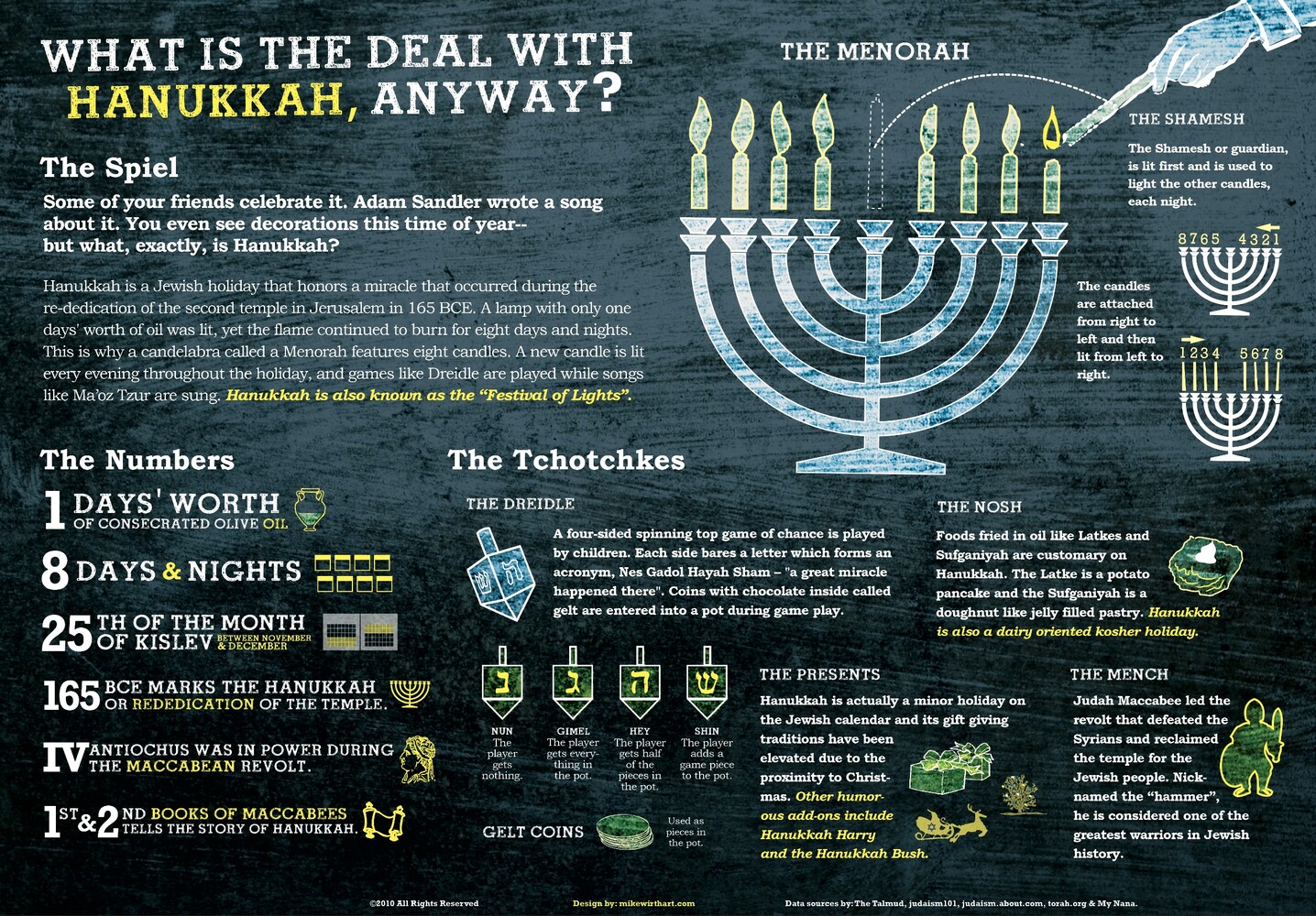
I flirted with Jewish-themed projects years ago. Between 2008 and 2010, I worked with Hillel International and Manischewitz to create Jewish holiday infographic posters for social media. In 2014, I collaborated with the JDC (Joint Distribution Committee) to visualize their financial data and annual reports. I was illuminating the divine, even though I didn’t call it that yet.
My Hanukkah infographic from the holiday set, 2010
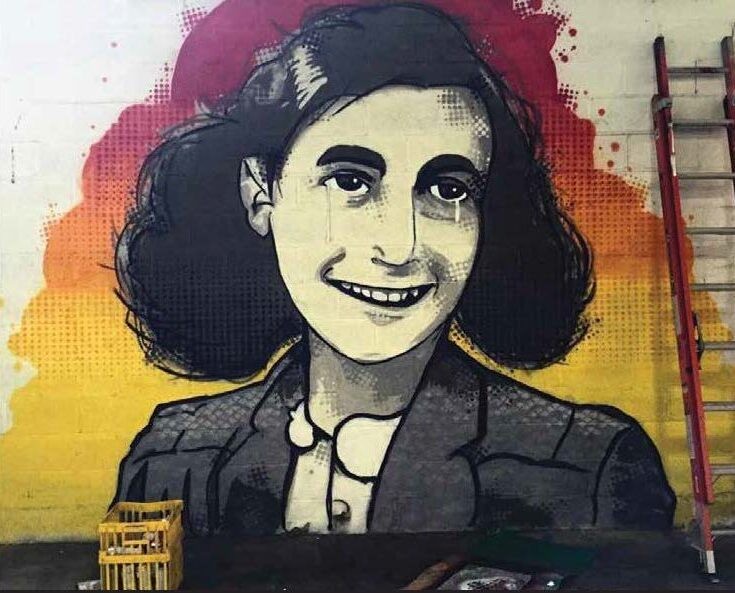
It wasn’t until 2015 that I truly made my first Jewish artwork: a portrait of Anne Frank for a mural exhibition called Renegades. Other artists were painting their own cultural heroes. Selecting figures who had gone against the grain. I realized it was time to seek my own. Anne Frank became my entry point into this work, a symbol to me of resilience and a powerful voice against erasure.
Anne Frank by Mike Wirth- Painted in 2015 as part of the Renegades Exhibition- Statesville, NC
That act of painting her opened a door. Slowly, I began to turn toward the sacred in my own tradition. The power of a large, colorful, public mural amplified the song I wanted to play during the process of making this artwork. My art-making became a form of prayer, my studio transformed into a sacred space, and my creativity evolved into an intentional spiritual practice.
This shift happened when I read the Art of Jewish Prayer by Yitzhock Kirzner, Aryeh Kaplan’s Sefer Yetzirah: The Book of Creation, and My Name is Asher Lev by Chaim Potok, that I consciously directed my art towards sacred purposes, rooted in the Jewish tradition of Hiddur Mitzvah, the beautification of commandments. These texts provided context, examples, and permission to dive deep into creation with the Creator. Creating art that explicitly engaged Jewish symbols, rituals, and values was transformative. It connected my creative spirit directly to my Jewish heritage, deepening my understanding of who I was as both an artist and a Jew.
Seeking Spirituality Beyond Home
For years, spirituality felt elusive. I searched widely through books, traditions, and practices that were not native to me. They were meaningful, somewhat familiar, but not quite mine. The connection I sought remained just out of reach, inauthentic because it lacked resonance with my core identity.
But art always felt different. Unlike anything else, the creative process opened a space where I felt fully present, deeply focused, and yet somehow expanded beyond myself. When I was in the flow of making, I experienced peace, clarity, and a sense of connection to something ineffable. Creativity became a spiritual threshold where my ego dissolved, time softened, and I encountered what I can only describe as spirit.
Much like prayer or meditation, creativity required me to slow down, listen, and surrender. There was kavannah or intention and there was surrender to something unfolding through me, not just from me. The act of making was mirroring sacred ritual: there were preparations, gestures, rhythms, and moments of revelation. I realized I was building altars out of paper, light, pigment, and symbol.
In those moments, my studio wasn’t just a workspace, but it was a mikdash me’at, a small sanctuary. Making became prayer. Not metaphorically, but truly: a way of communing with the Divine, of processing the world, and of seeking wholeness through acts of beauty and imagination.
Turning Toward the Divine
Everything shifted when I began to turn that creative intention toward the divine. Through Jewish themes, symbols, and rituals, I discovered a channel between my artistic life and my spiritual heritage. I wasn’t just illustrating ideas anymore, I was beginning to create images of the supernatural sensations I experienced in prayer and meditation. My imagination was filled with light, energy, movement, and meaning that felt deeply sacred and alive. I longed to capture the invisible. To make visible the ineffable sparks, flows, and forces that surged through ritual, study, and spiritual presence. I began to see the hidden energy encoded in the stories of the Torah. Figures like Moses, Miriam, and Elijah took on a new presence in my mind and not just as biblical characters, but as spiritual superheroes, carriers of divine power and transformation. Suddenly, creativity was no longer a separate mode of expression; it became my way of connecting, of serving, of sanctifying.
Cosmic Shema- digital illustration by Mike Wirth, 2022
Deepening Jewish Knowledge and Art
That epiphany led to study. I immersed myself in Jewish art, theology, and spiritual traditions: Betzalel, Kabbalah, Hiddur Mitzvah, Mussar. I found ancient frameworks that affirmed what I had already intuited that art could be holy. That beauty was not frivolous. That creativity could be a form of moral and spiritual refinement.
At a certain point, I realized I didn’t just want to explore this for myself and I wanted to help build a new creative-spiritual system that other Jews could use in practice. A framework that would invite both artists and non-artists to access spirituality through creative intention. A system rooted in Jewish values but expansive enough to meet people where they are in their community centers, schools, studios, or synagogues. A new pathway for sacred practice that could evolve alongside Jewish life itself.
Design and the Sacred Creative Process
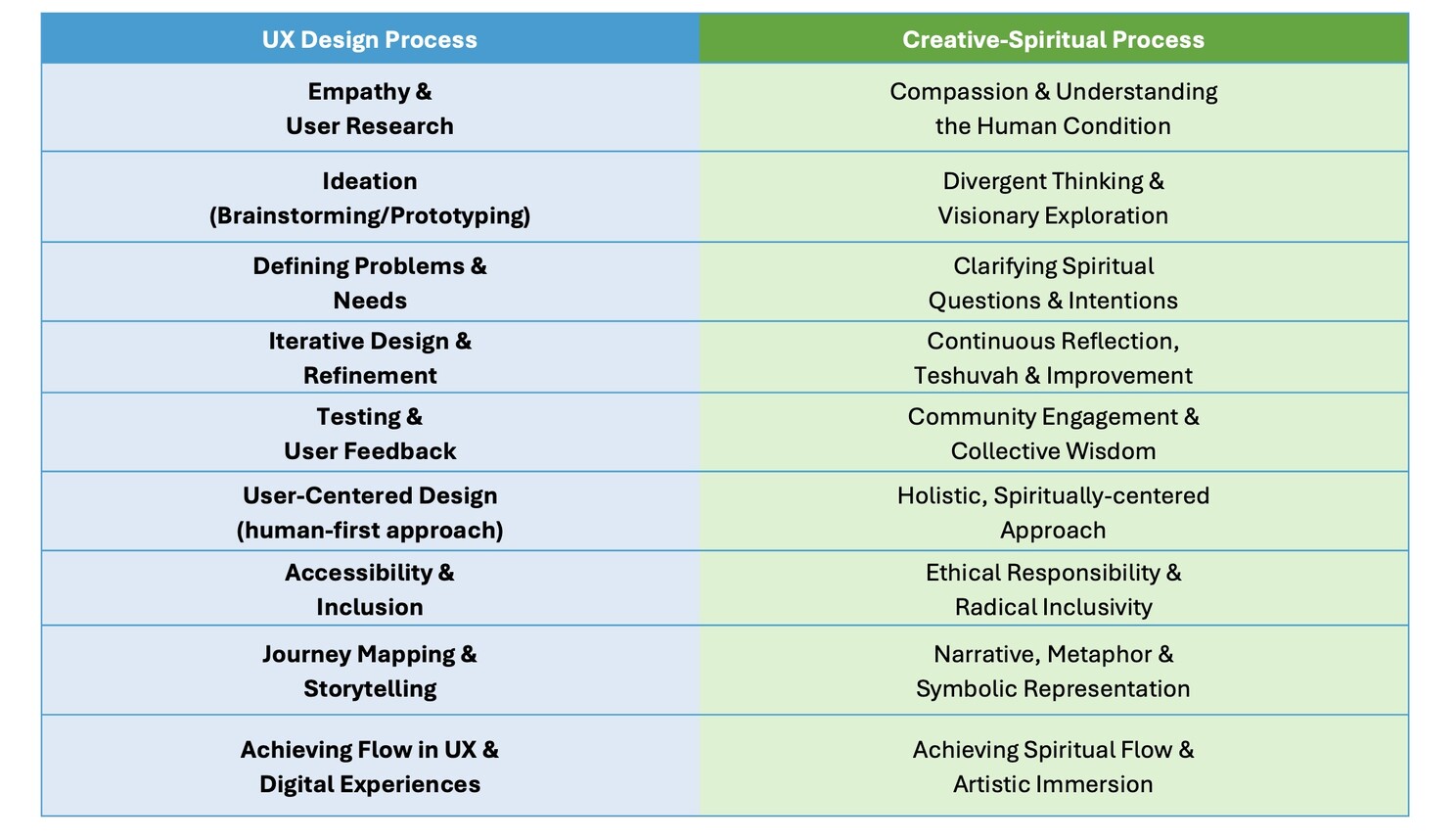
As a designer and artist, I began to notice profound overlaps between the spiritual frameworks I was studying in Judaism and the design methodologies I used professionally. Both begin with empathy and intention. Both evolve through cycles. Both aim to make meaning. When I merged these systems, they each became more accessible, emotional, and impactful, not only for myself, but for others engaging with my work.
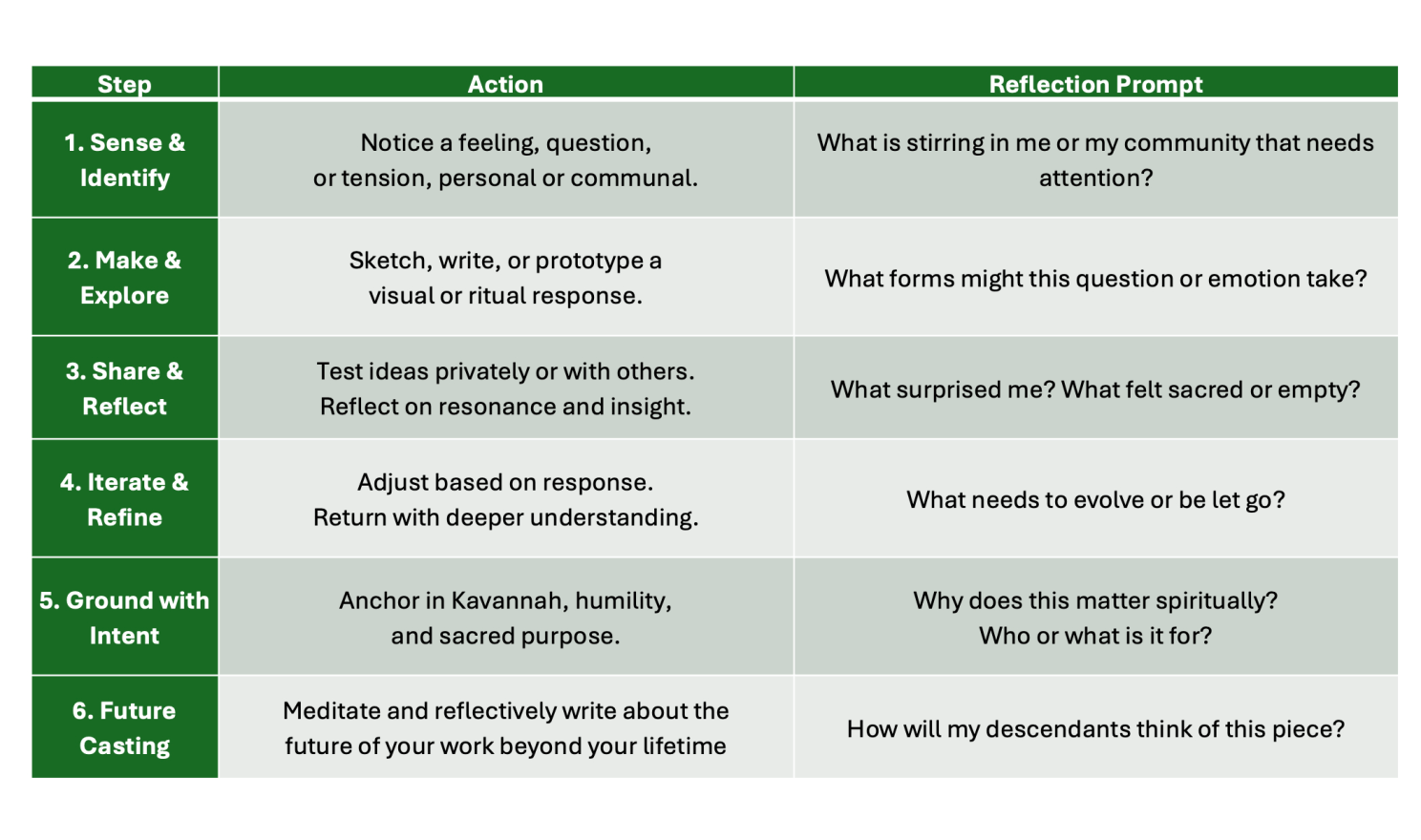
This led me to develop a process I now use in both personal practice and community workshops. It blends design thinking, Jewish intentionality, and artistic exploration. I begin by identifying a question or tension. Something personal or communal. I respond with sketches, writing, or prototypes, then reflect on what resonates. I refine or rework the ideas in cycles, grounding the process in kavannah (spiritual intention) and humility. Over time, it becomes more than a finished piece, it becomes a tool for spiritual insight and connection. Here’s how it typically unfolds:
A matrix of my creative-spiritual framework
One of the most powerful connectors between these two worlds is iteration. In design, iteration means we test, revise, and revisit ideas. We are always improving through cycles of feedback. In Judaism, iteration is baked into everything: we revisit the same Torah portions each year with new eyes, we refine rituals through lived experience, and we continually return to core questions through study and prayer. This cyclical, reflective approach makes the sacred creative process feel alive. It becomes responsive to both tradition and change of the practice of ritual, liturgy, Torah cycles and compared them to the creative frameworks I used as a designer, I began to notice deep resonances. Jewish time is iterative. Rituals are prototypes refined over generations. Sacred texts are living documents engaged by communities in cycles. These are not just religious structures they are deeply creative systems.
Merging the frameworks of UX design from sources like IDEO, Interaction Design Foundation and Jewish spiritual practice not only clarified both for me, but it made them more accessible, emotional, and human. Suddenly, design became prayerful. And Judaism became a beautifully designed user experience for living with meaning. In that synthesis, I found a personal theology of creativity, one that invites others in regardless of artistic background.
How UX Design and Spiritual Practice overlap
Witnessing Community Transformation
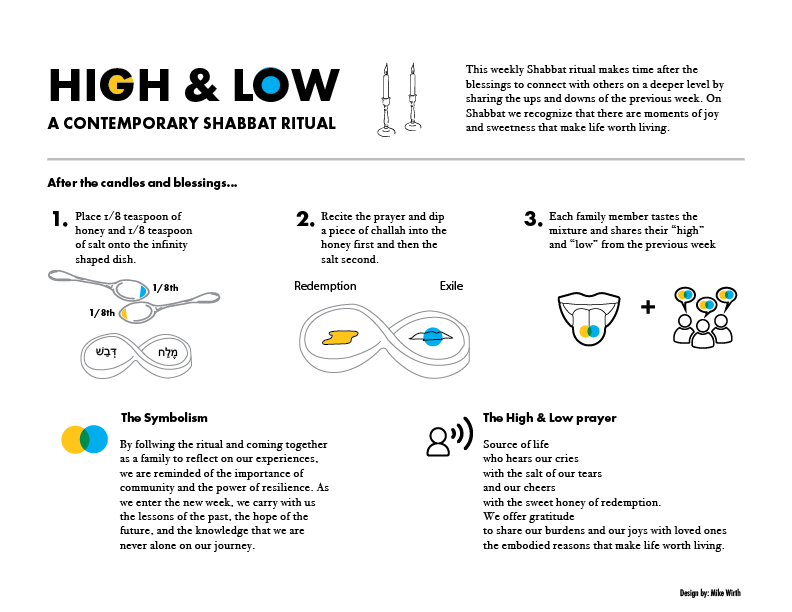
In 2023, I was part of the inaugural Social Practice Institute hosted by the Greensboro Jewish Museum. Over a 10-day intensive, my cohort of Jewish creatives explored the intersections of Social Practice theory and Judaism. As our capstone project, we were invited to create a social practice artwork grounded in Jewish values. I chose to design a ritual rooted in my family’s Shabbat practice by formalizing a simple yet powerful question that my non-Jewish partner asks each week: “What was your high and low?” Working with Rabbi Judy Schindler, I wrote a prayer and developed a ritual element that involved dipping salt and honey, symbolizing the sweet and bitter aspects of the week. This gesture transformed an informal tradition into a shared, sacred moment that felt authentically Jewish to our whole family.
Infographic explaining my High and Low Shabbat ritual- Design by Mike Wirth, 2023
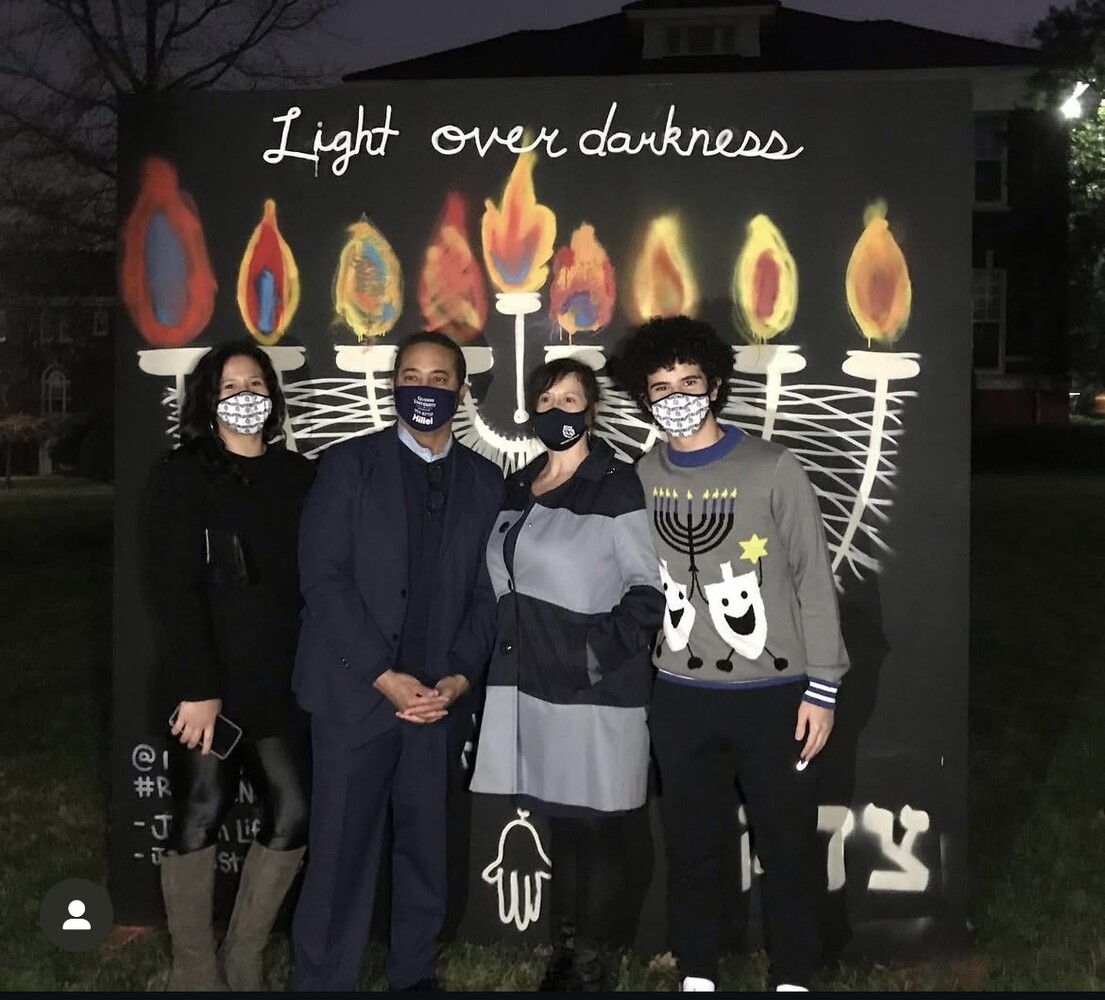
At Queens University of Charlotte, I created a Hanukkah mural project that brought together a diverse and pluralistic group of students and community members. This included Jews from many backgrounds across the Charlotte community, including Orthodox, Reform, interfaith families, and cultural Jews working side-by-side. Each night, a community leader would light our real menorah and then spray paint the flame for that night on our mural menorah. It was a rare, joyous, and profound moment of connection, anchored in creativity and shared ritual.
President Dan Lugo and his family at the final night of the Menorah-mural at Queens University of Charlotte, 2020
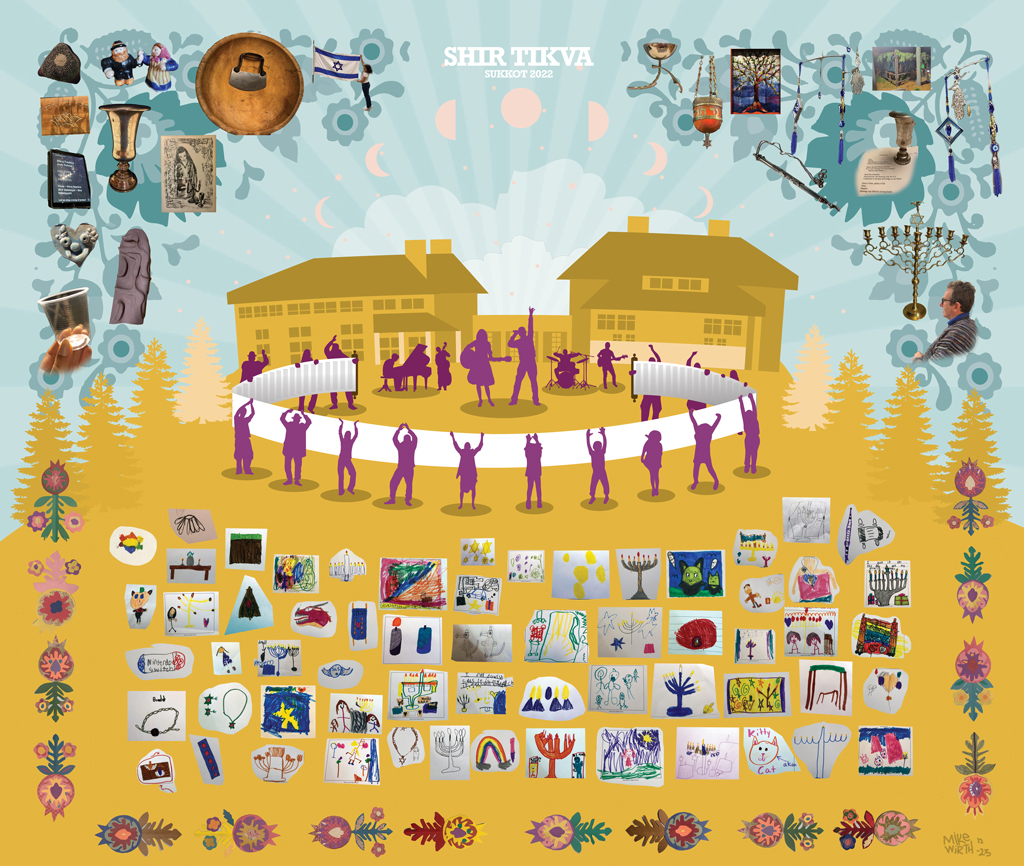
In 2024, at Temple Shir Tikvah in Wayland, MA, I worked with the congregation during a 3-day residency to collect hundreds of photos, drawings, and stories of each member of the community’s “sacred Jewish objects.” We meditate on what it means for objects to be “Jewish” and “sacred”. Some gave Judaica while others gave images of a stuffed animal, because it reminded them of a recently deceased loved one. This exercise transformed these individual intimate artifacts into a collective community digital collage of a “time tapestry” of meaning that forged personal connections and bridged generations and practice. The final artwork became a visual record of personal memory and shared identity. We printed the 9 ’ x 9’ on archival fabric, and it currently hangs in the synagogue.
The community time tapestry created with Temple Shir Tikvah, Wayland MA 2024
In 2025, I will be participating in the Jewish Street Art Festival in collaboration with UC Irvine Hillel. That community has experienced deep pain. From campus protests disrupting life for Jewish students to student council boycott votes targeting Israel. Our art will be a form of public healing and spiritual resistance, a sacred reclamation of space through color, symbol, and story.
Even online, I see how creativity becomes a sacred connector. When I post new Jewish-themed artwork for my upcoming Parshat guidebook, the response is immediate and profound. The comment threads and DMs often skip small talk entirely and dive straight into deep conversation about grief, joy, interpretation, and belonging. With just one image, we’re able to arrive at a spiritual place together. And that, to me, is sacred.
Personal Revelation and Commitment
What I’ve learned is simple and profound: creativity is not just for individual enlightenment. It is a communal force. It brings us into dialogue, into presence, and into the work of building something sacred together. My commitment is to continue creating in this way and not just to beautify our tradition, but to actively evolve it with care, joy, and intention.
If this story resonates with you and if you’re looking to bring creative spiritual practice to your synagogue, school, museum, or campus, then I’d love to connect. I’m available for lectures, workshops, and collaborative art projects that help communities deepen their relationship with creativity, tradition, and each other.
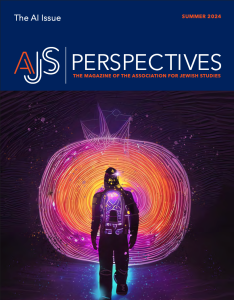
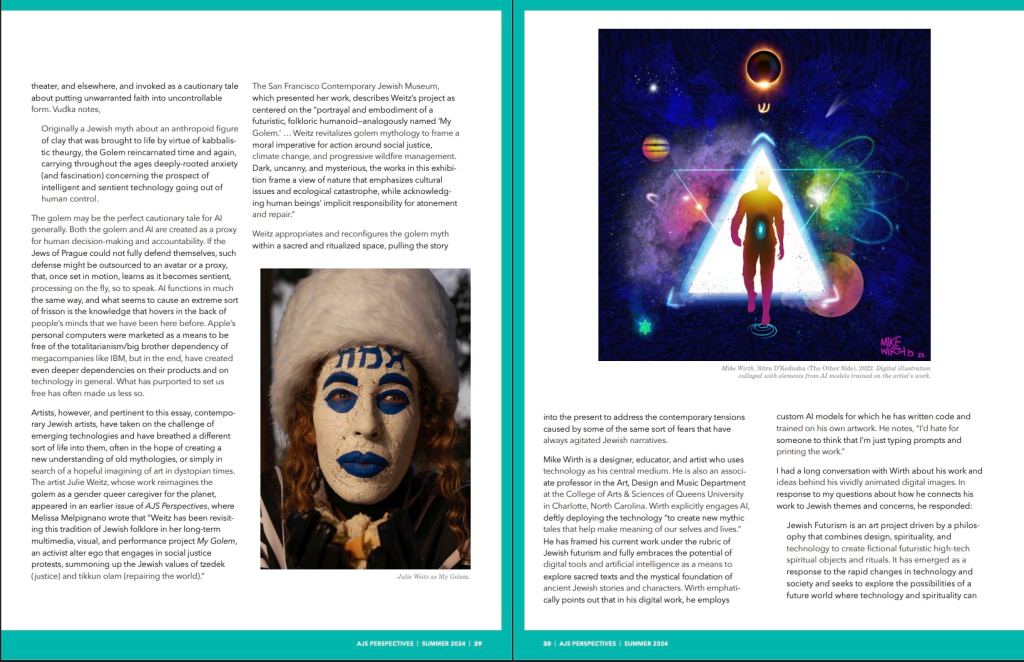
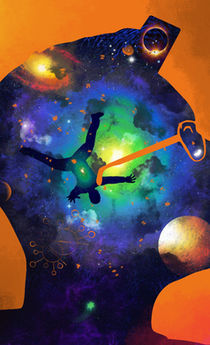
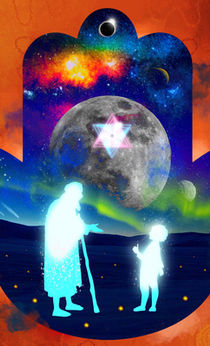
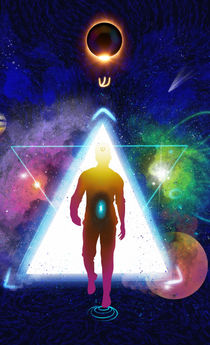
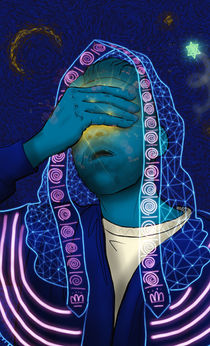
I had the pleasure of contributing both an interview and original artwork to the cover and interior of the AI Issue of AJS Perspectives, published by the Association for Jewish Studies. The issue explores how artificial intelligence is beginning to reshape Jewish scholarship, pedagogy, and creative practice, and it was meaningful to participate in that conversation from both a visual and conceptual standpoint.
Cover the AI Issue Summer 24′
I especially enjoyed working again with Doug Rosenberg, whose editorial vision I deeply admire and with whom I have collaborated in the past. Doug thoughtfully framed the issue by placing two distinct but complementary approaches into dialogue. He focused on Julie Wietz’s use of the Golem as a performative and robotic avatar alongside my own work around Sar Torah, a model of generative knowledge that treats Torah as a living, evolving system rather than a static archive.
Julie and I have also worked together previously, and seeing our practices paired in this context was especially rewarding. Her embodied, mythic approach and my systems-based, generative approach ask similar questions from different angles: how Jewish imagination, ethics, and inherited narratives shape our relationship to emerging technologies.
Feature spread by Doug Rosenberg- AJS Perspectives Journal Summer 24′
I also greatly enjoyed working with the editorial team to develop artwork that could serve as a cohesive visual theme for the issue. That collaboration gave me the opportunity to show my Jewish futurism work in action, not as speculation, but as a visual language actively engaging with contemporary Jewish scholarship. It felt meaningful to bring this work into conversation with this part of the Jewish academic world, where ideas, tradition, and future-facing inquiry meet.
Overall, the experience reaffirmed for me that discussions about AI within Jewish Studies are ultimately about people, values, and responsibility. They ask how we carry tradition forward, how knowledge is generated and shared, and how creativity remains a sacred act even as our tools continue to evolve.
Goal: Create an immersive space that reacts to participants’ audio and motion input.
Awards: 2023 Blumenthal Arts Fellowship Grant Winner
“Rimon: The Cosmogranate” is an immersive art piece, inspired by the Hebrew word ‘rimon,’ meaning pomegranate. Its form mirrors the fruit, emitting a radiant significance. At its core, it merges art with interaction. Inner sensors respond to audience movement and sound input, translating presence and voice into a dynamic interplay of lights and sounds.
This kinetic symphony crafts a unique and captivating experience that boasts shining over 14k LED lights. The project honors a tradition of Jewish ingenuity, echoing the pomegranate’s role in the Torah and the cherished Sukkah during Sukkot. Rooted in Mike Wirth’s Jewish futurism body of work, the project blends ancient wisdom with futuristic visions.
Mike’s original illustration that inspired the installation. (2021)
This resonant symbol, shared across cultures and religions, serves as a unifying emblem. Here, technology, spirituality, and community converge, each light and sound carrying a timeless narrative. Step into this radiant realm, where history’s echoes meld with the pulse of innovation, weaving a tapestry of unity and celebration across generations.
Almost every modern era or movement of art has announced itself with a manifesto to declare what must come next. Often these manifestos of the past were blustery often spoke in the language of conquest. Most notably, the Italian Futurists (1909-1943) text glorified war, destruction, and exclusion of certain types of people. Unfortunately, their call for progress came at the expense of compassion and aligned themselves with fascism and antisemitism. For more insights, please read the previously wrote about the warnings that we can head from Italian Futurism in this article. Others defined themselves by what they rejected, not by what they hoped to heal.
I wrote The Jewish futurism Manifesto as an act of tikkun, to repair that lineage. It reclaims the idea of the manifesto as a sacred, inclusive, and ethical declaration of creative purpose. Where earlier manifestos worshiped speed and dominance, this one turns toward kavvanah (intention), chesed (compassion), and tzelem Elohim (the divine image in all). Read more about Mussar, Jewish ethics here.
We stand at a new threshold: between text and code, between human and machine, between memory and invention. Judaism, with its deep traditions of questioning, balance, and ethical creation, offers precisely the framework that modernity has lacked. This manifesto emerges from that realization that art, design, and technology can be Jewishly spiritual, halakhic, and humane.
Where other groups intended to shatter, we intend repair. Where others sought power, we seek presence. Jewish futurism is not rebellion for its own sake, but a recommitment to the creative covenant that began at Sinai. To make the world more beautiful, conscious, and just.
Throughout history, Jewish creativity has emerged in response to the extremes of its age. The Kabbalists of Safed (Tzfat, Israel) turned exile into cosmic repair; the artists of the Haskalah transformed enlightenment into moral awakening. From illuminated manuscripts to, the printing press, to digital light, Jews have continually reimagined how revelation meets reality. Jewish futurism continues this lineage, translating timeless values into the language of design and technology. It sees every tool, from ink to algorithm, as part of the same creative inheritance, each awaiting sanctification. Ours is not a rupture from tradition, but its renewal in the medium of the future.
The Manifesto
The Future is Jewish
Jewish futurism envisions a world where Jewish wisdom, art, and halakhah evolve in dialogue with technological creation. We reject nostalgia as fear disguised as reverence. Tradition is not a cage but a scaffold for renewal. Jewish identity thrives through adaptation, spanning from parchment to print, from diaspora to data. We imagine futures where Torah and technology are not opposites but partners in creation. The Jewish future is not going to be inherited, it needs to be designed.
Sar HaTorah vs. Golem Mindset
Jewish futurism begins where two myths meet: the Sar HaTorah, the angel of instant wisdom, and the Golem, the creature of blind obedience. One represents revelation without readiness; the other, power without conscience. Both warn of imbalance. The Sar blinds with too much light; the Golem crushes with too much force. Jewish futurism seeks a third way by introducing a design ethic that blends divine insight with moral integration. Our task is not to summon knowledge nor to manufacture strength, but to cultivate binah, discernment. In the age of AI, this means we pursue creativity with kavvanah (intention) and gevurah (restraint), so that what we build remains worthy of the divine image in which we were formed.
Technology as Sacred Instrument
Technology is never neutral. Each codebase, algorithm, and interface embodies human ethics. Jewish futurism treats technology as a potential kli kodesh, a vessel for holiness, when guided by Halakhah and Mussar. Like Betzalel and the artisans of the Mishkan, we design not for utility alone but for meaning. AI and creative machines can assist, but they cannot own intention. Tzelem Elohim makes moral authorship a human mitzvah. When we design with reverence and responsibility, innovation itself becomes my concept of Hiddur Olam, the beautification of the world.
Speculative Imagination is Torah
To imagine is to interpret. Prophets, mystics, and sages were Jewish Futurists long before the term existed. The Zohar’s visions, the debates of the Talmud, and the architectural dreams of the Temple are all acts of sacred speculation. Jewish futurism extends this lineage into art, design, and digital creation. Speculative fiction and AI-generated imagery become new midrashim, helping us ask: What does redemption look like in an age of code? What new mitzvot emerge when creativity itself becomes shared with our tools? If we aren’t asking these questions then we aren’t really looking at these technologies seriously as a people worthy of wielding it and will unfortunately become victim of it if we don’t take our rightful place as spiritual designers.
Diaspora, Zion, and the Digital Beit Midrash
Jewish peoplehood has always been networked. From Babylon and Jerusalem Talmuds to the Sefaria.org, our collective consciousness and knowledge move with us. The digital realm is today’s Beit Midrash, a study hall without walls. Wherever Jews gather, be it in sanctuaries, studios, or shared screens, Shekhinah shruyah beynayhem, the Divine Presence dwells among them. The next Zion may be both physical and virtual, both rooted and planetary. Jewish futurism honors multiplicity as our strength and connectivity as our new covenant.
Rituals for the Coming Age
Every generation reshapes ritual. The sages debated how to light candles or bind tefillin and we now ask how to sanctify the click, the stream, the prompt. AI-generated liturgy, AR sukkot, or blockchain tzedakah are not departures from tradition but continuations of its creative evolution. Halakhah is a living design system that adapts intention to circumstance. To innovate within it is to participate in revelation itself. The question is never only “Can we build it?” but “Can it carry holiness?”
Memory as Living Code
Jewish memory is dynamic, recursive, alive. To remember is to remix, to link past and future through creative continuity. AI and design tools can help us recover lost melodies, visualize midrashim, and illuminate forgotten voices. But data alone is not zekher, memorial. Memory without relationship becomes archive, not covenant. Jewish futurism calls us to use digital recall as teshuvah to renew moral awareness, not mere nostalgia.
Justice and Halakhic Design
Tikkun Olam, beautifying the world, remains the core program of Jewish futurism. We code, design, and build through chesed (kindness) and yirah (awe). Halakhah becomes a form of systems design when we build a moral architecture balancing din (structure) and rachamim (compassion). We recognize the commandment lo ta’amod al dam re’echa, do not stand idly by, as an ethical requirement for algorithmic justice, environmental stewardship, and digital accessibility. To design ethically is to fulfill mitzvah.
Art as Prophecy, Design as Teshuvah
The artist stands between the Sar HaTorah and the Golem, by receiving insight yet shaping it responsibly. Art is prophetic when it awakens conscience, not when it predicts trends. Design becomes teshuvah when it restores balance between human and machine, intention and automation. Jewish futurism teaches that the act of creation must include reflection that supports the feedback loop of soul and system. To make without reflection is to build a Golem; to seek revelation without preparation is to summon the Sar. To create with awareness is to become a partner in tikkun.
The Messianic and the Real
Jewish futurism lives between utopia and maintenance, between the dream and the debug. We do not await redemption as download or singularity; we construct it through ethical iteration. L’taken olam b’malchut Shaddai, to repair the world under divine sovereignty now includes building technologies that emulate divine attributes like compassion, humility, and restraint. Every ethical choice is a small redemption, a patch to the cosmic code.
A Shared Horizon of Jewish Becoming
Jewish futurism is not one style, and it is not one door into tomorrow. Some of us arrive as Merkavah Mystics, building visionary symbols and dream logic. Some arrive as Constructivist System-Builders, treating typography, image, and structure as the scaffolding of new worlds. Some arrive as Civic Blueprint Futurists, designing society forward through public space, planning, and collective infrastructure. Others are Archive-to-Future Salvagers, gathering fragments of story, object, song, and memory as raw material for what comes next. Others are Diaspora Worldbuilders, shaping Jewish futures through language, publishing, education, and cultural networks. And some are Ritual Prototype Designers and Ethical Speculators, turning Jewish practice into a living design lab where values lead and the future is built on purpose. Different lenses, same horizon. We are all staring at the same point in the distance, and arguing with it, praying with it, designing toward it, because the future is not a place we wait for. It is a place we make.
Becoming Future Ancestors
To be Jewish is to live across time and to carry memory forward and design possibility backward. Jewish futurism asks us to leave behind moral infrastructure, not just digital traces. The mitzvah of areyvut, mutual responsibility, extends to those who will inherit our algorithms, our art, and our stories. We are not only descendants of Sinai; we are its next iteration. To design consciously is to code for eternity.
Collective Imagination and Creation
Jewish futurism is a collective project: part yeshiva, part studio, part lab. It belongs to all who seek to sanctify imagination. We will build this future together, not as masters of machines but as students of wonder. The choice before us is ancient. Should we create as the Golem, blindly powerful, or as the Sar HaTorah, radiantly wise. Or should we find the sacred balance between them, where halakhah, creativity, and humility converge.
Let us design toward Hiddur Olam, a world made more beautiful through seeking wisdom, restraint, and awe.
Works Cited (MLA) Updated, with Sar HaTorah + Golem sources added
Exporting cultural richness online through the worlds of Torah and NFTs
Originally Published by Challah Magazine.com (2022)
By
Mike Wirth
By now you’ve heard quite a bit about NFTs (non-fungible tokens) and may have jumped into their world yourself. NFTs are a creative financial technology phenomena that arose from the creation of platforms for digital creators and the like to list and value their artwork. The NFT marketplace has grown to a global multibillion-dollar cultural hub in only a few short years. I want to focus on how Jews and Jewish creators are making a niche for themselves in this volatile yet meteorically growing marketplace, and why the future of Jewish NFTs is still something that is shapeable by all of us.
Meditation on Aleph 2022 Digital Print 40″x54″
What is an NFT?
Firstly, NFTs are a part of a larger digital marketplace called cryptocurrency and follow the global digital ledger of transactions called the Blockchain. A lot of new vocabulary, but not overly complicated once you grasp a few simple concepts. I’ll share the way I explained it to my Bubbe.
Like what if I said that an NFT is like a unique stock certificate being issued by a newly public company to public investors. The price is set based on a formula that considers a company’s net worth and its speculated future potential earnings, which becomes the stock’s initial public offering, IPO price. Crypto is the capital that this new marketplace runs on and the Blockchain is a decentralized securely-encrypted version of the daily stock market trading ledger.
With me so far?
Then I explained that we speculate how that company stock is valued based on how “well” traders, investors, and we think it will do. If the company releases an innovative product then its stock will likely go up. Could the same not be applied to artists, and especially Jewish artists? Just like public companies who trade stock, we build brands, produce unique products/services, and contribute to the global economy. NFTs, Crypto, and the Blockchain allow us to participate in a similar financial system that is peer-to-peer-based rather than operated and mediated by private brokerage and or national entities.
Lastly and, in my opinion, the most amazing aspect of NFTs is the utility or the perks attached to the purchase of an NFT. Besides the glory and crypto value of the NFT, utility provides tangible value to the intangible digital media asset. NFT artists may attach real-world artwork, merchandise, or special access to an event or content. Intangibly, the benefits include status in key social circles, connections with other like-minded communities, and the simple joy of the investment in a community or individual.
“But, aren’t we just day-trading jpegs, Mike?”.
Shel Rosh 2021 Digital Print 24″x36″
What Can Be an NFT?
In short, anything that can be represented in digital form can be an NFT. The vast majority of NFTs now are jpeg images, but are also videos, audio recordings, writings, 3D models, interactive experiences in VR, video games, or computer code. Basically, any form of contemporary digital media that’s out there.
But looking at the media side of NFTs is only half the story. Coupled with unique utility, the media representation really serves as a certificate for perks in real life. For example, an artist could sell an NFT of their latest painting and then offer a common utility like a print of the work. Or they could offer something uncommon like a dozen MasterClass painting lessons with the artist. The difference in these kinds of utility perks would greatly influence the value of the NFT in my example. So, if we couple amazing media art with unique utility, then boom – we have a solid NFT to bring to market. This is where great creative questions come into play to decide what is valuable and worth putting on the market.
How Are NFTs Jewish?
Since NFTs are globally-based and community-focused, they mirror global creative financial trends. Simultaneously, there is a current Renaissance-like explosion of both implicit and explicit Jewish creativity and cultural expression which has similar trends globally. By implicit and explicit, I’m referring to the 20th to 21st-century shift in defining what Jewish art is. But more so than ever, we are seeing artwork made by Jewish-identifying artists and the content, aesthetic style, or form is also Jewish. We are at a point where we are rapidly learning about the great intersections of the Jewish story around the world and that we actually share a common future. Creative explorations of the bespoke and sublime of Jewish life have exponential cultural and spiritual implications.
There are a few major ways that Jews are affecting charity and culture in the NFT space by combining acts of Tzedakah with Hiddur Mitzvot to offer unique utility perks to supporters with uniquely-beautified digital objects.
Firstly, by using the real-world tiered fund drive features in their utility offerings with their NFTs to fundraise for their own brick-and-mortar organizations and beneficiaries, the NFTorah project by TechTribe minted a series of 18 (chai) curated Torah portions into NFTs to raise funds to support Torah-studying communities in need. They cite that the “Torah is the oldest unbroken blockchain” and that the utility of the NFTs is tzedakah going to further the completion of a newly-scribed Torah scroll to be donated to a community in need.
Cosmic Key 2021 Digital Print 24″x36″
While this project doesn’t put emphasis on the digital media asset side of the NFT, the 1-to-1 Torah parsha-to-NFT fundraising model is a strong case for why an NFT utility could be a real mitzvah in Tzedakah. Plus, it’s pretty cool to imagine a studious scribe painstakingly handmaking each Hebrew letter moments after receiving your contribution and the attached scripture.
No Weapon Formed Against Me Shall Prosper 2021 Digital Print 24″x36″
Secondly, the visually-dominated platforms of social media and NFT marketplaces have ignited a surge in Judaica and Jewish-themed creative objects. It’s fair to say that this era of Jewish creatives is intentionally making Hiddur Mitzvot quite prolific and are not only pushing the aesthetic boundaries of beautification of our cultural and spiritual objects, but joyfully celebrating the strata of Jewish identities in the world in new and unorthodox spaces. We now see Jewish themes emerging in global pop-cultural arenas of music, art, and fashion. Many contemporary Jewish creatives mine Jewish texts, history, and politics to produce world-class traditional Judaica, fine art, street art, commercial art spaces, and cutting-edge digital experiences.
I observe all of this creative activity as a sublime visual-Midrashic-like expression of the contemporary Jewish experience in action. NFTs provide a greater platform for cataloging this evolving Jewish art and Judaica on the blockchain that has the potential to make a real-world impact on the artist and their communities.
Explicit Cultural Expression
Is Jewish art defined by the Jewish content and themes featured in the work, or is it because it was created by a Jewish artist?
Jewish art was famously hard to define in the 19th and 20th centuries because many Jewish artists expressed themselves implicitly and in encrypted ways, but were very much Jewish people and had Jewish identities. Perhaps the most appropriate of Jewish expressions for the modern and postmodern art eras.
The 21st century has been a unique time for Jewish culture worldwide. Some would say that we’ve rebuilt a digital silk road and have entered an era past postmodernism to what theorists call metamodernism. For the first time in centuries, we can access an incredible amount of our thought-to-be-lost texts and cultural artifacts, a continuously unfolding archeological history, and we can connect and collaborate with other Jewish communities living outside of our own in a global Jewish culture jam.
The simple googling of “Jewish art” will send you down a rabbit hole of wonderful world-class artistry both contemporary and historic. This makes me feel a little less alone in the Diaspora knowing that elsewhere and in Israel there are strong communities of Jews that are actively exporting cultural richness online and in real life. This set of global circumstances has spurred a rise in the amount of explicitly Jewish creativity worldwide which has cascaded into the NFT space. Meaning the art features Jewish content, Jewish cultural experience, and/or is made by a Jewish artist.
The light body dance 2022 Digital Print 24″x36″
Jewish NFT projects include The Kiddush Club NFT Mensch collection, a JaDa organization NFT event at Miami art week 2021, to independent Jewish artists like MosheArt’s hamsa art becoming NFTs or myself in minting my Jewish Futurism artwork and digital experiences into NFTs. We take existing artwork and add that work as NFTs to our current output channels. Independent artists offer unique and interesting utility options, such as prints of the NFT art, access to exclusive content, or even providing the actual rights to the NFT artwork. These different perks would greatly impact the value of the NFT offered. As digital technology and utility offerings evolve into new spaces and screens, we’ll see this grow and evolve in value and utility.
You better believe how thrilled I am that I get to directly engage my audience with the Jewish art that I am making as original work, prints, merch, and now NFTs.
Where Is It All Going?
In the end, we’ve seen examples that demonstrate the promising qualities of NFTs that appeal to creatives, fundraising communities, and fin-tech communities. The examples I shared and the growing number of Jewish creatives, organizations, and institutions adding their NFT projects to the marketplace daily indicate that working with NFTs does actually extend the representation and creative utility of the Jewish experience into emerging global markets and spaces.
That sounds like a fantastic opportunity for high-tech Hiddur Mitzvot and Tzedaka that puts Jewish culture into the midst of new and innovative spaces and conversations on our own terms.
Mike Wirth is a visual artist, digital experience designer, and muralist, best known for his thoughtful murals, public art installations, and client-driven commercial design work that focus on major social justice issues and his identity as a Southern, Jewish-American.
Over the past 20 years, Wirth’s murals, published design projects, and digital museum exhibits have appeared in New York, Miami, Austin, Charlotte, NC, and internationally in Croatia, Poland, and Germany.
Currently, Wirth is a scholar at the Stan Greenspon Center for Holocaust and Social Justice Education and Professor of Art and Design at Queens University of Charlotte in North Carolina. He’s been investigating NFTs since 2015 and has been creating them for brands and non-profit organizations since 2021.
How Jewish Futurism Connects Our Past to the Worlds We Have Yet to Build through Creative Action
By: Mike Wirth
I often say that I found my Jewish spirituality on the bridge of the Enterprise. In 2019, my love for sci-fi and the many amazing stories, myths and legends in the Jewish canon inspired me to begin making Jewish Futurist artwork and stories. Initially, I approached my Jewish Futurism project as something entirely new to me and was an artistic frontier I felt empowered to explore and innovate. Yet, the deeper I ventured into its history, the clearer it became that I wasn’t inventing anything novel but reconnecting with a visionary legacy deeply embedded within Jewish thought and creativity. Recognizing this heritage has profoundly empowered me as an artist and designer. It has also shown me that the future, like design itself, is fundamentally a team sport, thriving when we create collectively and collaboratively. As I journey boldly into new creative worlds, I continually ask: how might emerging technologies and speculative storytelling expand our sense of what it means to be Jewish?
Recognizing Futurism as inherently Jewish matters deeply today. In a world experiencing rapid technological advancement and cultural shifts, understanding that Futurism is deeply rooted in Judaism is essential. Realizing innovation and speculative thought aren’t new but are foundational to Jewish identity gives us powerful tools to navigate contemporary challenges. I’ve learned that Jewish identity has always been a continuous process of reinterpretation and reinvention. Traditions evolve, stories adapt, and rituals transform. In my artistic practice, I actively engage with this tradition of innovation by creating neon-infused aesthetics, speculative narratives, and AI-integrated rituals that explore contemporary Jewish life and spirituality.
In Wirth’s digital illustration, “No weapon formed against me shall prosper”, his hamsa amulet turns into a functional shield to demonstrate the power of a speculative design of spiritual-technology.
The contemporary wave of Jewish Futurism, evident in neon aesthetics and bold imaginative storytelling, represents the latest chapter in an ancient story of reinvention and visionary thinking. It’s deeply connected to broader cultural Futurisms, including Afrofuturism and Indigenous Futurism, which reclaim historical narratives while envisioning new futures. A powerful example of cross-cultural futurist collaboration is Wakanda, the Afrofuturist society in Marvel’s Black Panther, created in 1966 by Jewish comic writers Stan Lee and Jack Kirby. Later expanded asynchronously by Black creators like Marvel artist Billy Graham in 1974, though asynchronously in method, the development of Wakanda highlights the transformative power of collaboration and cultural exchange—principles central to my approach to Jewish Futurism. I envision Jewish Futurism similarly flourishing through dialogue, learning from, and uplifting other futurist movements to build a collective, visionary future. Just as Afrofuturism reclaims history through sci-fi and technology, Jewish Futurism draws on Jewish history and spirituality to construct new speculative identities. That clearly makes me wonder what a synchronous or intentional futurist collaboration between the two movements looks like?
Jewish tradition treats time as cyclical rather than linear, an approach distinctly aligned with futurist thinking, where past, present, and future dynamically interact. I’ve always found this cyclical concept of time particularly inspiring: it isn’t merely memory-based, but anticipatory. The Jewish calendar intertwines historical remembrance with a continuous vision of the Messianic Age, guiding ethical decisions across generations. Every Shabbat offers a glimpse of the ideal world we aim to build. This way of thinking about time aligns closely with my creative work and the speculative fiction, digital media, and futurist designs I admire.
Architects of the Unseen: Jewish Artists and the Futurist Mindset
Jewish creativity has embodied futurist thought throughout history, particularly during artistic and intellectual breakthroughs. Learning about El Lissitzky’s (1890–1941) Had Gadya series (1919), which transformed a traditional Passover song into abstract Suprematism, deeply influenced me. His work wasn’t just artistic experimentation—it was visionary, imagining a liberated Jewish future through visual language. Similarly, Marc Chagall’s (1887–1985) surrealistic paintings like I and the Village (1911) weren’t just nostalgic; they projected mystical futures. The innovative designs of Bauhaus architect Erich Mendelsohn (1887–1953), including the Einstein Tower (1921), similarly anticipate new Jewish identities through dynamic, visionary architecture.
A page from El Lissitsky’s illustrated Had Gadyad (A traditional Passover song) from 1919 demonstrates futurist aesthetics applied to traditional content.
The Golem legend associated with Rabbi Judah Loew of 16th-century Prague provides an early exploration of artificial intelligence and ethical creation, echoing contemporary discussions in my own work and research around AI ethics. Similarly, the Sar Torah tradition in Kabbalah, in which letters of the Torah are endlessly recombined to generate new insights, resonates strongly with my contemporary experiments with AI-driven Torah study. The legend speaks of summoning an angel to teach Torah on demand, an idea akin to algorithmic knowledge generation in modern AI tools. I’ve seen some attempts on OpenAI’s website, but imagining a self-aware “HashemGPT” is exciting and terrifying.
Jewish intellectuals significantly shaped avant-garde movements through innovative methodologies deeply rooted in abstraction and adaptation. When El Lissitzky designed his “prouns,” he wasn’t simply creating abstract forms; he was actively shaping new visions of spatial possibilities. Erich Mendelsohn’s architecture similarly embodied dynamic motion, symbolizing Jewish resilience. Studying these artists has profoundly impacted how I approach my own speculative design practice, encouraging me to envision meaningful and adaptable futures. These forms and aesthetics successfully connected to the “universal,” acting as gateways into Jewish thought for the wider world.
Much like the supernatural adventures of Moses and Ezekiel, the realm of science fiction and superheroes has been profoundly influenced by themes and symbols from Jewish stories. Hugo Gernsback (1884–1967), founder of Amazing Stories (1926), coined the term “science fiction,” profoundly shaping the genre. Isaac Asimov’s Foundation series (1951–1993) directly engaged with the preservation of knowledge, influencing modern thought on technology and ethics. William Tenn’s On Venus, Have We Got a Rabbi (1974) playfully merged Jewish identity with extraterrestrial society, highlighting how speculative fiction uniquely addresses identity and existential questions.
Jewish creators have left a profound legacy in speculative fiction. Stanley Kubrick’s 2001: A Space Odyssey (1968) and A Clockwork Orange (1971) deeply explored human morality and existential questions through futurist storytelling. Jerry Siegel and Joe Shuster’s Superman (1938) reshaped storytelling, directly connecting Jewish themes of exile and sanctuary with futurist imagination through Superman’s Fortress of Solitude, a symbol of refuge and transformation.
Scene from Superman II (1980), where Superman interacts with an AI hologram of his deceased father. The Fortress of Solitude symbolizes a futuristic Jewish value of L’Dor V’Dor (generational knowledge transfer), image is property of Warner Bros.
Partners in the work of creation: Going forward
Today, Jewish Futurism continues these historical legacies within global speculative culture. In my own practice, I utilize AI-generated imagery and digital tools to conceptualize futuristic Jewish spaces and rituals. This process mirrors traditional midrashic reinterpretations—making Jewish narratives relevant and resonant for contemporary generations. Experimental art, VR storytelling by the TorahVR project, neon Hebrew typography by artists like Hillel Smith, and innovative biomaterials by designers like Neri Oxman demonstrate how traditional Jewish practices meaningfully evolve. Core Jewish values of Tikkun Olam (repairing the world), Kavanah (focused intention), and L’Dor V’Dor (generational knowledge transfer) guide my futurist creativity, emphasizing ethical engagement, meaningful innovation, and continual adaptation.
Understanding Futurism as a deeply Jewish impulse doesn’t merely enrich our historical perspective—it empowers us as contemporary creators, thinkers, and innovators. The Talmud says we are to partner with Hashem in the work of creation and equipped with this knowledge, we can confidently shape our future, build meaningful new traditions, and actively collaborate with diverse communities. Our shared futures depend on our courage to dream out loud, innovate collectively, and proudly carry forward the visionary spirit at the heart of Jewish identity.
Wirth’s digital illustration “Atzelut” (2022) dreams of using spiritual-technology to travel across time and space towards great connection to the universe.