Category: Jewish Design

  • Prophetic Sensation: Neurodivergence and Jewish futurism

    Prophetic Sensation: Neurodivergence and Jewish futurism

    An Essay on ADHD, Flow, and Revelation Through Pattern

    Introduction: Where Neurodivergence Meets Jewish Futurism

    Neurodivergent people are often told our brains need fixing. Jewish tradition is often told it needs preserving, frozen in amber to survive. Both framings are wrong, and both miss the same truth: difference isn’t deviation, it’s design principle.

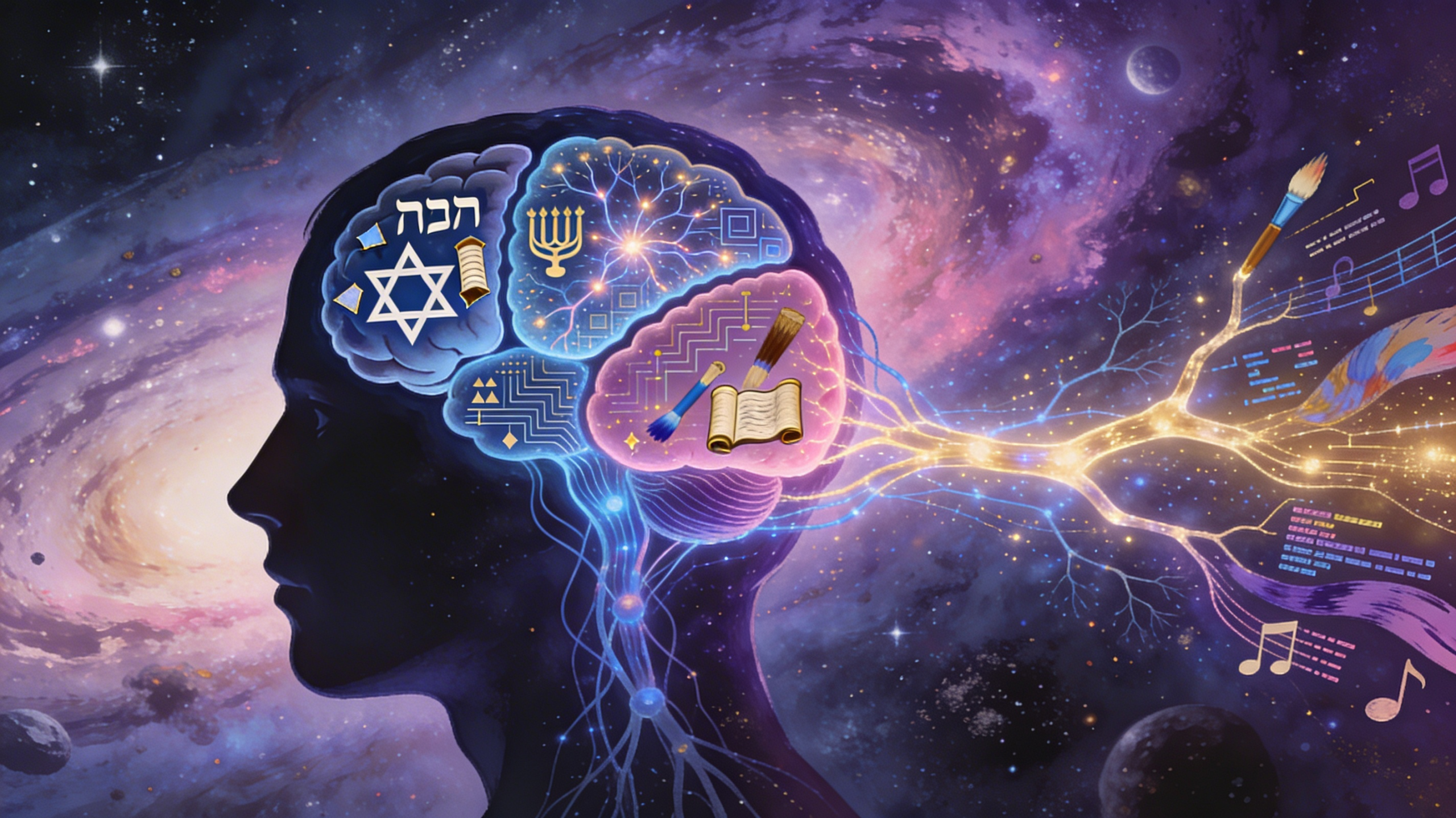
    I have the unique pleasure of being Jewish, neurodivergent, and an artist. This intersection isn’t burden or coincidence. It’s the source of my creative and spiritual practice. This essay argues that neurodivergence and Jewish futurism aren’t just compatible frameworks, they’re overlapping systems that reveal each other’s deeper possibilities. My late ADHD diagnosis showed me that the creative and spiritual practices I’d developed weren’t workarounds for a broken brain. They were Jewish futurist methodology, and my neurodivergence was the engine driving it.

    Jewish futurism, as I define it, is a design methodology and creative practice that imagines ethical Jewish futures without freezing the past or erasing identity. It recognizes that Jewish civilization is closer to its beginning than its end, requiring radical idea development rather than preservation of fixed forms. Rather than asking “how do we preserve Shabbat as it was,” Jewish futurism asks “what does rest look like in a future we design?” Neurodivergence operates on similar principles. A neurodivergent brain resists linear, settled narratives. It sees patterns others miss, makes unexpected connections, and questions endlessly. Both frameworks reject the notion that there’s one correct way to think, create, or practice. Both demand that we build new systems rather than simply accommodate ourselves to existing ones that weren’t designed for us.

    The overlap is way more than just metaphorical. Jewish practice has always contained practices that change how we think and feel: repetitive prayer motion, textual wrestling, embodied ritual. Neurodivergent minds have always sought ways to access flow states (shefa in Hebrew), regulate brain chemistry, and channel intense perception into creative work. When these two meet, something revelatory happens. Ancient wisdom reveals itself as neurodivergent technology. Neurodivergent experience reveals itself as a form of prophetic sight.

    The Cloud of Noise

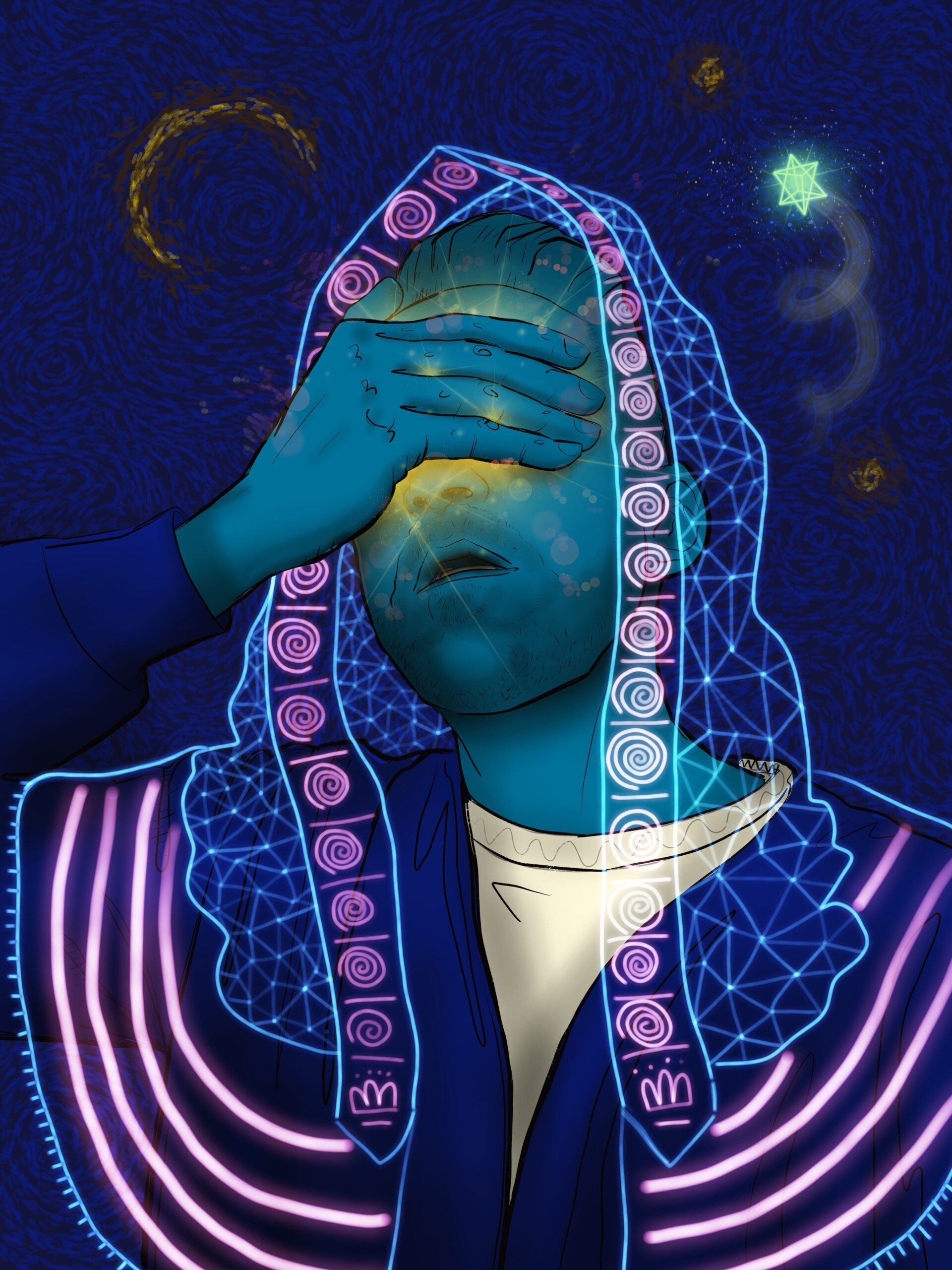
    In the late 1980s, I stood before Jackson Pollock’s Lavender Mist at the National Gallery of Art in Washington DC and felt my world tilt. The painting’s scale overwhelmed me. With no subject or focal point, my eye moved constantly, never resting. The density of marks created illusory movement that simultaneously pushed and pulled me. I wasn’t seeing anything sinister. The optical effects themselves stimulated my young brain in a way I’d never encountered before. The disorientation frightened me because I’d lost control of my own perception.

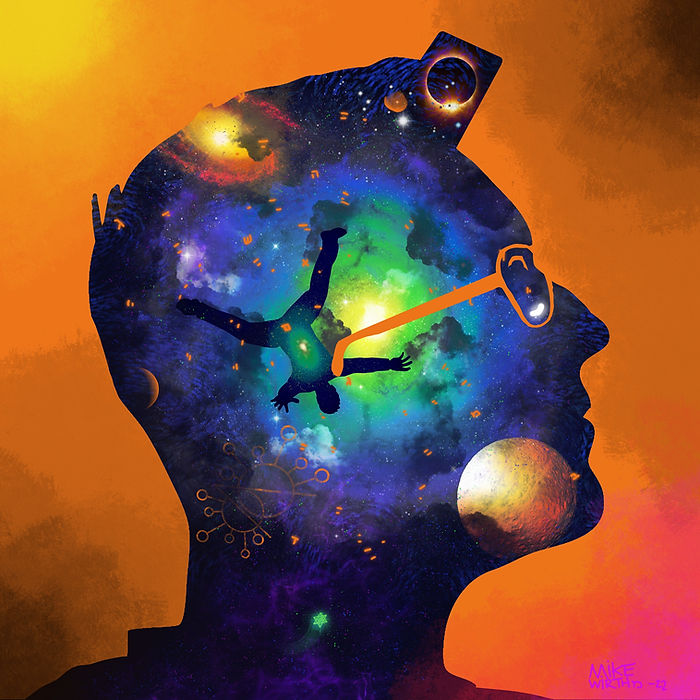
    Decades later, when my doctor asked if I could remember childhood moments of sensory overload, this returned to me. But it’s also the story I tell about falling in love with art. My neurodivergence wasn’t separate from my artistic calling. It was delivering information through my body, through sensation, showing me a path I would spend my life following. I would later learn that ADHD brains don’t produce enough dopamine naturally, the neurochemical that regulates focus, motivation, and pleasure. This means my brain is constantly seeking stimulation, novelty, and intensity to feel what neurotypical brains get more easily. It also means that when I find the right stimulus (complex patterns, rhythmic motion, creative flow), I can hyperfocus with an intensity that feels transcendent. This isn’t a disorder to fix. It’s a different operating system that needs different fuel.

    The All-Night Dance

    I realized art-making could produce that fuel in college during the late 90s. I had procrastinated on a large painting for class, one of my mosaic-like pieces built from tiny dashes, dots, and patterns. Now I faced an all-night session with the piece due at 8am.

    Panicking, I cranked up music and danced my frustration away. I hadn’t yet learned to daven (the rhythmic, often swaying motion of Jewish prayer), but I knew how to headbang. The swaying motion of my brain (probably bouncing off the inside of my skull) gave me a surge of energy and focus. That launched an all-night painting dance. The first time I felt it.

    A floormate studying art therapy explained that creativity and flow were connected. It stuck with me. When I’m in that state, I’m moving, dancing, pausing, getting back up and working. Eventually it all becomes rhythmic. Stopping can be hard because I love the feeling. My brain is finally getting the dopamine it needs, and it feels like coming home.

    Discovering Shefa Before Diagnosis

    Before my ADHD diagnosis, I began practicing Jewish meditation and connected with the ecstatic state that emerges from davening. When I worked up faster and faster in motion, I entered an ecstatic state producing focused, euphoric sensation. This showed how deep into flow I had gone. In Jewish mystical tradition, this is called shefa, the flow of divine abundance. That flow is holy and sacred.

    I developed meditation as a way to enter flow state on demand. When I had creative work with limited time, I couldn’t noodle around waiting for the zone. I needed a technique to get there in minutes. Meditation does this for me. What I didn’t understand then: my neurodivergent brain was seeking the dopamine regulation it craved through ancient Jewish practice. The practice was already there, waiting for my body to recognize it as both medicine and revelation.

    The Late Diagnosis as Renarration

    My late ADHD diagnosis functioned as a Jewish futurist act of renarration. Jewish futurism rejects nostalgia that freezes the past. A late diagnosis forces you to reinterpret your entire history through a new lens. Experts describe a 2-3 year period of deepening self-awareness and making sense of the past while getting to know yourself perhaps for the first time. This mirrors Jewish practice of wrestling with text and meaning, returning to the same stories and finding new interpretation. In Hebrew, this return is called teshuvah, and it doesn’t mean going backward. It means turning to face something you couldn’t see before.

    I worried that medication and therapy would dull or damage my creativity. Thank God it didn’t. Instead, I finally felt focus and clarity like I’d never known. The drawbacks shifted. Learning to stop became a new challenge because I can get so hyperfocused that I lose the sense of time completely. I’ve set alarms for work time now. While time management was never my strength before diagnosis, I’m now hyperfocused and productive instead of procrastinating and wasting time.

    This is Jewish futurist methodology: using constraints and identity to design ethical, sustainable futures. Setting alarms isn’t giving up on natural creative flow. It’s designing a life where I can create without burning out. It’s building a future that works with my brain, not against it.

    Returning to Lavender Mist

    When I looked at Lavender Mist again as a photo online after my diagnosis (I haven’t returned in person yet), I anticipated the sensation. This time I felt like I could be inside the painting. I could follow individual splashes of paint throughout the entire piece. It seemed to pulse like neurons. Maybe it’s because I’m older and have studied the work for 35 years. Maybe it’s something else.

    What appeared as a cloud of noise in childhood now reveals the complex interconnectedness of the universe and our lives. My pattern recognition explains why I remember flags, logos, fonts, and motifs with uncanny precision. As a kid, I spent hours memorizing the flags in my family’s encyclopedia books. When I didn’t quite understand what I was seeing and it altered my physical balance or other sensations, I craved it.

    This craving led me to love jazz as a teenager, dive into complex video games, and eventually learn BASIC, HTML, CSS, JavaScript, Java, PHP and MySQL. I built a career in multimedia, infographics, illustration, and interactive installations. I’ve always been chasing the feeling those early experiences showed my brain. I suspect I’m not alone in this. Many neurodivergent artists, coders, musicians, and designers describe similar origin stories: an early overwhelming encounter with complexity that felt like a calling.

    Teaching Flow States

    With therapy and treatment, my self-awareness lets me focus more on my students’ states. I have hours of meditation practice and training that I now relay to my students. The methods and practices my therapists and mentors taught me, my resources, literature, and guidebooks are open to them. I observe when students enter and exit flow states.

    I now weave sensory-friendly methods into my classroom curriculum. I guide students through sensory-friendly design practices. I set outcomes and classroom practices using timers, reminders, and feedback-centric approaches to projects.

    One example: I use a digital whiteboard to doodle and lecture. I pause my lecture to allow students to reflect and doodle on my slides or drawings. My therapists say those brief pauses give my brain time to catch up. They give neurotypical people a moment to rest and reflect as well.

    Building in transitions allows flow to extend learning and enables pivots to new topics or activities without harsh interruption. These practices don’t just help neurodivergent students. They make learning more sustainable and creative for everyone. This is ongoing. I still have loads of questions. Luckily, I have colleagues who are music therapists at my university. I want to work with them to learn more.

    Prophecy Through Sensation

    I could say these feelings were prophetic, though they didn’t come with instructions. Only feelings. I wasn’t told to go forth. I was given the physical sensation that my brain loved, and I knew I should follow it into my future. Powerful. Looking back, it could have been prophetic.

    The Pollock moment wasn’t isolated. In the late 90s, I heard Dave Brubeck’s “Blue Rondo à la Turk” and lost my mind. I’d never heard 9/8 time before and it was an experience to be had. Parts of my brain were firing for the first time. In the late 2000s, reading Octavia Butler’s Parable of the Sower, a book gave me this sensation for the first time. When I painted my first mural in college, I felt it too. Each time, my body told me: this matters, follow this.

    This sensation guides my creative problem-solving. When I built a microcontrolled LED pomegranate sculpture, the solution appeared in my imagination. I knew I wanted specific patterns and wrote code to simulate them. The solving came from trying out code ideas rather than looking up answers. I felt like I had it in my head and didn’t want to jump ahead. I would have felt bad, like I skipped a step and missed the chance to connect to the problem more deeply than just using an answer. When I get a taste of that Jackson Pollock feeling, I know the idea is worthy to act upon.

    I see these prophetic moments in my students. In 2012, I taught a digital installation course where students built interactive experiences with projectors, cameras, and software. This was a challenge many had never faced, and there was no real framework for it. The students stayed in the lab longer than I’d ever seen. Each one was hyperfocused on coming up with a great idea and executing it. One student made a cubist magic mirror. Participants would look into the camera and see their face broken into multiple planes like a cubist painting. It was a technical achievement and an exciting concept. This student could achieve deep focus, and I was overjoyed. I watched them receive revelation through the making itself.

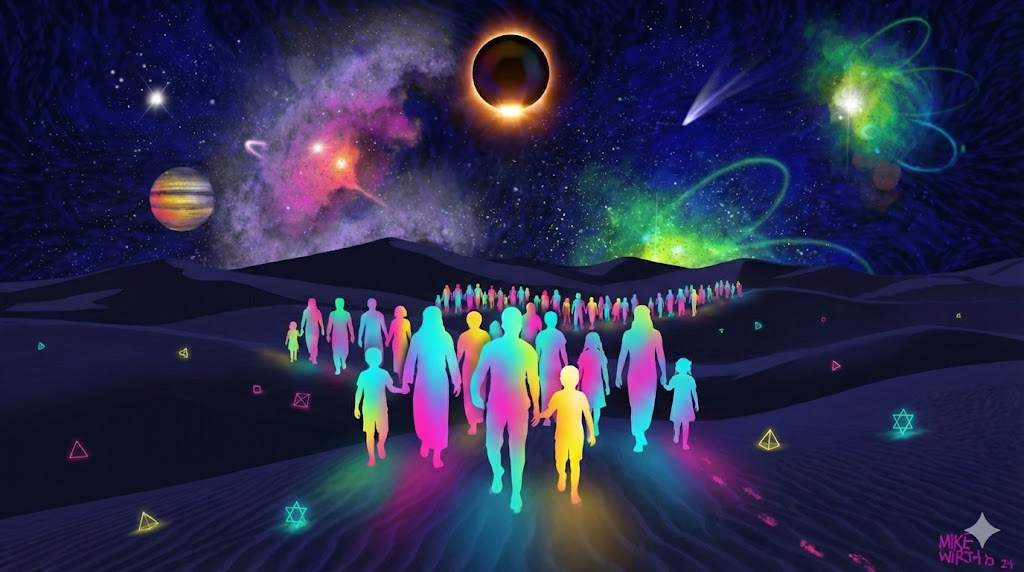
    My meditation practice has delivered visions that became art. After I read the legend of the Sambatyon River (a legendary lost river where the lost tribes of Israel are said to be on the other side), it appeared in my head as a complete image. I illustrated it as an art piece. It was amazing to bring that clear and crystallized vision to life. I want to one day make it an immersive interactive digital experience for people in a gallery. How amazing to reconnect with the lost tribes through sensation and technology.

    This is the question I’m sitting with now: what if prophecy today arrives not as commandment but as sensation? Rather than a booming voice with harsh instructions like Moses received, perhaps prophecy today is a neurological connection born of overwhelming encounter with beauty or complexity. Perhaps neurodivergent people, who feel sensory input more intensely, are receiving information that neurotypical perception processes more quietly.

    I think art functions as revelation for neurodivergent people in this way, which makes art therapy crucial to intersect with neurodivergent experience. Because we feel so deeply (words, pictures, information, pattern, sound), we can embody it in ways that catalyze transformation. We don’t just see the painting or hear the music. We feel it rewire our nervous system. We receive direction through our bodies.

    AI as Neurodivergent Technology

    AI has become a second brain for my ADHD practice. It helps me go down rabbit holes with purpose and stay on track when I get lost. It lets me use my own entrance points into thinking and learning through conversation. I love having it roleplay scenarios and offer critique to get another perspective, especially at 2am when I might be working and no human collaborator is available.

    I use LLMs regularly. I run DiffusionBee with my own custom fine-tuned image model based on hundreds of images of my own work. I use NotebookLM to make infographics and slide decks for students in my design history class. I help students use AI to vibe-code or troubleshoot issues with digital projects. Before AI, staying organized and fighting the paralysis of starting to write were my biggest challenges. Now I use my custom-trained AI model to sketch with. I can pose any character into a new image, allowing me to expand my body of work into new camera angles and compositions. This has pushed me beyond what I could do alone.

    The relationship to flow state is complicated. If I jump to AI too early, I usually get weak output because I don’t yet know why I’m doing what I’m doing. Without human purpose, AI feels like a toy. But it speeds up the juxtaposition process dramatically. I can merge, twist, blend, and oscillate images in a fraction of the time I could on my own using Photoshop and collaging elements together to make references to paint or draw.

    It feels like both collaboration and assistance. There are tasks I can delegate to AI so I can focus on the grand vision and be the final editor saying yes or no to my idea manifested as a sketch. I still rewrite what AI gives me even if it’s good or better than what I could do. I can feel “that’s not my voice” after a quick read. This editing process is where I connect to the work.

    AI and Jewish Futurist Practice

    AI helps me explore the divergent ideas I get about interpreting Torah or Kabbalah. It’s an assistive chevruta partner (a traditional Jewish study partner) when a living one isn’t available. Often I use it to help me think about how a Jewish futurist idea might unfold over a long period of time or what impacts I might be missing or overlooking. I appreciate those bits of what AI can do for my practice. Sometimes it shares profound ideas and helps me see what I might be assuming about my thoughts. It’s helped me develop my thoughts to be more accessible and inclusive.

    I teach my students about AI and share my appreciation as an ADHD user, but I teach in a neurodiversity-friendly way and don’t specifically focus on that unless a student asks me. I want all students to see AI as a tool that can work with their brain, whatever their neurotype.

    The complications are real. LLMs can be overwhelming. Prompting can lead to dead ends without help. The technology is harmful to the planet, which makes me use it sparingly and offline or locally on my computer whenever possible. I’ve led the way to use these tools on personal computers rather than via web browser and data center, reducing the intensity of greenhouse gases. I’ve needed to write something personal fast and entered vague prompts that produced very weak output. After a few more attempts with no luck, it frustrated me so much I shut the computer and wrote it myself.

    This tension is Jewish futurist thinking in action. How do we use powerful tools ethically? How do we build sustainable practices that don’t extract more than they give? I set instructions to my chatbot to not give me answers but to have a conversation and build an outline. This helps me organize my chaotic thoughts. Then I leave the chatbot with a product I can use to write by hand. The AI doesn’t replace my thinking. It scaffolds it so my neurodivergent brain can do what it does best: make unexpected connections, see patterns, and create something that didn’t exist before.

    Neurodivergent Jewish Futurism

    Jewish futurism suggests that Jewish civilization is closer to its beginning than its end. This requires radical idea development rather than preservation of fixed forms. My ADHD brain doesn’t accept “this is how it’s always been” as an answer. That’s precisely the mindset needed to imagine ethical Jewish futures that don’t freeze the past or erase identity.

    Neurodivergent minds naturally resist linear, settled narratives. We favor pattern recognition, connection-making, and questioning that never stops. The Talmudic tradition, the central text of Jewish law and ethics built on centuries of debate and commentary, may itself reflect neurodivergent thinking patterns through its attention to detail, organizational systems, and endless questioning.

    What makes this Jewish futurism: my story demonstrates how neurodivergent experience isn’t a deviation from Jewish practice requiring accommodation. It’s a particular intensity of engagement with practices already designed to alter consciousness. My childhood terror before Lavender Mist, my college discovery that headbanging unlocked creative flow, my pre-diagnosis discovery of shefa through davening, my post-diagnosis ability to track individual paint splatters as neural pathways. These aren’t separate experiences. They’re the same neurodivergent capacity to perceive overwhelming amounts of information as sacred pattern.

    Jewish futurism asks: how do we design ethical, sustainable Jewish futures that don’t freeze identity or erase difference? My answer, embodied in my creative and spiritual practice, recognizes neurodivergent perception as prophetic sight that comes through sensation rather than instruction. We build techniques (meditation, alarm systems, rhythmic prayer, sensory-friendly pedagogy) that allow neurodivergent bodies to access flow sustainably. We teach that the overwhelm itself, when it comes from encountering beauty or holiness, is shefa.

    Closing

    I’ve been chasing the feeling Lavender Mist gave me for 35 years. In doing so, I’ve built a Jewish futurist practice that centers a simple truth: neurodivergent brains aren’t broken. We’re receiving revelation through channels that neurotypical perception might miss entirely.

    If you’ve ever felt overwhelmed by beauty, if you’ve ever found focus through repetition, if you’ve ever sensed that your different brain perceives something others miss, you might be receiving revelation too. The question isn’t whether you’re broken. It’s what you’re being shown, and what futures you’re being called to design.

  • Liminal Space as Creative Method: Jewish futurism and the Multiverse of Stories

    Liminal Space as Creative Method: Jewish futurism and the Multiverse of Stories

    Back in 2014, when I first started to create my Jewish futurist art and stories, I thought that my character, the Wanderer should live a few hundred years into the future, so my spiritual technology objects could just “work” as he travels through time to different Jewish moments in history. But not everything in the Jewish cannon of stories are historical, so that became a narrative issue for my characters extraterrestrial abilities to be believable. I shifted to think about what if the character existed not in the “future” based on time, but in a liminal space built entirely out of the Jewish cannon of stories. This is the first thing to understand when thinking about Jewish futurism as a creative practice. We’ve learned to think of thresholds as thin lines, transitional moments you pass through quickly on your way from one stable state to another. But Jewish textual tradition suggests something different: the threshold itself can be a world, a zone of variable width where multiple versions of the same story coexist without resolution.

    This is where Jewish futurism lives and works.

    The Wilderness Prototype

    The Book of Numbers, Bamidbar in Hebrew, literally means “in the wilderness.” Rabbi Jonathan Sacks identified this wilderness period as Israel’s formative liminal experience, a space “between Egypt and the Promised Land” where the people transformed from “escaping slaves” into “a kingdom of priests and a holy nation”. The wilderness wasn’t just a route to somewhere else. It was the place where identity formed, where law was given, where the impossible work of becoming happened.

    Wandering Israelites 2024, Digital Illustration, By Mike Wirth

    Jewish futurism inherits this structure. It positions itself in a wilderness between deep tradition and speculative futures, refusing to resolve that tension into either pure preservation or pure innovation. The creative power comes from staying in the threshold.

    Multiformity: When Stories Refuse to Collapse

    Jewish textual tradition demonstrates something unusual: it preserves multiple versions of the same story without declaring one correct and the others false. The Talmud includes the story of how Jewish children survived Pharaoh’s decree in two different midrashim, Exodus Rabba 1:12 and Exodus Rabba 23:8, telling “essentially the same story” with different details and emphases. Both remain authoritative. Both are studied. Neither cancels the other out.

    This happens again with the creation narratives in Genesis, which offer two distinct accounts that the rabbis never harmonized. When Genesis 2:23 has Adam declare “this time (zot hapa’am) bone of my bone,” the rabbis read the phrase “this time” as evidence there must have been a first time, another woman before Eve. This reading generates the Lilith tradition, which itself exists in radically different versions across texts. Sometimes she’s a Mesopotamian demon, sometimes Adam’s first wife who refused subordination, sometimes multiple Liliths entirely (the Matron Lilith mated with Samael, the Lesser Lilith with Asmodeus). The tradition never consolidates these into one coherent mythology.

    This is what I mean by calling liminal space a “storehouse of options.” All these versions exist together, not as rough drafts leading to a final text, but as a permanent multiplicity. The creative work happens in the space between versions, where meaning emerges from juxtaposition and contradiction rather than resolution.

    Metamodernism and the Jewish futurist Oscillation

    Jewish futurism operates through what contemporary theory calls metamodernism, an approach that “oscillates between a modern enthusiasm and a postmodern irony, between hope and melancholy, between naivete and knowingness, empathy and apathy, unity and plurality, totality and fragmentation”. This isn’t confusion or inconsistency. It’s a deliberate method of holding contradictions in productive tension.

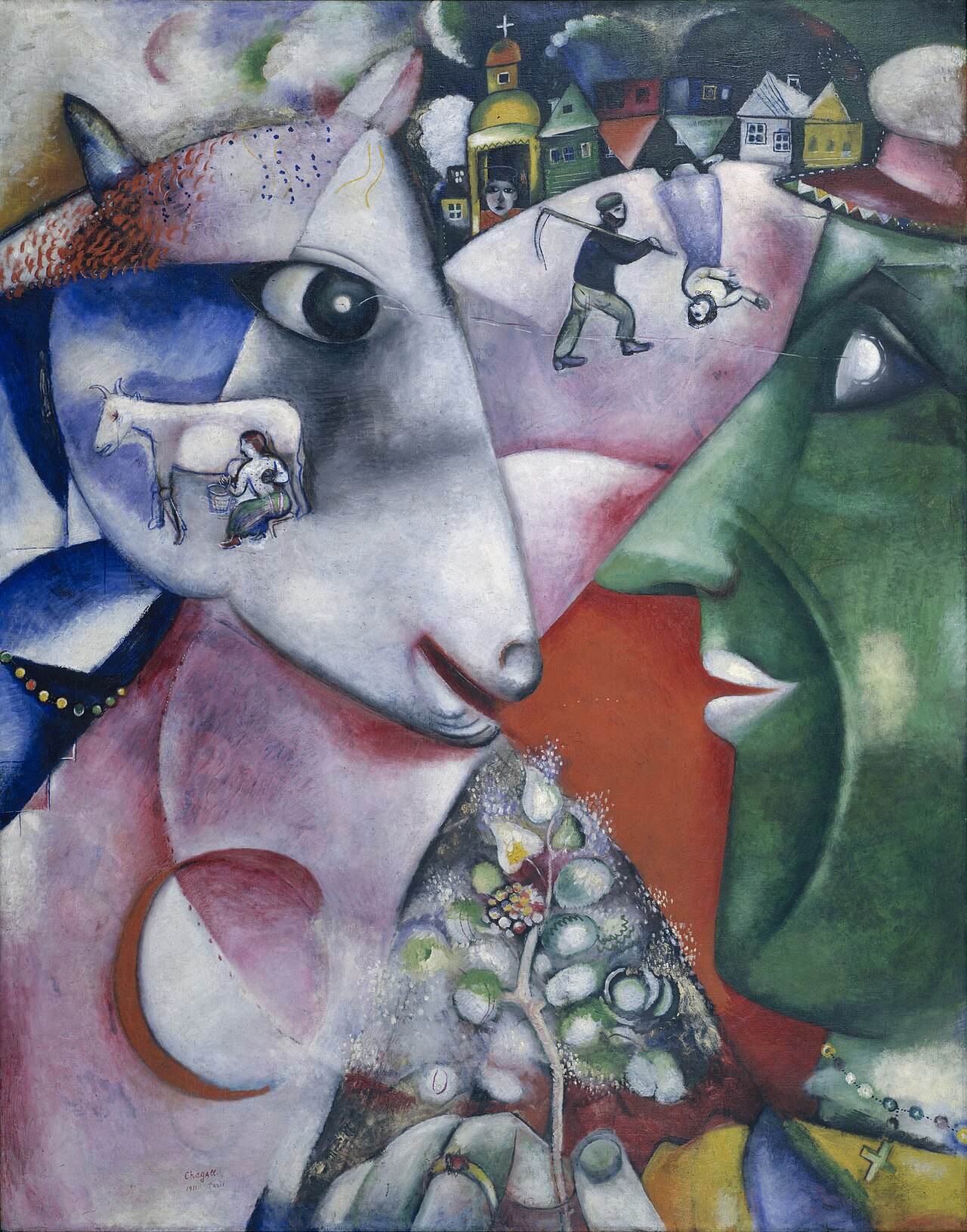
    Marc Chagall’s I and the Village (1911)

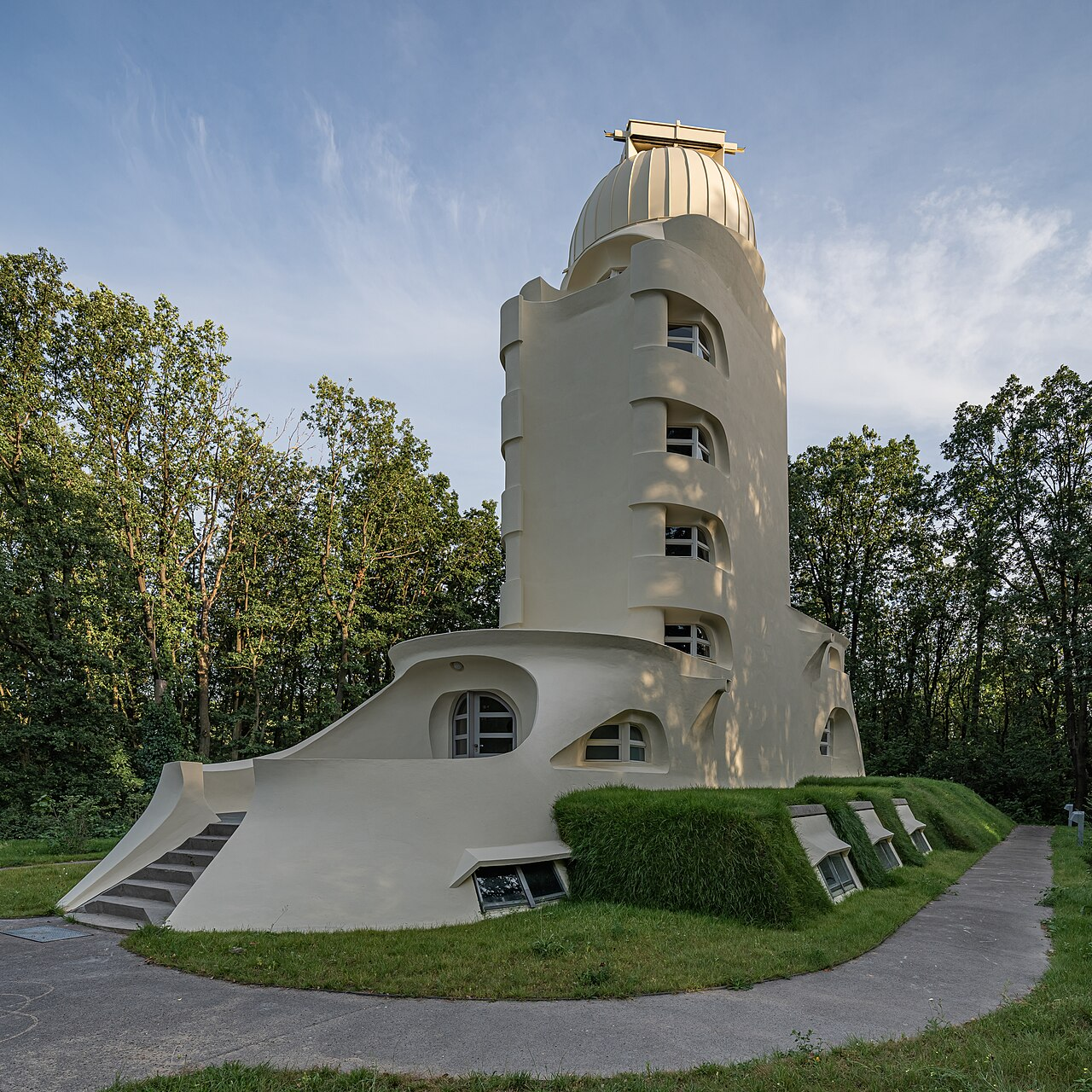
    Consider Marc Chagall’s I and the Village (1911), which projected “mystical futures” while remaining rooted in shtetl imagery, or Erich Mendelsohn’s Einstein Tower (1921), which used “dynamic, visionary architecture” to anticipate “new Jewish identities” while drawing on Jewish cultural memory. Both works refuse to choose between past and future. They exist in the oscillation itself.

    Erich Mendelsohn’s Einstein Tower (1921)

    My own practice with neon aesthetics, AI-integrated rituals, and speculative spiritual objects tries to inhabit this same oscillating space. The work is simultaneously reverent toward tradition and radically speculative about Jewish futures. It takes the midrashic impulse (interpreting and expanding upon existing texts) and applies it to material culture, visual art, and interactive experience. The question isn’t whether to look backward or forward, but how to create in the charged space where both directions exist at once.

    The Danger of Over-Explanation

    Here’s where methodology becomes crucial. The liminal space has power precisely because it resists total systematization. When you map everything, explain all the connections, resolve all the contradictions into a coherent world, you destroy the liminal quality you were trying to work with.

    The internet phenomenon of The Backrooms demonstrates this perfectly. In 2019, someone posted a single unsettling image on 4chan: an empty office space with yellowed lighting that evoked uncanny familiarity and wrongness. Its power came from mystery and minimalism. You could project your own dread onto that space. It remained undefined.

    But as one analysis explains, “the internet tends to reject simplicity. A mere image cannot suffice; it demands depth, a narrative, characters, and intricate worldbuilding”. Within months, The Backrooms “transformed from a strange setting into an entire alternate dimension, complete with its own physical laws and terrifying creatures. There are countless levels, each featuring unique themes, ecosystems, backstories, and factions”. A commenter captured what was lost: “Modern Fandom kills that feeling of liminality and making up your own interpretations. You’re never just ‘alone’ with a game or story giving you fractured information”.

    The lesson for Jewish futurism is clear. The moment you turn the “storehouse of options” into a fully mapped shared universe (like the Marvel Cinematic Universe or an RPG sourcebook), you’ve left liminal space behind. You’re no longer working with multiformity but with a single systematized world that happens to contain variety.

    Dwelling in the Threshold

    Jewish futurism as creative practice means learning to dwell in the threshold rather than passing through it. It means producing work that operates like midrash, creating new versions that coexist with rather than replace existing ones. It means embracing the metamodern oscillation between tradition and speculation, between melancholy and hope, between the archive and the unknown.

    Most importantly, it means resisting the urge to explain everything, to make it all cohere. The wilderness between Egypt and the Promised Land was where transformation happened precisely because it was undefined space, liminal territory where old certainties no longer held but new ones hadn’t yet solidified. That’s the space where Jewish futurism works.

    The magic is in the mystery. Once the mystery is gone, so is the magic.

  • What Went Wrong with Italian Futurism and Why Every futurist Needs to Know More About It

    What Went Wrong with Italian Futurism and Why Every futurist Needs to Know More About It

    When I teach graphic design history at Queens University of Charlotte, we hit a point in the semester that always makes me a little uncomfortable, because I know it’s coming before the students do. We’re talking about Italian Futurism, those bold typographic posters, a visionary sounding manifesto bursting with energy, those declarations about speed and machines and destroying museums. At first, students lean forward and feel like the work looks alive and feels thrilling. And then we read more deeply into the Marinetti’s words and we see that this movement became a propaganda apparatus for Mussolini’s fascist regime.

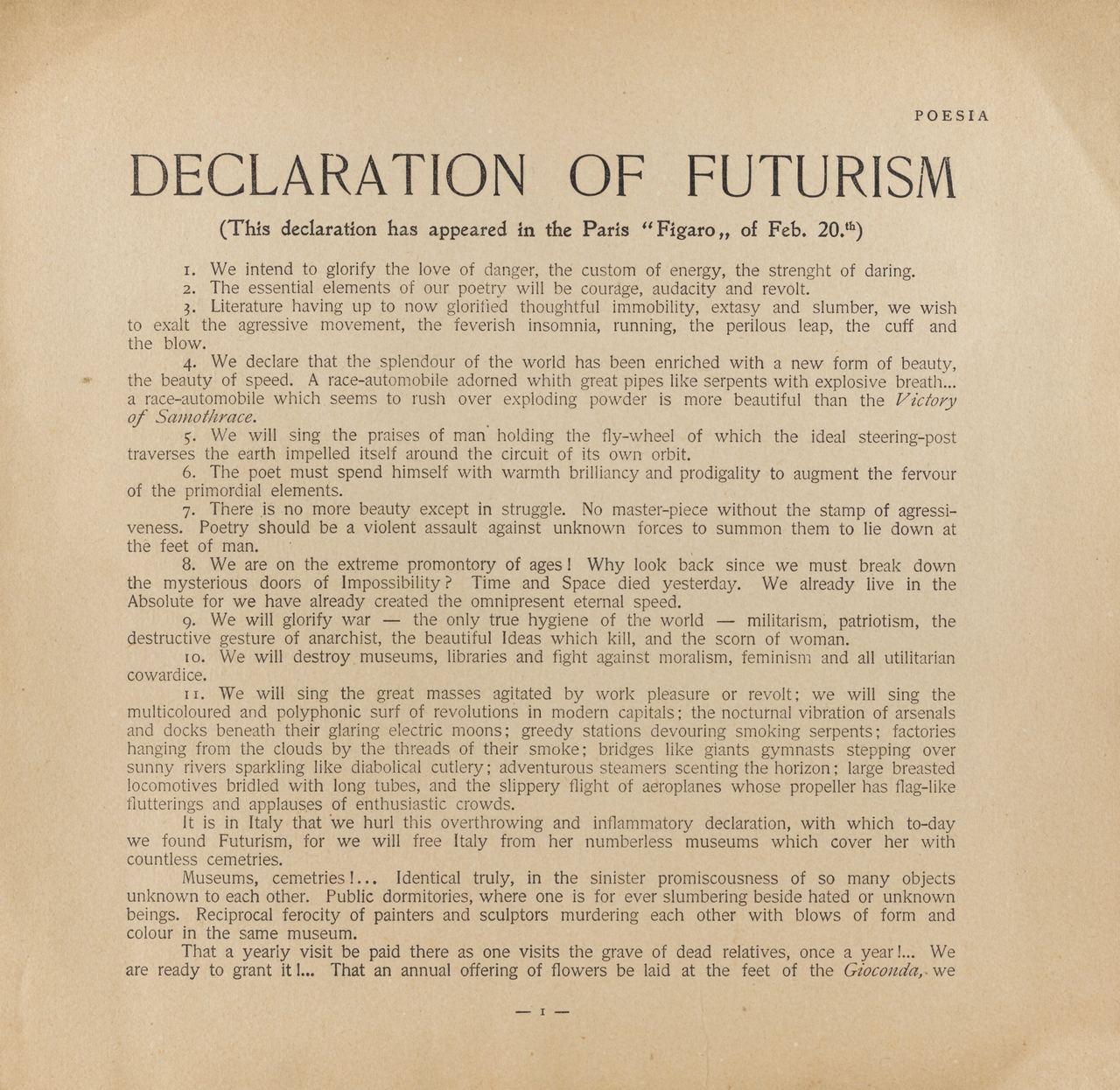
    The first page of the manifesto of Il Futurismo by FT Marinetti 1909

    Those promising-sounding ideas about breaking with the past? They’re loaded with fascist and racist intentions. That gorgeous energy? It was weaponized.

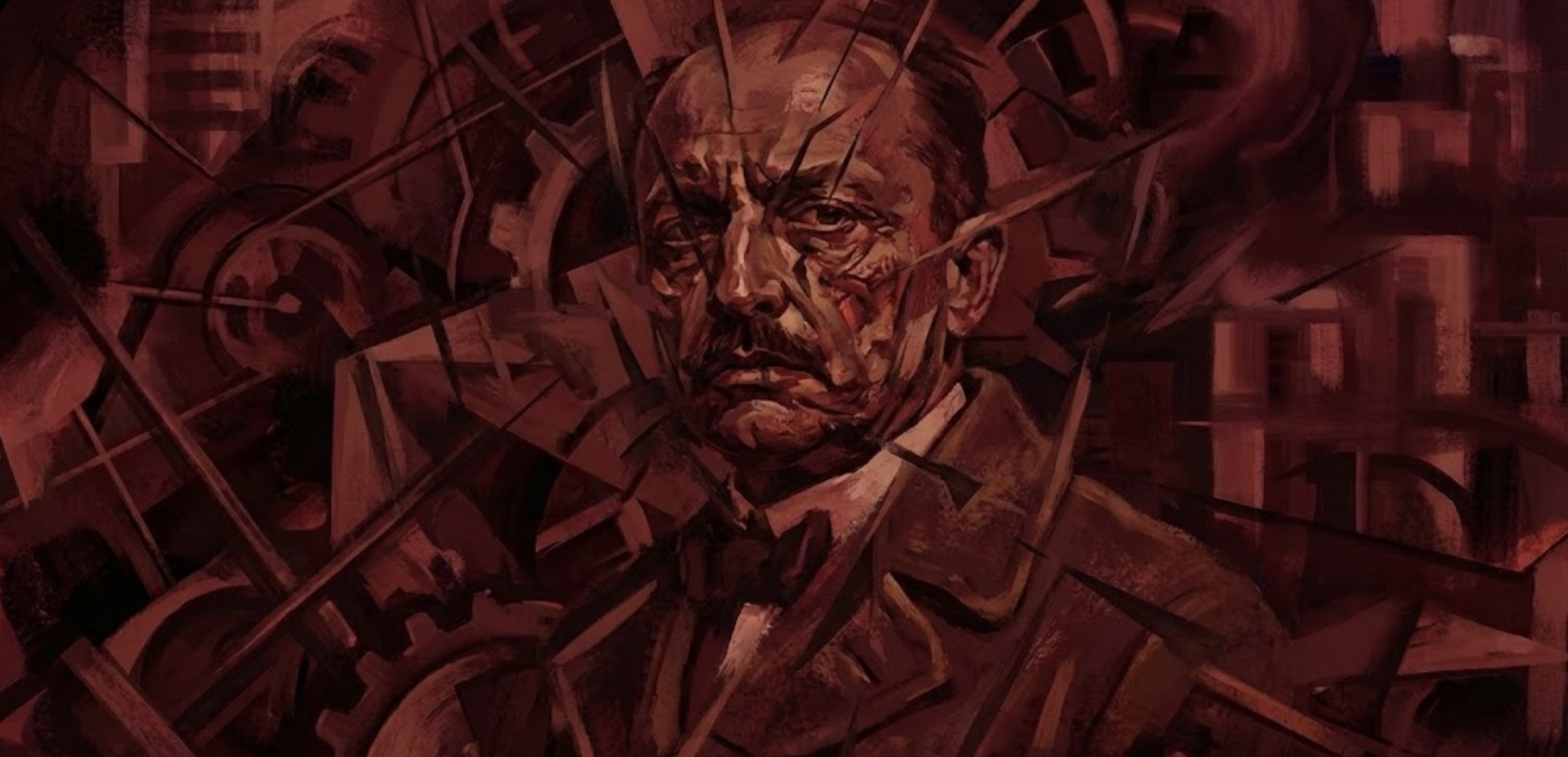
    FT Marinetti 1909

    This is the pedagogical tightrope I walk every semester, and it’s the same tightrope I’m walking in my work on Jewish futurism.

    I’m trying to rescue the core impulse of futurism, the bold, beautiful desire to imagine and design better futures, from what Italian Futurism did to it.

    Because here’s the thing: Italian Futurism started with legitimate, even utopian desires, and it still became a cautionary tale. If you’re going to study any kind of futurism seriously, you need to meet Italian Futurism early, not to emulate it, but to understand exactly what can go wrong when speed replaces wisdom and aesthetics trump ethics.

    Futurism vs futurism: Why the Capital Letter Matters

    I’ve started being very careful about capital F versus lowercase f. Futurism with a capital F names a specific historical movement: Marinetti’s Italian avant-garde, with all its inherited baggage. It’s bound up with nationalism, misogyny, the glorification of war as “the world’s only hygiene,” and an eventual merger with Mussolini’s Fascist Party in 1920. When I write “Futurism,” I’m signaling: we’re talking about that movement, that history, those consequences.

    Futurism with a lowercase “f” names something broader and more perennial: the human impulse to imagine, prototype, and design what comes next. It’s the practice of speculating about futures, whether through art, spirituality, technology, or politics. Lowercase futurism is a method and a desire, not an ideology. It’s the thing Jewish futurism, Afrofuturism, Queerfuturism, Sinofuturism, and Gulf futurism all share: the courage to ask what could be, and the willingness to build toward it.

    This distinction isn’t just academic. It gives us critical vocabulary. Capital-F Futurism becomes an object of analysis and caution, the ancestor we study to avoid repeating. Lowercase futurism becomes a space for repair, reinvention, and new ethical commitments. Jewish futurism inherits the impulse without inheriting the violence.

    How Futurist Movements Emerge: What They All Want at First

    Futurist movements consistently arise during periods of dramatic technological transformation and cultural rupture. Italian Futurism emerged from a very specific crisis. Turn-of-the-century Italy was struggling in ways that made the country feel stuck in the past. The government was weak and unstable. There was no real national identity binding the regions together. Industrial development lagged decades behind other European powers. Poverty was widespread, modernization faced fierce resistance, crime and corruption were endemic, and millions of Italians were emigrating in search of better lives.​

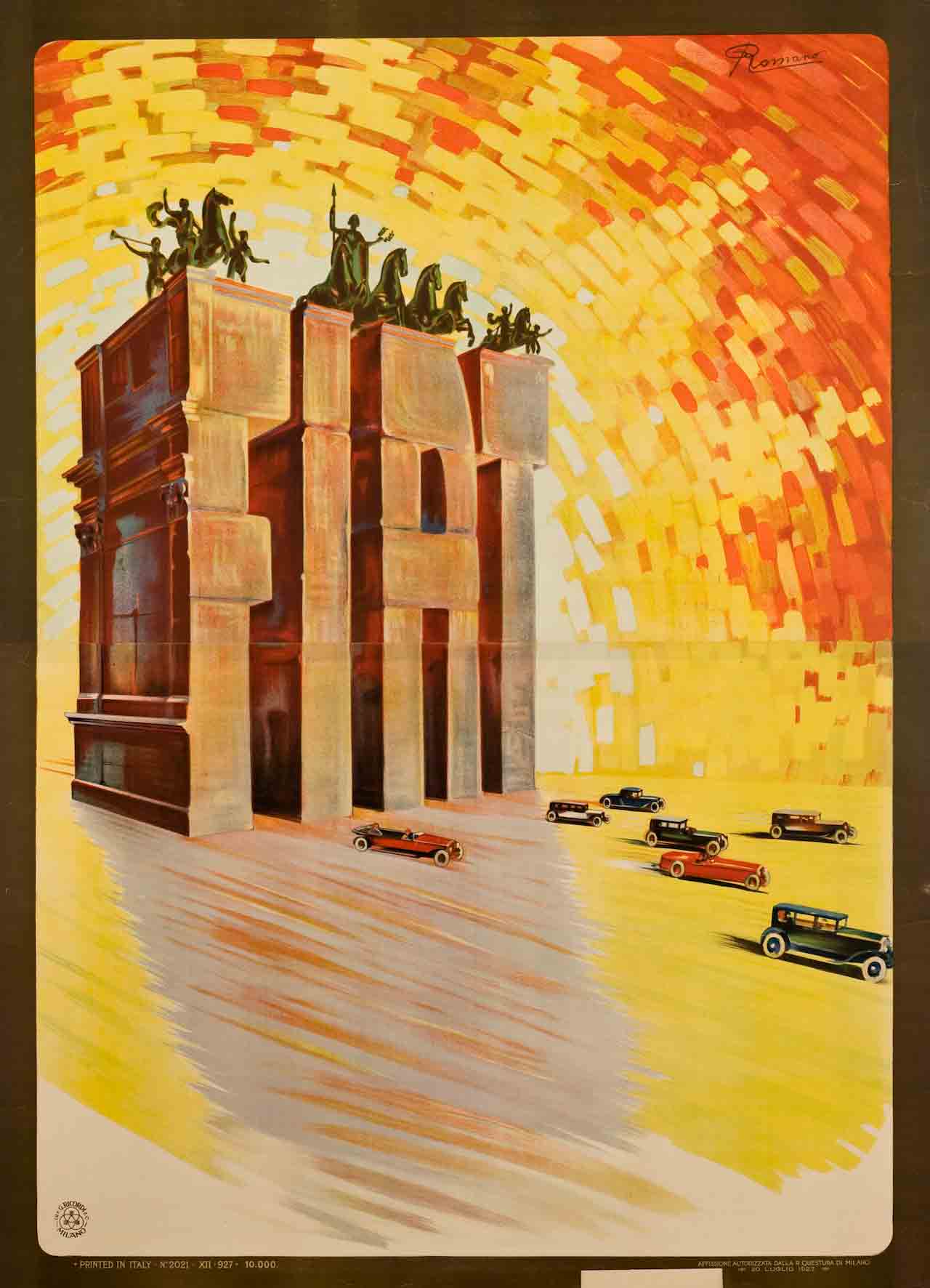
    FIAT, 1927 Giuseppe Romano (1905–67) Fondazione Massimo e Sonia Cirulli Collection, Bologna

    Meanwhile, foreign tourists flooded Italy to gaze at ancient ruins and Renaissance masterpieces, treating the country like a beautiful museum, a relic of what it once was. For young Italian intellectuals like Marinetti, this was humiliating. People came to see what Italy was, not what it is or could become. The weight of the past felt suffocating.

    This pattern repeats across other futurist movements. Afrofuturism developed in response to the ongoing trauma of the transatlantic slave trade and systemic oppression, seeking to reclaim narratives and imagine liberation. Gulf futurism arose from the rapid, oil-driven transformation of the Arab Gulf states. Sinofuturism responds to China’s technological rise and Western anxieties about shifting global power.​

    Despite their different contexts, these movements share foundational patterns. They reject traditions they perceive as inadequate or stifling. They embrace technology as a catalyst for radical cultural change. Most importantly, they assert the right to imagine and define their own futures rather than accepting externally imposed visions.​

    Codognato, Plinio Fiat 520 Optima!, 1928
    Lazzaro, Umberto di Italian Aerial Lines, 1933 ca.

    Futurist movements emerge from communities experiencing rupture, whether from rapid modernization, colonialism, diaspora, or globalization. They often adopt manifesto culture, broadcasting bold visions to gather followers. They’re youth-driven, appealing to younger generations eager to break free from what they see as the constraints of older orders.​

    At their inception, futurist movements typically seek cultural sovereignty, the synthesis of heritage and innovation, celebration of dynamism and transformation, radical breaks from oppressive pasts, and social change through technology. These are legitimate, even beautiful desires. The critical question is: what values guide those transformative visions? Italian Futurism demonstrates what happens when the desire to destroy the past overwhelms the responsibility to build just futures.​

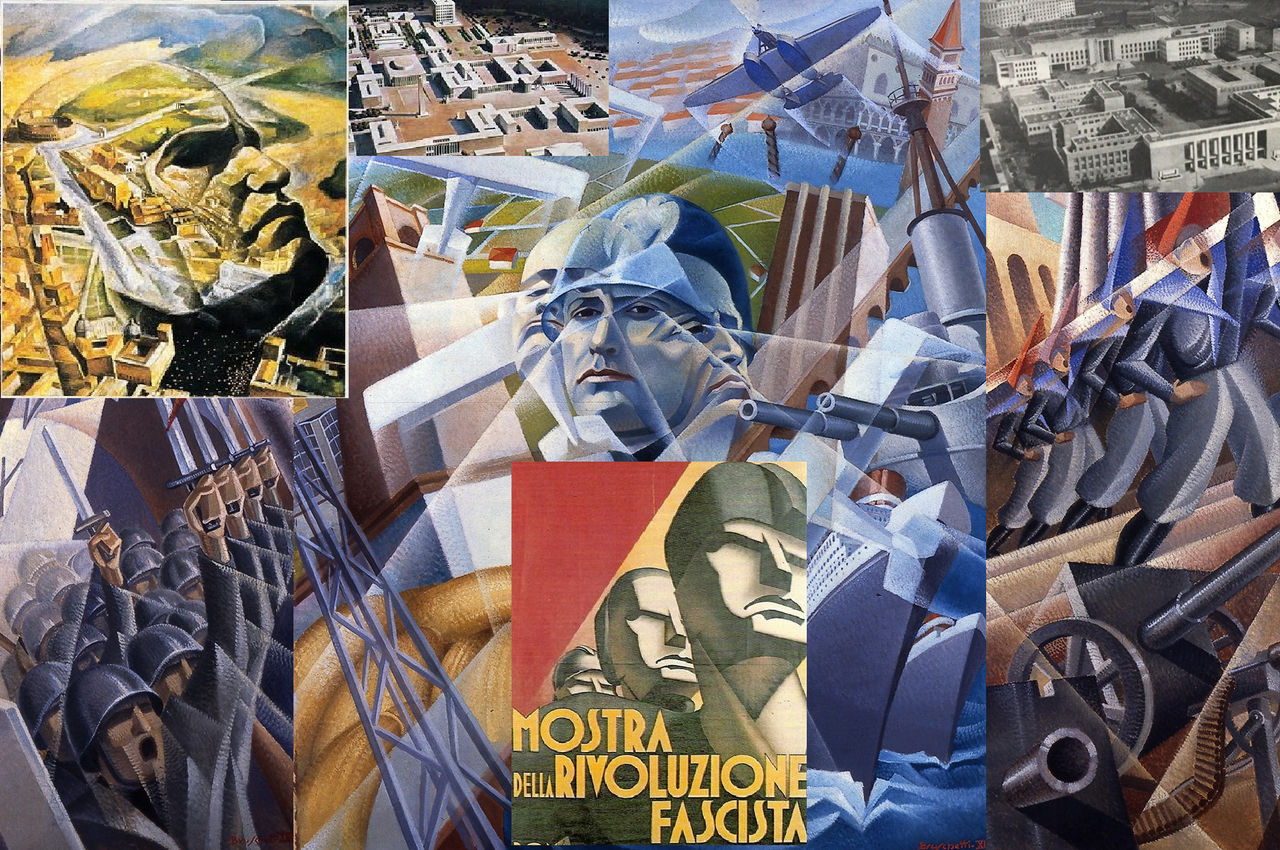
    Collage of Futurismo Fascisto Art By SheldonOswaldLee

    The Promise and Peril of Italian Futurism

    Filippo Tommaso Marinetti launched Italian Futurism with his 1909 manifesto, and it crackled with revolutionary energy. He declared the racing car more beautiful than the Winged Victory of Samothrace and announced war on museums, libraries, and academies. The movement promised total cultural transformation through speed, machines, violence, and youth.​

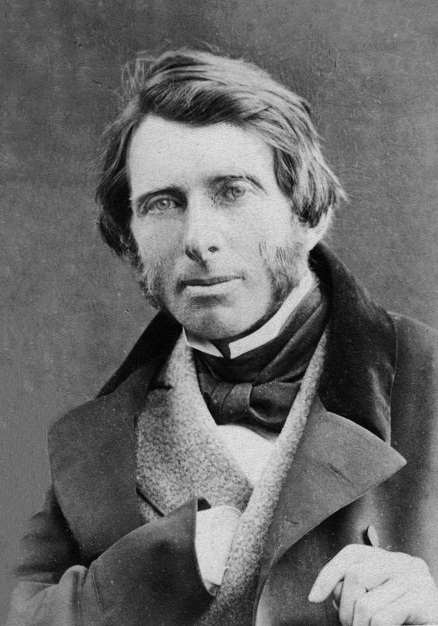
    But Marinetti wasn’t speaking metaphorically. He made actual political proposals to sell off Italy’s art heritage in bulk to other countries. Museums were “graveyards,” he argued, places that paralyzed Italy and prevented it from joining the modern world. Venice, beloved by foreign tourists, was dismissed as “Europe’s brothel”. Art critic John Ruskin, who had celebrated Italian cultural heritage, became an enemy figure.

    John Ruskin, 29 June 1863, Photo by
    William Downey (1829-1915)

    The Futurist manifesto even contained a self-consuming logic. It declared that when Marinetti himself turned 40, younger futurists should throw him “into the trash can, like useless manuscripts”. The movement advocated not just destroying museums once, but periodic cleansing of cultural memory. Nothing could be allowed to accumulate tradition or meaning.

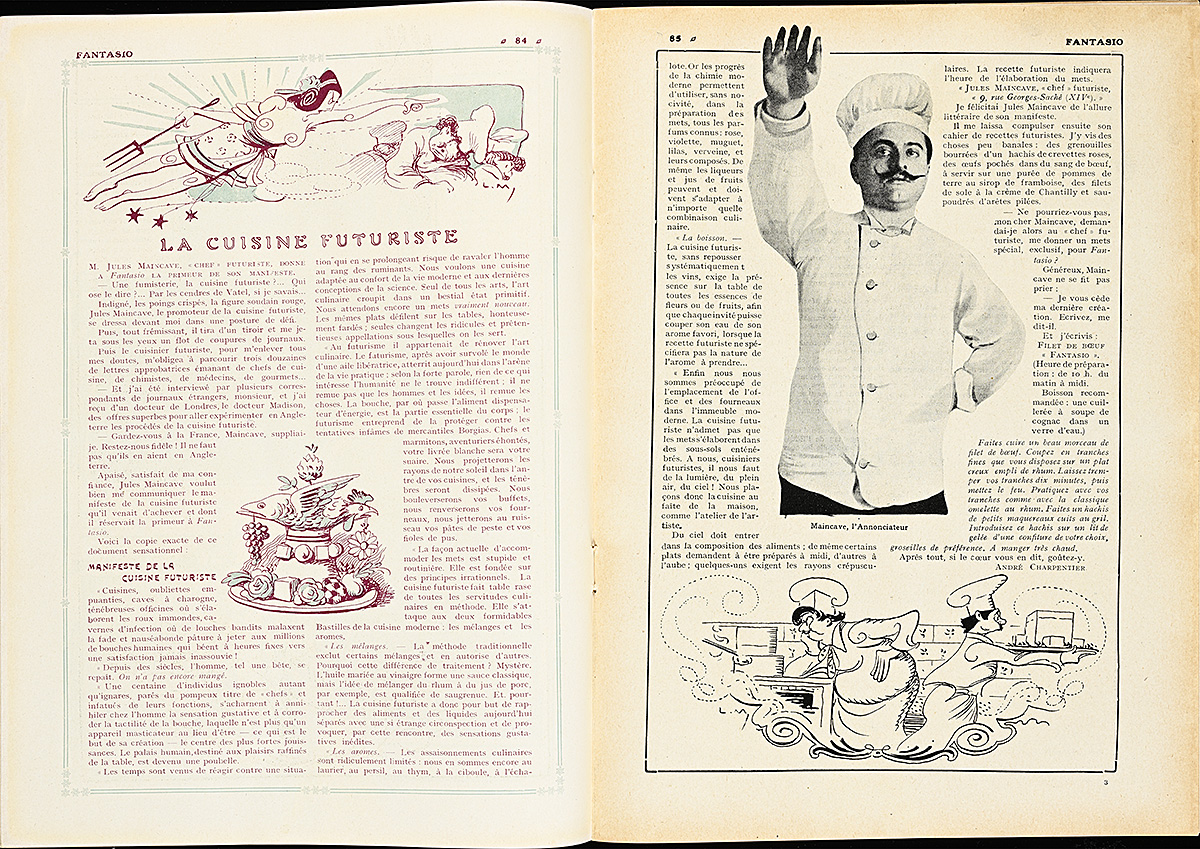
    FT Marinetti’s Futurist Cook book- where he calls for the ban of pasta form the Italian diet, 1913 Posterhaus

    The seeds of destruction were there from the beginning. Marinetti glorified war as “the world’s only hygiene” and promoted aggressive Italian nationalism. When the Futurist Political Party merged with Mussolini’s Fascist movement in 1920, artistic vision was subordinated to political power. The philosophical contradictions, celebrating individual creative genius while demanding conformity to nationalist ideology, created tensions that made the movement culturally irrelevant even as it gained political influence.​

    Aeroritratto di Mussolini aviatore, Alfredo Ambrosi, 1930

    Five Things That Went Catastrophically Wrong

    1. Glorification of Violence and Destruction

    Italian Futurism didn’t just accept violence as a historical reality. It actively celebrated war, aggression, and destruction as aesthetic and moral goods. The movement embraced Italian expansionism and cultural supremacy, making technological progress inseparable from domination. Rather than synthesizing past and future, Italian Futurism sought to obliterate history entirely, creating a vacuum that fascist ideology eagerly filled.​

    This pattern wasn’t unique to Italy. The source material connects Futurism to similar state-sponsored iconoclasm in revolutionary France, Soviet Russia, and Maoist China. When modernization ideology justifies cultural destruction, it creates dangerous precedents. The logic always sounds progressive at first: we must destroy the old to make way for the new. But that destruction rarely stops where its advocates promise.

    2. Absence of Ethical Guardrails

    The movement valued technology and speed for their own sake, with no moral framework to guide their application. Machines were beautiful because they were fast and powerful, not because they served human flourishing. This absence of empathy-centered design principles meant that when political power beckoned, the movement had no philosophical foundation to resist authoritarianism.​

    Marinetti viewed Italy’s cultural heritage not as something to be honored or reinterpreted, but as a burden to be liquidated. There was no question of what wisdom traditions might offer, no consideration of what future generations might need from the past. Speed was the only value.

    3. Authoritarianism Over Democracy

    Italian Futurism began with anti-monarchist and anti-clerical positions, challenging established power. These principles were quickly abandoned when Marinetti saw opportunities for influence within Mussolini’s regime. The movement became a propaganda tool, with artistic vision subordinated to the authoritarian state. Individual creative genius, once celebrated, was channeled into serving nationalist ideology.​

    4. Exclusionary Cultural Supremacy

    Italian nationalism and cultural dominance were core tenets from the start. There was no space for pluralism, interfaith dialogue, or universal design principles. The aggressive rejection of tradition created a vacuum where fascist ideology could flourish, as the movement offered speed and violence but no sustaining vision of human connection.​ Not to mention that the regime implemented Italian Racial Laws in 1938, introducing discrimination and persecution against Jews of Italy. 

    The humiliation Marinetti felt when tourists treated Italy as a museum of the past was real. But his response, to erase that past entirely rather than build new futures in dialogue with it, became toxic. Cultural sovereignty doesn’t require cultural amnesia.

    5. Aesthetic Without Substance

    When Mussolini refused to make Futurism the official state art of fascist Italy, the movement collapsed into cultural irrelevance. Decades of manifesto-writing had produced style over philosophical depth. Without a sustainable ethical foundation, Italian Futurism had nothing to offer once political winds shifted.​

    The movement’s self-consuming logic guaranteed this outcome. If nothing is allowed to accumulate meaning, if every generation must destroy what came before, then no stable cultural foundation can ever form. You can’t build futures on ground you keep setting on fire.

    Jewish futurism: Building From Different Ground

    This is where my work begins. Jewish futurism emerges from fundamentally different premises, offering a model for how technological optimism can coexist with ancient wisdom and ethical responsibility. Where Italian Futurism glorified destruction, Jewish futurism centers empathy-led innovation, positioning technology as a tool for meaning-making rather than domination.​

    Jewish history demonstrates millennia of resilience and reinvention without destroying the past. Continuous reinterpretation, of texts, traditions, cultural practices, allows Jewish communities to honor ancestral heritage while embracing modernity. This mirrors Afrofuturism’s Sankofa principle, which emphasizes learning from the past to inform future trajectories. Rather than revolutionary destruction, Jewish futurism practices synthesis and transformation.​

    In my own practice, Jewish futurism is rooted in Jewish thought: tikkun olam (repair of the world), justice, responsibility. Technology is never valued for its own sake but always in service of deeper moral commitments. This philosophical grounding provides the ethical guardrails that Italian Futurism catastrophically lacked. The question at the heart of my work is: “What kind of ancestor will you be?” That question changes everything.​

    Where Marinetti wanted to be thrown in the trash at age 40, Jewish futurism asks what we’re building that will outlast us, what we’re passing down that future generations will need. It’s not about preserving everything unchanged. It’s about being in active, creative dialogue with tradition while we build what comes next.

    What We Can Learn: Five Lessons for Building Responsible Futurisms

    Ethics Must Precede Aesthetics: Beauty and innovation without moral grounding enable atrocity. Technology requires wisdom traditions to guide its use. Speed without wisdom is just velocity. It doesn’t know where it’s going or why. When Marinetti proposed selling Italy’s art heritage in bulk, he showed what happens when aesthetic ideology overrides ethical consideration.​

    Honor the Past While Building the Future: Synthesis surpasses destruction as a strategy for cultural renewal. Tradition provides foundation for innovation rather than serving as an obstacle to it. Jewish tradition treats time as cyclical rather than linear, where past, present, and future dynamically interact. The humiliation Italy felt at being treated as a museum was real, but erasure isn’t the only response. We can acknowledge what’s broken in our inherited traditions while keeping what sustains us.​

    Center Human Dignity Over Cultural Supremacy: Universal design principles create futures for all people, not just dominant groups. futurism must be liberatory rather than oppressive, replacing nationalism with empathy and collaboration. Jewish futurism creates shared spaces for collective growth and interfaith collaboration. The pattern of state-sponsored iconoclasm, from revolutionary France to Soviet Russia to Maoist China, shows us what happens when one vision of the future tries to erase all others.​

    Resist Political Opportunism: Artistic movements must maintain ethical independence even when political power beckons. When survival requires moral compromise, the movement has already failed. Marinetti’s compromises to ensure the movement’s survival hollowed it out from within. The proposals to liquidate cultural heritage weren’t just aesthetic statements. They were political calculations about access to power.​

    Root Innovation in Community: Collective meaning-making replaces the cult of individual genius. As I’ve learned in my own practice, the future, like design itself, is fundamentally a team sport. It thrives when we create collectively and collaboratively. Collaboration and care supersede competition and domination. The Futurist manifesto’s call to throw Marinetti himself in the trash at 40 reveals a movement with no concept of intergenerational continuity, no way to pass wisdom forward.​

    The Responsibility of Imagining Futures

    Every speculative vision carries political and ethical consequences. Italian Futurism’s trajectory from revolutionary art movement to fascist propaganda machine demonstrates that enthusiasm for the future, absent ethical grounding, can enable profound harm.​

    When I stand in front of my design students at Queens, looking at those bold Futurist posters, I don’t want to just critique them. I want to show what it looks like to rescue the core impulse, the courage to imagine radically different futures, from what got corrupted. The frustration Marinetti felt was real. Italy was stuck. The weight of the past was crushing. Foreign tourists treating the country as a beautiful corpse was genuinely humiliating. But his solution, to burn it all down and start from nothing, created more problems than it solved.

    Jewish futurism offers that alternative model: technological optimism rooted in ancestral wisdom, innovation guided by empathy, futures built through synthesis rather than destruction. We can honor what we’ve inherited while transforming it. We can be critical of traditions that harm while keeping what sustains. We can build futures that acknowledge the past without being imprisoned by it.​

    The question isn’t whether we’ll imagine futures. In periods of technological transformation, futurist movements will inevitably emerge. The question is what values will guide those visions. Will we learn from history’s warnings about the price of speed without wisdom, aesthetics without ethics, innovation without responsibility? Or will we repeat Italian Futurism’s mistakes with new technologies and new manifestos?​

    I’m betting we can do better. Jewish futurism, and the broader family of ethical futurisms it’s part of, shows us how. We can be bold and careful. We can embrace transformation and honor memory. We can design futures that are actually livable, not just fast. That’s the work. That’s what I’m trying to build.

  • Rimon: The Cosmogranate, A Jewish futurism Interactive Light Installation

    Rimon: The Cosmogranate, A Jewish futurism Interactive Light Installation

    • Project Title: “Rimon: The Cosmograntate”
    • Project Type: Interactive Installation
    • Year Created: 2023
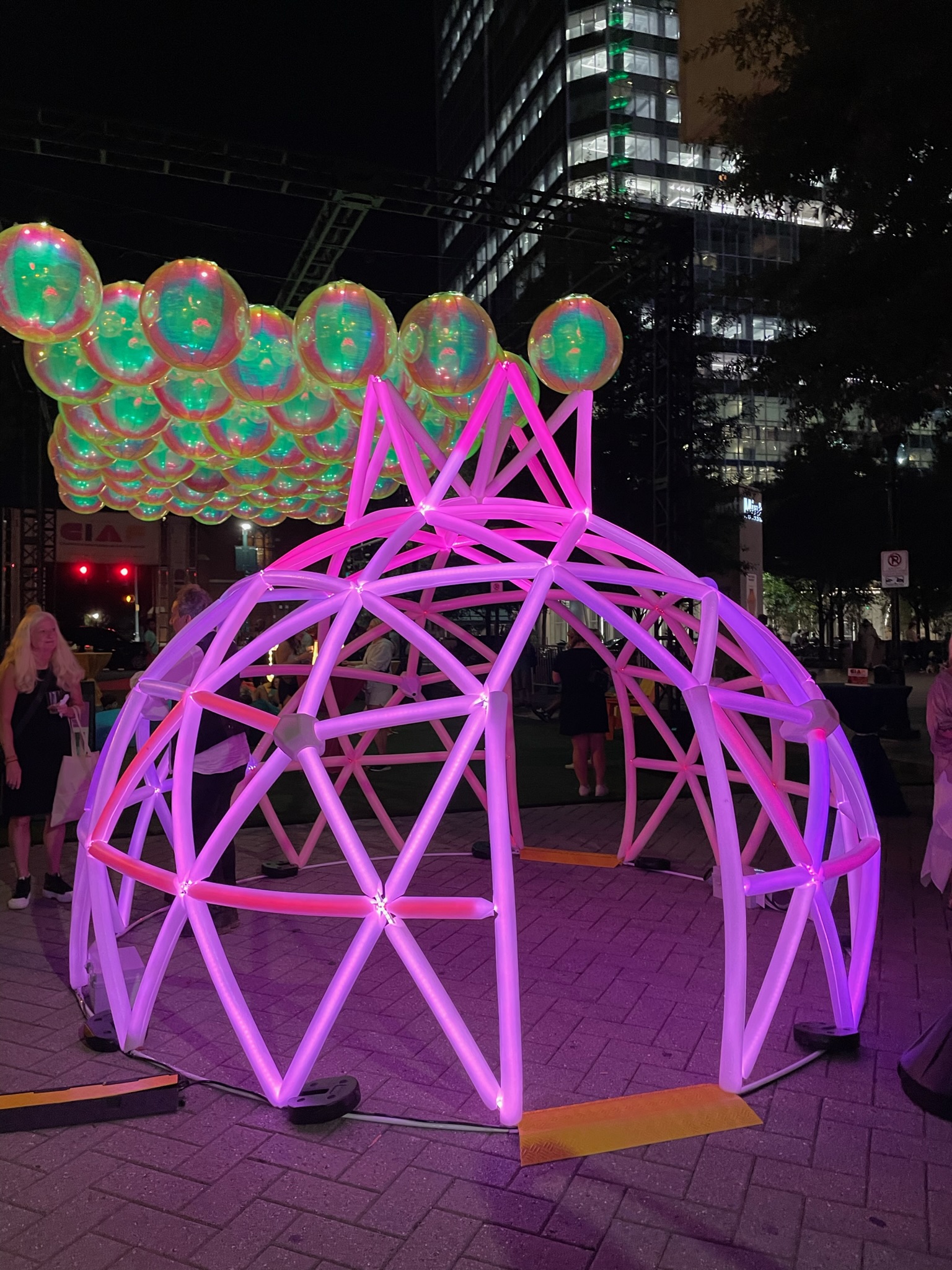
    • Technology: Controllable LED, ESP32 Microcontroller, WLEDs, Ultrasonic Sensors, Microphone input
    • Goal: Create an immersive space that reacts to participants’ audio and motion input.
    • Awards: 2023 Blumenthal Arts Fellowship Grant Winner

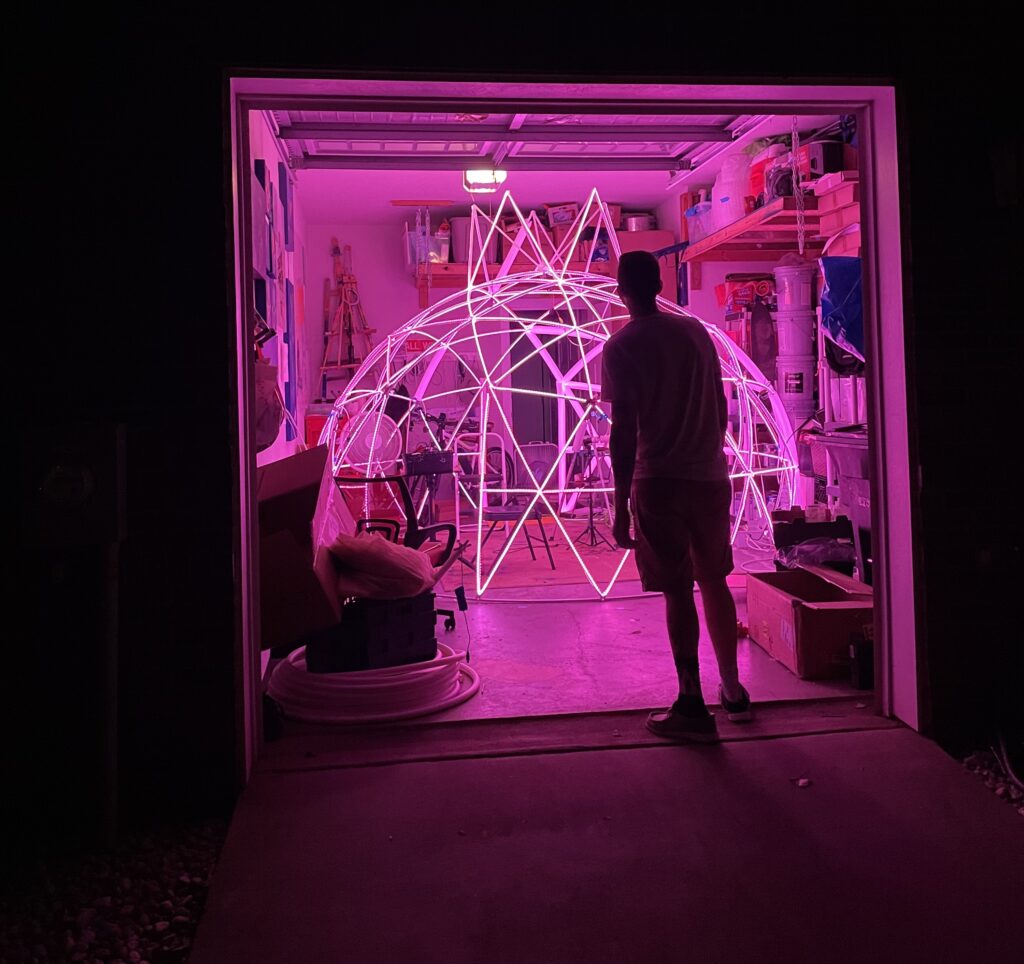
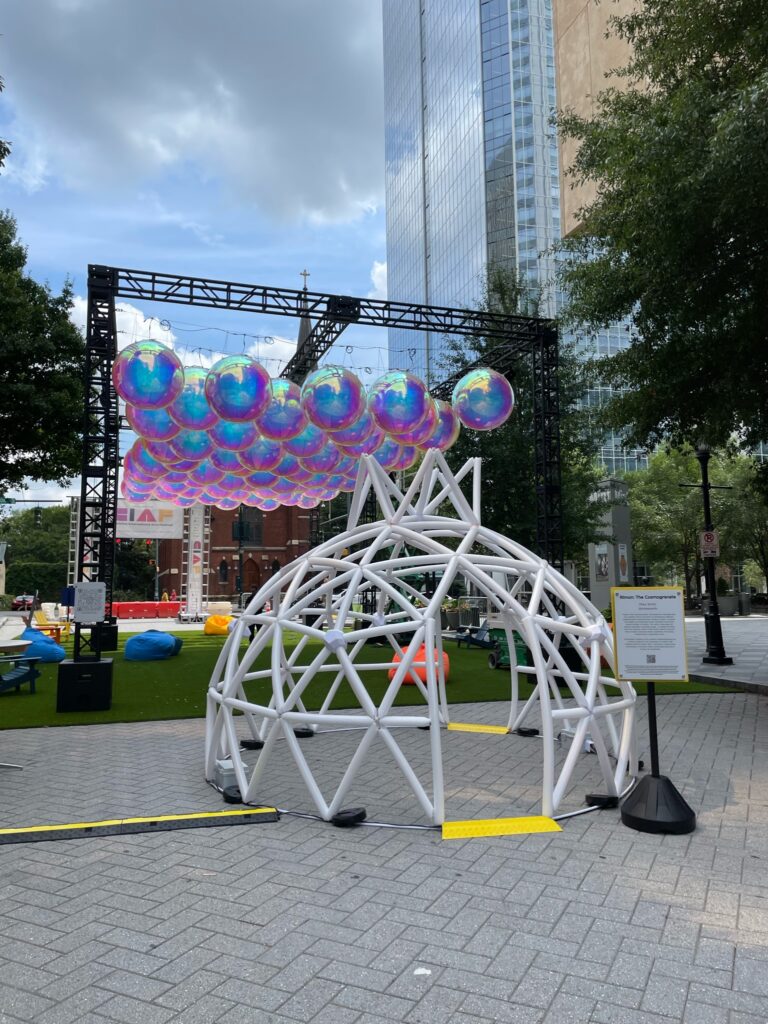
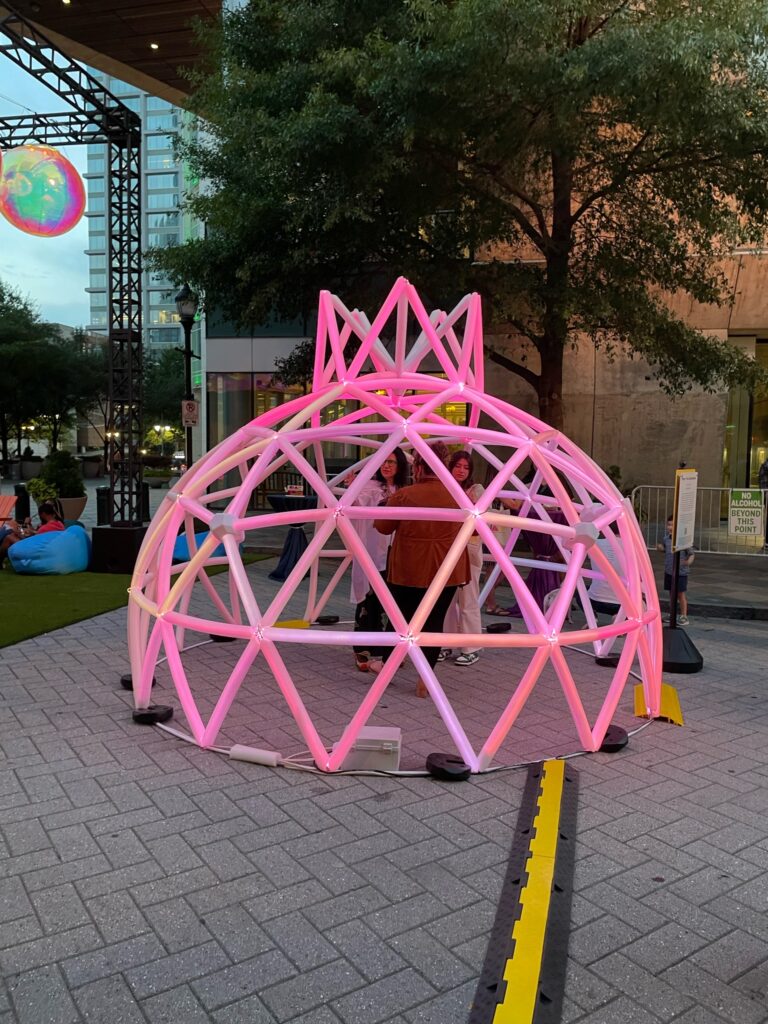
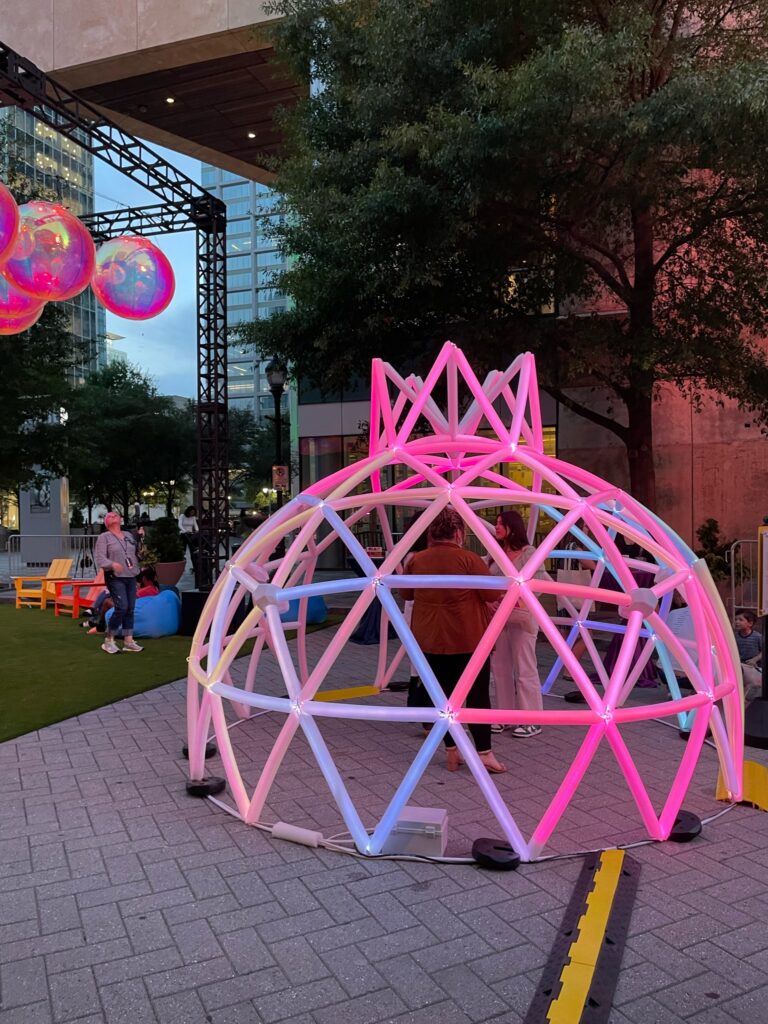
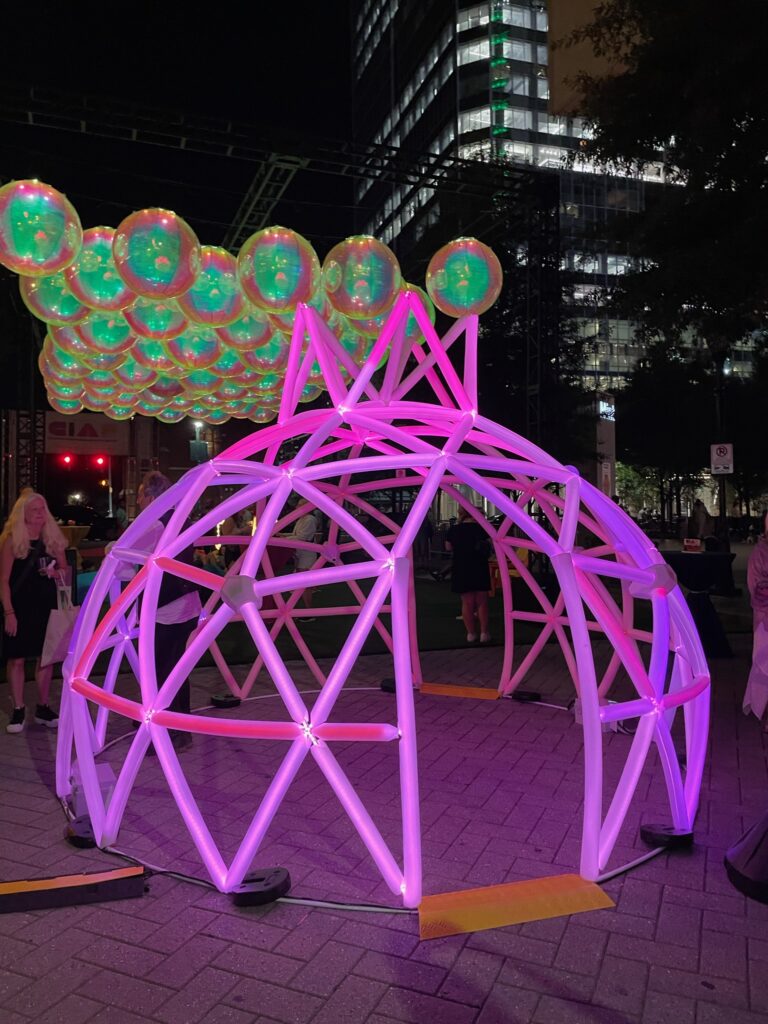
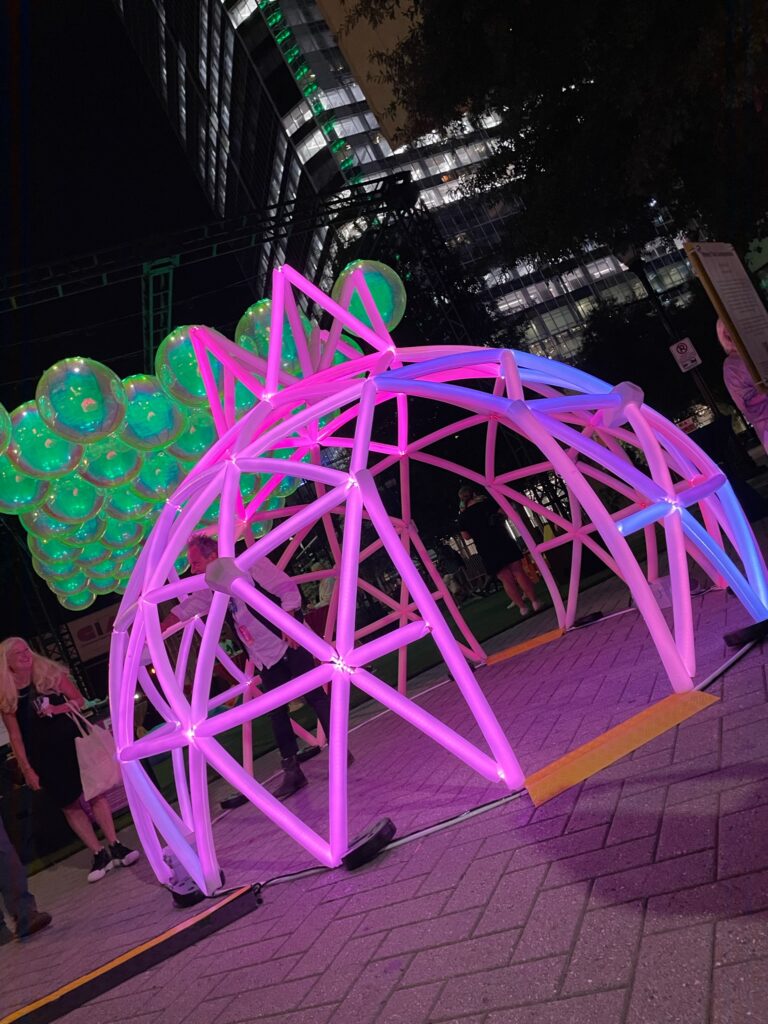
    “Rimon: The Cosmogranate” is an immersive art piece, inspired by the Hebrew word ‘rimon,’ meaning pomegranate. Its form mirrors the fruit, emitting a radiant significance. At its core, it merges art with interaction. Inner sensors respond to audience movement and sound input, translating presence and voice into a dynamic interplay of lights and sounds.

    This kinetic symphony crafts a unique and captivating experience that boasts shining over 14k LED lights. The project honors a tradition of Jewish ingenuity, echoing the pomegranate’s role in the Torah and the cherished Sukkah during Sukkot. Rooted in Mike Wirth’s Jewish futurism body of work, the project blends ancient wisdom with futuristic visions.

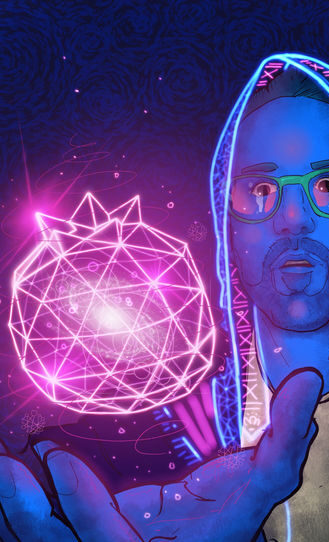
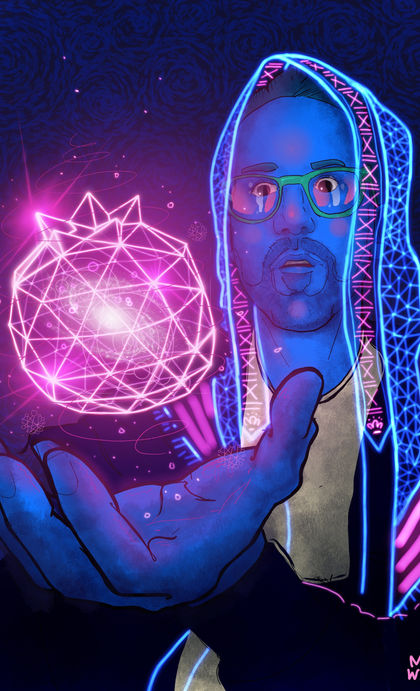
    illustration of Mike's cosmogranate.
    Mike’s original illustration that inspired the installation. (2021)

    This resonant symbol, shared across cultures and religions, serves as a unifying emblem. Here, technology, spirituality, and community converge, each light and sound carrying a timeless narrative. Step into this radiant realm, where history’s echoes meld with the pulse of innovation, weaving a tapestry of unity and celebration across generations.

    The Interaction

    Audio Input Test in Mike’s Studio (2024)

    Exhibitions

    Charlotte International Arts Festival

    Charlotte, NC, USA

    AUG – SEPT 2023

    Art Fields

    Lake City, SC

    JUN – AUG 2024

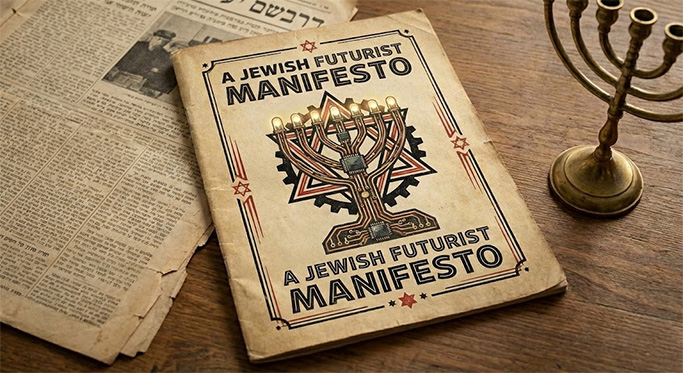
  • The Jewish futurist Manifesto

    The Jewish futurist Manifesto

    9–14 minutes

    Introduction: Why a Jewish futurism Manifesto

    Almost every modern era or movement of art has announced itself with a manifesto to declare what must come next. Often these manifestos of the past were blustery often spoke in the language of conquest. Most notably, the Italian Futurists (1909-1943) text glorified war, destruction, and exclusion of certain types of people. Unfortunately, their call for progress came at the expense of compassion and aligned themselves with fascism and antisemitism. For more insights, please read the previously wrote about the warnings that we can head from Italian Futurism in this article. Others defined themselves by what they rejected, not by what they hoped to heal.

    I wrote The Jewish futurism Manifesto as an act of tikkun, to repair that lineage. It reclaims the idea of the manifesto as a sacred, inclusive, and ethical declaration of creative purpose. Where earlier manifestos worshiped speed and dominance, this one turns toward kavvanah (intention), chesed (compassion), and tzelem Elohim (the divine image in all). Read more about Mussar, Jewish ethics here.

    We stand at a new threshold: between text and code, between human and machine, between memory and invention. Judaism, with its deep traditions of questioning, balance, and ethical creation, offers precisely the framework that modernity has lacked. This manifesto emerges from that realization that art, design, and technology can be Jewishly spiritual, halakhic, and humane.

    Where other groups intended to shatter, we intend repair. Where others sought power, we seek presence. Jewish futurism is not rebellion for its own sake, but a recommitment to the creative covenant that began at Sinai. To make the world more beautiful, conscious, and just.

    Throughout history, Jewish creativity has emerged in response to the extremes of its age. The Kabbalists of Safed (Tzfat, Israel) turned exile into cosmic repair; the artists of the Haskalah transformed enlightenment into moral awakening. From illuminated manuscripts to, the printing press, to digital light, Jews have continually reimagined how revelation meets reality. Jewish futurism continues this lineage, translating timeless values into the language of design and technology. It sees every tool, from ink to algorithm, as part of the same creative inheritance, each awaiting sanctification. Ours is not a rupture from tradition, but its renewal in the medium of the future.


    The Manifesto

    The Future is Jewish

    Jewish futurism envisions a world where Jewish wisdom, art, and halakhah evolve in dialogue with technological creation. We reject nostalgia as fear disguised as reverence. Tradition is not a cage but a scaffold for renewal. Jewish identity thrives through adaptation, spanning from parchment to print, from diaspora to data. We imagine futures where Torah and technology are not opposites but partners in creation. The Jewish future is not going to be inherited, it needs to be designed.

    Sar HaTorah vs. Golem Mindset

    Jewish futurism begins where two myths meet: the Sar HaTorah, the angel of instant wisdom, and the Golem, the creature of blind obedience. One represents revelation without readiness; the other, power without conscience. Both warn of imbalance. The Sar blinds with too much light; the Golem crushes with too much force. Jewish futurism seeks a third way by introducing a design ethic that blends divine insight with moral integration. Our task is not to summon knowledge nor to manufacture strength, but to cultivate binah, discernment. In the age of AI, this means we pursue creativity with kavvanah (intention) and gevurah (restraint), so that what we build remains worthy of the divine image in which we were formed.

    Technology as Sacred Instrument

    Technology is never neutral. Each codebase, algorithm, and interface embodies human ethics. Jewish futurism treats technology as a potential kli kodesh, a vessel for holiness, when guided by Halakhah and Mussar. Like Betzalel and the artisans of the Mishkan, we design not for utility alone but for meaning. AI and creative machines can assist, but they cannot own intention. Tzelem Elohim makes moral authorship a human mitzvah. When we design with reverence and responsibility, innovation itself becomes my concept of Hiddur Olam, the beautification of the world.

    Speculative Imagination is Torah

    To imagine is to interpret. Prophets, mystics, and sages were Jewish Futurists long before the term existed. The Zohar’s visions, the debates of the Talmud, and the architectural dreams of the Temple are all acts of sacred speculation. Jewish futurism extends this lineage into art, design, and digital creation. Speculative fiction and AI-generated imagery become new midrashim, helping us ask: What does redemption look like in an age of code? What new mitzvot emerge when creativity itself becomes shared with our tools? If we aren’t asking these questions then we aren’t really looking at these technologies seriously as a people worthy of wielding it and will unfortunately become victim of it if we don’t take our rightful place as spiritual designers.

    Diaspora, Zion, and the Digital Beit Midrash

    Jewish peoplehood has always been networked. From Babylon and Jerusalem Talmuds to the Sefaria.org, our collective consciousness and knowledge move with us. The digital realm is today’s Beit Midrash, a study hall without walls. Wherever Jews gather, be it in sanctuaries, studios, or shared screens, Shekhinah shruyah beynayhem, the Divine Presence dwells among them. The next Zion may be both physical and virtual, both rooted and planetary. Jewish futurism honors multiplicity as our strength and connectivity as our new covenant.

    Rituals for the Coming Age

    Every generation reshapes ritual. The sages debated how to light candles or bind tefillin and we now ask how to sanctify the click, the stream, the prompt. AI-generated liturgy, AR sukkot, or blockchain tzedakah are not departures from tradition but continuations of its creative evolution. Halakhah is a living design system that adapts intention to circumstance. To innovate within it is to participate in revelation itself. The question is never only “Can we build it?” but “Can it carry holiness?”

    Memory as Living Code

    Jewish memory is dynamic, recursive, alive. To remember is to remix, to link past and future through creative continuity. AI and design tools can help us recover lost melodies, visualize midrashim, and illuminate forgotten voices. But data alone is not zekher, memorial. Memory without relationship becomes archive, not covenant. Jewish futurism calls us to use digital recall as teshuvah to renew moral awareness, not mere nostalgia.

    Justice and Halakhic Design

    Tikkun Olam, beautifying the world, remains the core program of Jewish futurism. We code, design, and build through chesed (kindness) and yirah (awe). Halakhah becomes a form of systems design when we build a moral architecture balancing din (structure) and rachamim (compassion). We recognize the commandment lo ta’amod al dam re’echa, do not stand idly by, as an ethical requirement for algorithmic justice, environmental stewardship, and digital accessibility. To design ethically is to fulfill mitzvah.

    Art as Prophecy, Design as Teshuvah

    The artist stands between the Sar HaTorah and the Golem, by receiving insight yet shaping it responsibly. Art is prophetic when it awakens conscience, not when it predicts trends. Design becomes teshuvah when it restores balance between human and machine, intention and automation. Jewish futurism teaches that the act of creation must include reflection that supports the feedback loop of soul and system. To make without reflection is to build a Golem; to seek revelation without preparation is to summon the Sar. To create with awareness is to become a partner in tikkun.

    The Messianic and the Real

    Jewish futurism lives between utopia and maintenance, between the dream and the debug. We do not await redemption as download or singularity; we construct it through ethical iteration. L’taken olam b’malchut Shaddai, to repair the world under divine sovereignty now includes building technologies that emulate divine attributes like compassion, humility, and restraint. Every ethical choice is a small redemption, a patch to the cosmic code.

    A Shared Horizon of Jewish Becoming

    Jewish futurism is not one style, and it is not one door into tomorrow. Some of us arrive as Merkavah Mystics, building visionary symbols and dream logic. Some arrive as Constructivist System-Builders, treating typography, image, and structure as the scaffolding of new worlds. Some arrive as Civic Blueprint Futurists, designing society forward through public space, planning, and collective infrastructure. Others are Archive-to-Future Salvagers, gathering fragments of story, object, song, and memory as raw material for what comes next. Others are Diaspora Worldbuilders, shaping Jewish futures through language, publishing, education, and cultural networks. And some are Ritual Prototype Designers and Ethical Speculators, turning Jewish practice into a living design lab where values lead and the future is built on purpose. Different lenses, same horizon. We are all staring at the same point in the distance, and arguing with it, praying with it, designing toward it, because the future is not a place we wait for. It is a place we make.

    Becoming Future Ancestors

    To be Jewish is to live across time and to carry memory forward and design possibility backward. Jewish futurism asks us to leave behind moral infrastructure, not just digital traces. The mitzvah of areyvut, mutual responsibility, extends to those who will inherit our algorithms, our art, and our stories. We are not only descendants of Sinai; we are its next iteration. To design consciously is to code for eternity.

    Collective Imagination and Creation

    Jewish futurism is a collective project: part yeshiva, part studio, part lab. It belongs to all who seek to sanctify imagination. We will build this future together, not as masters of machines but as students of wonder. The choice before us is ancient. Should we create as the Golem, blindly powerful, or as the Sar HaTorah, radiantly wise. Or should we find the sacred balance between them, where halakhah, creativity, and humility converge.

    Let us design toward Hiddur Olam, a world made more beautiful through seeking wisdom, restraint, and awe.


    Works Cited (MLA) Updated, with Sar HaTorah + Golem sources added

    Fishbane, Eitan. “Tikkun Olam: Repairing the World, Healing God in Kabbalistic Thought.” The Jewish Theological Seminary, 17 July 2023, https://www.jtsa.edu/event/tikkun-olam-repairing-the-world-healing-god-in-kabbalistic-thought/. Accessed 19 Jan. 2026.

    Han, Jae Hee. “Angelic Contemplation in the Sar Torah and the Prognostic Turn.” Prophets and Prophecy in the Late Antique Near East, Cambridge University Press, 26 Oct. 2023, https://www.cambridge.org/core/books/prophets-and-prophecy-in-the-late-antique-near-east/angelic-contemplation-in-the-sar-torah-and-the-prognostic-turn/C8EE08B1543602E7BFC79CF912D8331A. Accessed 19 Jan. 2026.

    Jones, Jonathan. “‘We Will Glorify War – and Scorn for Women’: Marinetti, the Futurist Mussolini Sidekick Who Outdid Elon Musk.” The Guardian, 9 Jan. 2025, https://www.theguardian.com/artanddesign/2025/jan/09/marinetti-the-futurist-mussolini-sidekick-who-outdid-elon-musk. Accessed 19 Jan. 2026.

    Kaval, Allan. “Rome Exhibition on Futurism Exalts the Italian National Narrative.” Le Monde (English edition), 20 Apr. 2025, https://www.lemonde.fr/en/opinion/article/2025/04/20/rome-exhibition-on-futurism-exalts-the-italian-national-narrative_6740429_23.html. Accessed 19 Jan. 2026.

    Library of Congress. “Manifesto of the Futurist Painters.” Library of Congress, https://www.loc.gov/item/2021667100/. Accessed 19 Jan. 2026.

    Leiman, Shnayer Z. “The Golem of Prague in Recent Rabbinic Literature.” The Seforim Blog, 3 May 2010, https://seforimblog.com/2010/05/golem-of-prague-in-recent-rabbinic/. Accessed 19 Jan. 2026.

    Marinetti, F. T. “Manifesto of Futurism.” Design Manifestos, 1909, https://designmanifestos.org/f-t-marinetti-manifesto-of-futurism/. Accessed 19 Jan. 2026.

    Robinson, Ira. “The Golem of Montreal.” Jewish Review of Books, 5 Oct. 2022, https://jewishreviewofbooks.com/jewish-history/12566/the-golem-of-montreal/. Accessed 19 Jan. 2026.

    Sefaria. “The Torah and the Angels.” Sefaria: Topics, https://www.sefaria.org/topics/the-torah-and-the-angels. Accessed 19 Jan. 2026.

    “Golem Legend.” YIVO Encyclopedia of Jews in Eastern Europe, https://encyclopedia.yivo.org/article.aspx/Golem_Legend. Accessed 19 Jan. 2026.

    Areyvut (ar-AY-voot) ערבות
    Mutual responsibility. The idea that Jewish life is bound up together, ethically and practically.

    Beit Midrash (BAYT MEE-drash) בית מדרש
    A Jewish study hall. In this article, a metaphor for shared learning spaces, including digital ones.

    Binah (BEE-nah) בינה
    Discernment and understanding. Not just knowledge, but the ability to interpret wisely and act well.

    Chesed (KHEH-sed) חסד
    Lovingkindness. A core ethical trait and a guiding value for design choices.

    Din (deen) דין
    Judgment or structure. Often paired with compassion to describe balanced moral systems.

    Gevurah (geh-VOO-rah) גבורה
    Strength and restraint. Power that is disciplined, bounded, and ethically contained.

    Halakhah (hah-lah-KHAH) הלכה
    Jewish law and practice. A living system that guides behavior, ritual, and communal norms.

    Haskalah (hah-skah-LAH) השכלה
    The Jewish Enlightenment, associated with modern education, literature, and cultural transformation.

    Hiddur Olam (hee-DOOR oh-LAHM) הידור עולם
    Beautifying the world. A framework where creativity and design serve ethical repair and sacred purpose.

    Kavvanah (kah-vah-NAH) כוונה
    Intention. The inner direction behind an act, not only the visible outcome.

    Kli Kodesh (klee KOH-desh) כלי קודש
    A vessel of holiness. A tool or object used in service of sacred purpose.

    Merkavah (mehr-kah-VAH) מרכבה
    Chariot mysticism. Jewish visionary tradition centered on symbolic, otherworldly imagery.

    Midrash (MEE-drash) מדרש
    Interpretive teachings that expand Torah through story, commentary, and imagination.

    Mishkan (MISH-kahn) משכן
    The Tabernacle. A model for sacred making guided by craft, structure, and intention.

    Mussar (MOO-sar) מוסר
    Jewish ethical discipline focused on refining character traits through practice and reflection.

    Rachamim (rah-khah-MEEM) רחמים
    Compassion or mercy. Often paired with din to describe moral balance.

    Shekhinah (sheh-khee-NAH) שכינה
    The indwelling Divine Presence. In rabbinic language, presence that dwells among people gathered with intention.

    Tikkun Olam (tee-KOON oh-LAHM) תיקון עולם
    Repairing the world. Often used for social responsibility, with roots in Jewish mystical language of repair.

    Teshuvah (teh-shoo-VAH) תשובה
    Return and repair. A process of course-correction, not just regret.

    Tzelem Elohim (TSEH-lem eh-loh-HEEM) צלם אלוהים
    The divine image in every human being. A foundation for dignity, ethics, and responsibility.

    Zekher (ZEH-kher) זכר
    Covenantal remembrance. Memory that stays relational and morally active, not just archived.

    Zion (tsee-YOHN) ציון
    A layered term meaning Jerusalem and the symbolic center of Jewish peoplehood, longing, and future-building.

  • Spiritual pixels: reconciling Judaism and NFTs

    Spiritual pixels: reconciling Judaism and NFTs

    Exporting cultural richness online through the worlds of Torah and NFTs

    Originally Published by Challah Magazine.com (2022)

    By
    Mike Wirth

    By now you’ve heard quite a bit about NFTs (non-fungible tokens) and may have jumped into their world yourself. NFTs are a creative financial technology phenomena that arose from the creation of platforms for digital creators and the like to list and value their artwork. The NFT marketplace has grown to a global multibillion-dollar cultural hub in only a few short years. I want to focus on how Jews and Jewish creators are making a niche for themselves in this volatile yet meteorically growing marketplace, and why the future of Jewish NFTs is still something that is shapeable by all of us.

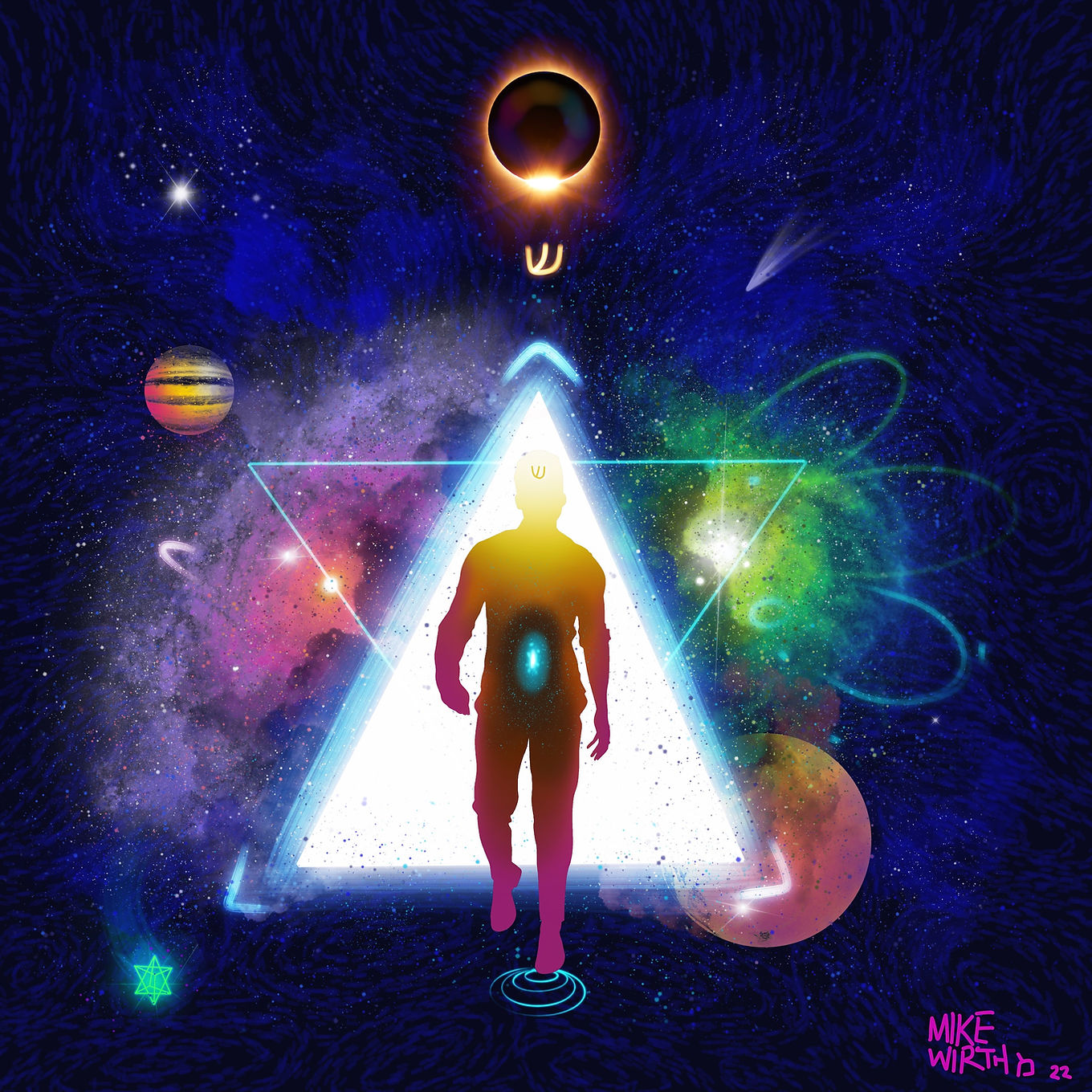
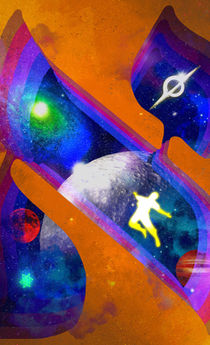
    Meditation on Aleph 2022 Digital Print 40″x54″

    What is an NFT?

    Firstly, NFTs are a part of a larger digital marketplace called cryptocurrency and follow the global digital ledger of transactions called the Blockchain. A lot of new vocabulary, but not overly complicated once you grasp a few simple concepts. I’ll share the way I explained it to my Bubbe.

    Like what if I said that an NFT is like a unique stock certificate being issued by a newly public company to public investors. The price is set based on a formula that considers a company’s net worth and its speculated future potential earnings, which becomes the stock’s initial public offering, IPO price. Crypto is the capital that this new marketplace runs on and the Blockchain is a decentralized securely-encrypted version of the daily stock market trading ledger.

    With me so far?

    Then I explained that we speculate how that company stock is valued based on how “well” traders, investors, and we think it will do. If the company releases an innovative product then its stock will likely go up. Could the same not be applied to artists, and especially Jewish artists? Just like public companies who trade stock, we build brands, produce unique products/services, and contribute to the global economy. NFTs, Crypto, and the Blockchain allow us to participate in a similar financial system that is peer-to-peer-based rather than operated and mediated by private brokerage and or national entities.

    Lastly and, in my opinion, the most amazing aspect of NFTs is the utility or the perks attached to the purchase of an NFT. Besides the glory and crypto value of the NFT, utility provides tangible value to the intangible digital media asset. NFT artists may attach real-world artwork, merchandise, or special access to an event or content. Intangibly, the benefits include status in key social circles, connections with other like-minded communities, and the simple joy of the investment in a community or individual.

    “But, aren’t we just day-trading jpegs, Mike?”.

    Shel Rosh 2021 Digital Print 24″x36″

    What Can Be an NFT?

    In short, anything that can be represented in digital form can be an NFT. The vast majority of NFTs now are jpeg images, but are also videos, audio recordings, writings, 3D models, interactive experiences in VR, video games, or computer code. Basically, any form of contemporary digital media that’s out there.

    But looking at the media side of NFTs is only half the story. Coupled with unique utility, the media representation really serves as a certificate for perks in real life. For example, an artist could sell an NFT of their latest painting and then offer a common utility like a print of the work. Or they could offer something uncommon like a dozen MasterClass painting lessons with the artist. The difference in these kinds of utility perks would greatly influence the value of the NFT in my example. So, if we couple amazing media art with unique utility, then boom – we have a solid NFT to bring to market. This is where great creative questions come into play to decide what is valuable and worth putting on the market.

    How Are NFTs Jewish?

    Since NFTs are globally-based and community-focused, they mirror global creative financial trends. Simultaneously, there is a current Renaissance-like explosion of both implicit and explicit Jewish creativity and cultural expression which has similar trends globally. By implicit and explicit, I’m referring to the 20th to 21st-century shift in defining what Jewish art is. But more so than ever, we are seeing artwork made by Jewish-identifying artists and the content, aesthetic style, or form is also Jewish. We are at a point where we are rapidly learning about the great intersections of the Jewish story around the world and that we actually share a common future. Creative explorations of the bespoke and sublime of Jewish life have exponential cultural and spiritual implications.

    There are a few major ways that Jews are affecting charity and culture in the NFT space by combining acts of Tzedakah with Hiddur Mitzvot to offer unique utility perks to supporters with uniquely-beautified digital objects.

    Firstly, by using the real-world tiered fund drive features in their utility offerings with their NFTs to fundraise for their own brick-and-mortar organizations and beneficiaries, the NFTorah project by TechTribe minted a series of 18 (chai) curated Torah portions into NFTs to raise funds to support Torah-studying communities in need. They cite that the “Torah is the oldest unbroken blockchain” and that the utility of the NFTs is tzedakah going to further the completion of a newly-scribed Torah scroll to be donated to a community in need.

    Cosmic Key 2021 Digital Print 24″x36″

    While this project doesn’t put emphasis on the digital media asset side of the NFT, the 1-to-1 Torah parsha-to-NFT fundraising model is a strong case for why an NFT utility could be a real mitzvah in Tzedakah. Plus, it’s pretty cool to imagine a studious scribe painstakingly handmaking each Hebrew letter moments after receiving your contribution and the attached scripture.

    No Weapon Formed Against Me Shall Prosper 2021 Digital Print 24″x36″

    Secondly, the visually-dominated platforms of social media and NFT marketplaces have ignited a surge in Judaica and Jewish-themed creative objects. It’s fair to say that this era of Jewish creatives is intentionally making Hiddur Mitzvot quite prolific and are not only pushing the aesthetic boundaries of beautification of our cultural and spiritual objects, but joyfully celebrating the strata of Jewish identities in the world in new and unorthodox spaces. We now see Jewish themes emerging in global pop-cultural arenas of music, art, and fashion. Many contemporary Jewish creatives mine Jewish texts, history, and politics to produce world-class traditional Judaica, fine art, street art, commercial art spaces, and cutting-edge digital experiences.

    I observe all of this creative activity as a sublime visual-Midrashic-like expression of the contemporary Jewish experience in action. NFTs provide a greater platform for cataloging this evolving Jewish art and Judaica on the blockchain that has the potential to make a real-world impact on the artist and their communities.

    Explicit Cultural Expression

    Is Jewish art defined by the Jewish content and themes featured in the work, or is it because it was created by a Jewish artist?

    Jewish art was famously hard to define in the 19th and 20th centuries because many Jewish artists expressed themselves implicitly and in encrypted ways, but were very much Jewish people and had Jewish identities. Perhaps the most appropriate of Jewish expressions for the modern and postmodern art eras.

    The 21st century has been a unique time for Jewish culture worldwide. Some would say that we’ve rebuilt a digital silk road and have entered an era past postmodernism to what theorists call metamodernism. For the first time in centuries, we can access an incredible amount of our thought-to-be-lost texts and cultural artifacts, a continuously unfolding archeological history, and we can connect and collaborate with other Jewish communities living outside of our own in a global Jewish culture jam.

    The simple googling of “Jewish art” will send you down a rabbit hole of wonderful world-class artistry both contemporary and historic. This makes me feel a little less alone in the Diaspora knowing that elsewhere and in Israel there are strong communities of Jews that are actively exporting cultural richness online and in real life. This set of global circumstances has spurred a rise in the amount of explicitly Jewish creativity worldwide which has cascaded into the NFT space. Meaning the art features Jewish content, Jewish cultural experience, and/or is made by a Jewish artist.

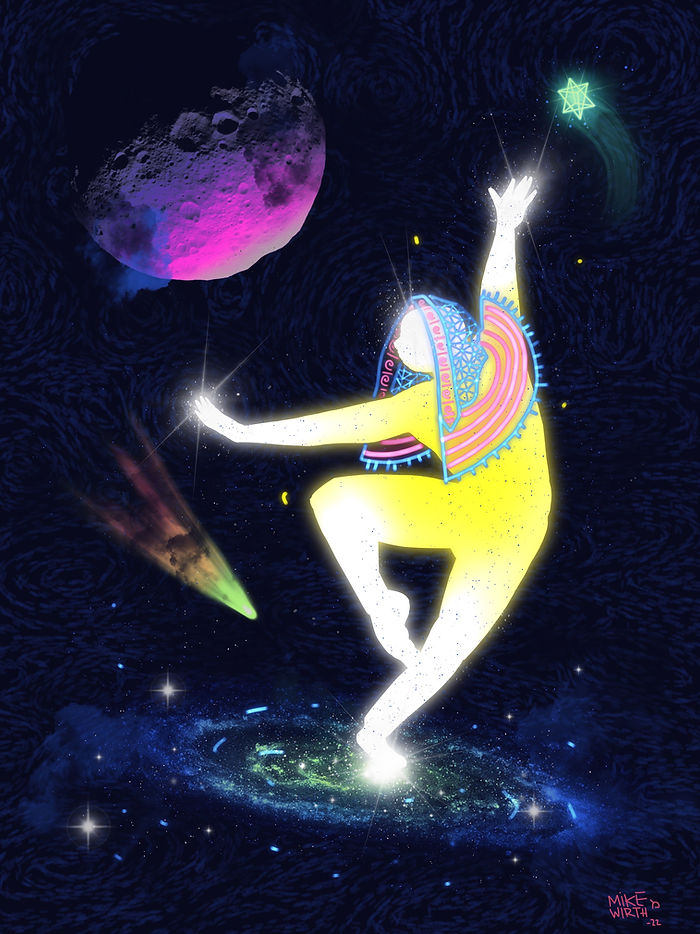
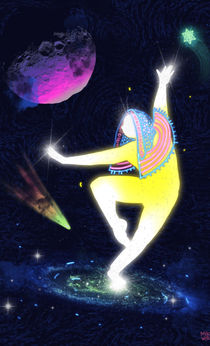
    The light body dance 2022 Digital Print 24″x36″

    Jewish NFT projects include The Kiddush Club NFT Mensch collection, a JaDa organization NFT event at Miami art week 2021, to independent Jewish artists like MosheArt’s hamsa art becoming NFTs or myself in minting my Jewish Futurism artwork and digital experiences into NFTs. We take existing artwork and add that work as NFTs to our current output channels. Independent artists offer unique and interesting utility options, such as prints of the NFT art, access to exclusive content, or even providing the actual rights to the NFT artwork. These different perks would greatly impact the value of the NFT offered. As digital technology and utility offerings evolve into new spaces and screens, we’ll see this grow and evolve in value and utility.

    You better believe how thrilled I am that I get to directly engage my audience with the Jewish art that I am making as original work, prints, merch, and now NFTs.

    Where Is It All Going?

    In the end, we’ve seen examples that demonstrate the promising qualities of NFTs that appeal to creatives, fundraising communities, and fin-tech communities. The examples I shared and the growing number of Jewish creatives, organizations, and institutions adding their NFT projects to the marketplace daily indicate that working with NFTs does actually extend the representation and creative utility of the Jewish experience into emerging global markets and spaces.

    That sounds like a fantastic opportunity for high-tech Hiddur Mitzvot and Tzedaka that puts Jewish culture into the midst of new and innovative spaces and conversations on our own terms.

    Dance of Miriam 2022 Digital Print 24″x36″

    PreviousNext

    About the author

    Mike Wirth

    @mikewirth, www.mikewirthart.com

    Mike Wirth is a visual artist, digital experience designer, and muralist, best known for his thoughtful murals, public art installations, and client-driven commercial design work that focus on major social justice issues and his identity as a Southern, Jewish-American.

    Over the past 20 years, Wirth’s murals, published design projects, and digital museum exhibits have appeared in New York, Miami, Austin, Charlotte, NC, and internationally in Croatia, Poland, and Germany.

    Currently, Wirth is a scholar at the Stan Greenspon Center for Holocaust and Social Justice Education and Professor of Art and Design at Queens University of Charlotte in North Carolina. He’s been investigating NFTs since 2015 and has been creating them for brands and non-profit organizations since 2021.

    Black Facebook Icon
    Black Instagram Icon