
Tag: judeofuturism podcast

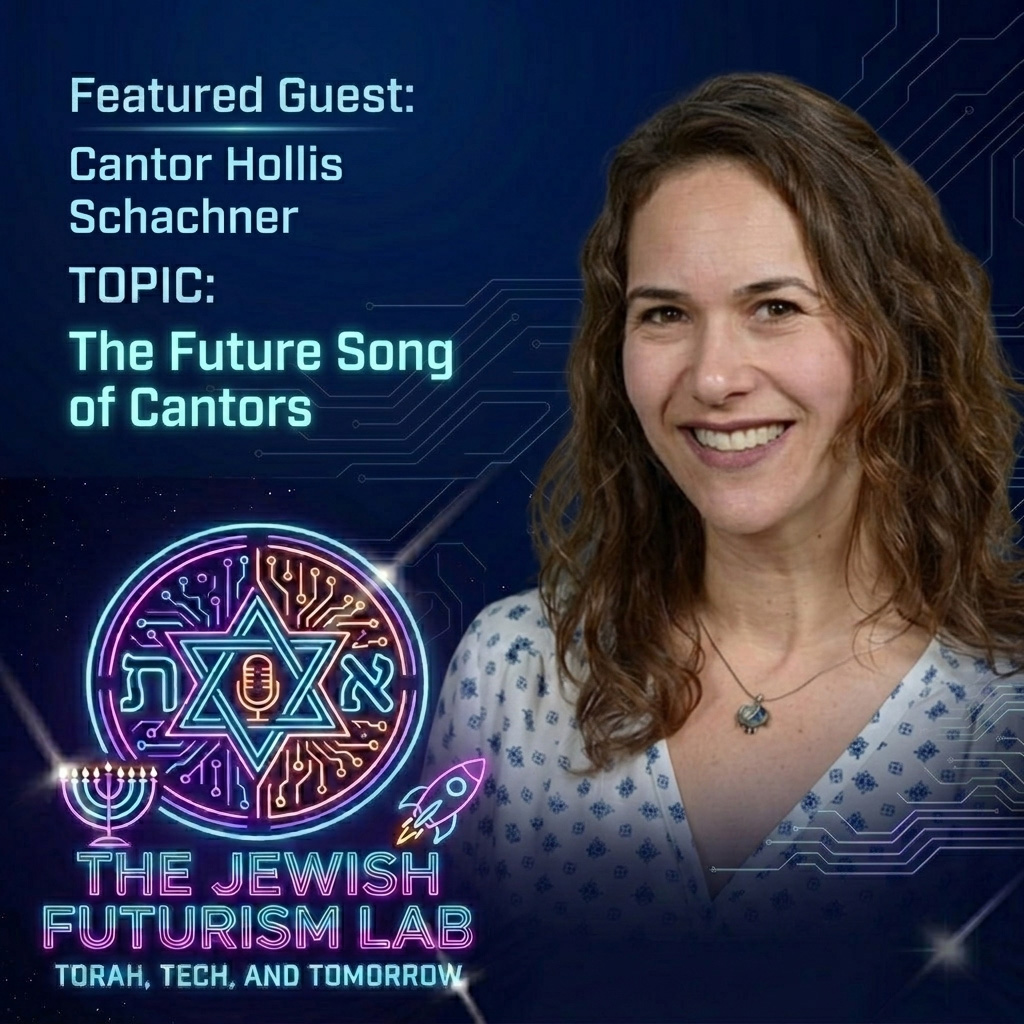
  • Episode 26: The Future Song of Cantors with Hollis Schachner

    Episode 26: The Future Song of Cantors with Hollis Schachner

    The Jewish futurism Lab
    The Jewish futurism Lab
    Episode 26: The Future Song of Cantors with Hollis Schachner
    Loading
    /

    In this episode of The Jewish futurism Lab, host Mike Wirth sits down with his cousin, Cantor Hollis Schachner, to explore her future vision of cantors, community, and creativity. Hollis is a longtime spiritual leader and artist at Temple Shir Tikva in Wayland, Massachusetts, and her journey from musical theater and jazz into a life of prayer, song, and community offers a vivid window into Jewish spiritual futures.

    Hollis shares stories of the mentors, teachers, and communities that helped shape her cantorate journey, and how their influence continues to echo in the way she leads today. She dives into her hopes for the next generation at Shir Tikva, what she wants to see flourishing in her community, and how she understands the evolving role of the cantor in a time of changing Jewish life.

    Together, they reflect on their beloved grandparents, Nana and Poppy, whose presence formed a shared family backbone for their Jewish identities and creative work. Throughout the conversation, Hollis shares the experiments, quiet measures of success, and emerging questions that guide her as she helps compose the “future song” of cantors and Jewish spiritual leadership.

    If you care about Jewish futurism and the real humans who are composing the next chapters of Jewish communal life, this episode will give you a heartfelt and thoughtful listen.
  • Episode 25: The Future Is a Torah Story with Rabbi Danny Burkeman

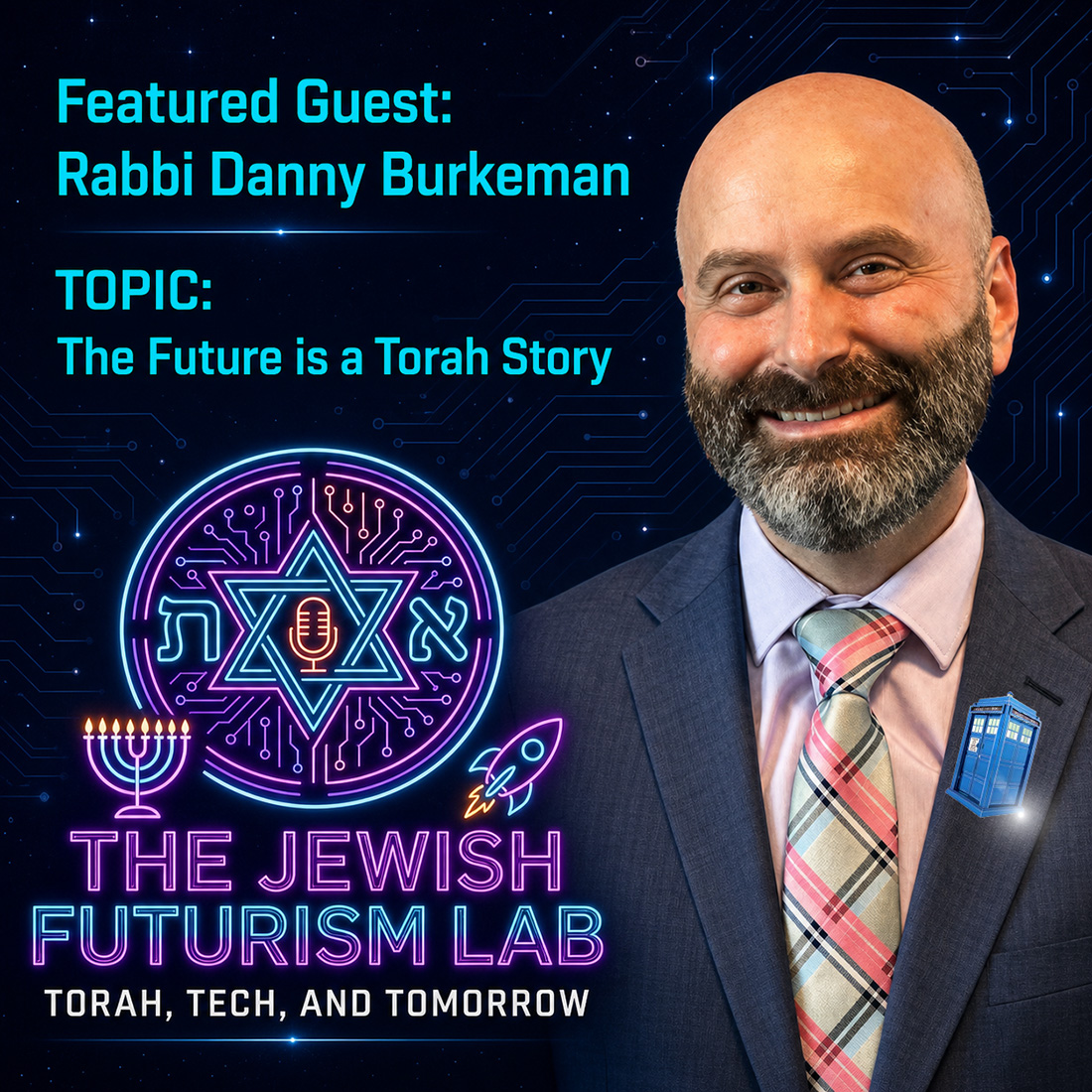
    Episode 25: The Future Is a Torah Story with Rabbi Danny Burkeman

    The Jewish futurism Lab
    The Jewish futurism Lab
    Episode 25: The Future Is a Torah Story with Rabbi Danny Burkeman
    Loading
    /

    Mike Wirth sits down with Rabbi Danny Burkeman, Senior Rabbi at Temple Shir Tikva in Wayland, Massachusetts, and host of the award-winning podcast Two Minutes of Torah. Danny was raised in the British Reform movement, ordained in 2009, and has spent his rabbinical career making Judaism urgent and alive for the modern world.

    This episode goes deep on a question this show keeps circling: what does it mean to build the future from the inside out? Danny and Mike find that thread running through science fiction. Doctor Who. Star Trek. And Andor, the Star Wars series that may be the most morally serious popular story of our moment. Together they trace the shared architecture between great sci-fi and Jewish teaching: the rebel who discovers what they stand for, the slow repair of the self, the cost of looking away.

    That brings them to Mussar, the 19th-century Jewish movement of character ethics founded by Rabbi Yisrael Salanter, which asks practitioners to name their moral weaknesses, sit with them honestly, and do the slow work of reshaping them. Danny walks listeners through how to actually begin a Mussar practice: not as a grand gesture, but as a daily reckoning with one middah, one character trait, at a time.

    The conversation moves through what it means to rehearse a better version of yourself before you become them, how stories we love shape the people we are choosing to become, and why Jewish tradition has always been in the business of prototyping futures.

    This one is for Trekkies with siddurim, rabbis who rewatch Andor, and anyone who believes that self-repair is the most radical act of world and galaxy repair.

  • Episode 24: Reclaiming the Future of Zionism with Eitan Chitayat

    Episode 24: Reclaiming the Future of Zionism with Eitan Chitayat

    The Jewish futurism Lab
    The Jewish futurism Lab
    Episode 24: Reclaiming the Future of Zionism with Eitan Chitayat
    Loading
    /

    In this episode of The Jewish futurism Lab, host Mike Wirth sits down with writer and creative director Eitan Chitayat, creator of the viral I’m That Jew project, to talk about his new campaign Zionism Is, created with former Knesset member and leading Zionism thinker Dr. Einat Wilf. Together, they explore how Jewish creatives can reclaim the word Zionism from antisemitic misuse and social‑media distortion, and re‑anchor it in Jewish history, peoplehood, and indigenous return to the land of Israel.

    The conversation traces Eitan’s journey from global brand builder for companies like Google and Apple to full‑time Jewish advocate after October 7, and unpacks how “Zionism Is” uses typography, short texts, and design thinking to create a simple, human vocabulary for Zionism as home, culture, heritage, confidence, strength, feminism, equality, and survival. Mike and Eitan discuss the narrative war over Israel and the Jewish people, the difference between political Zionism and “lowercase zionism,” and why giving ordinary Jews better language may be as important as any policy debate.

    If you care about Jewish identity, Israel, antisemitism, decolonization, indigenous sovereignty, and how design and storytelling shape the future of the Jewish people, this episode offers a provocative, future‑facing look at where the Zionism conversation might go next.

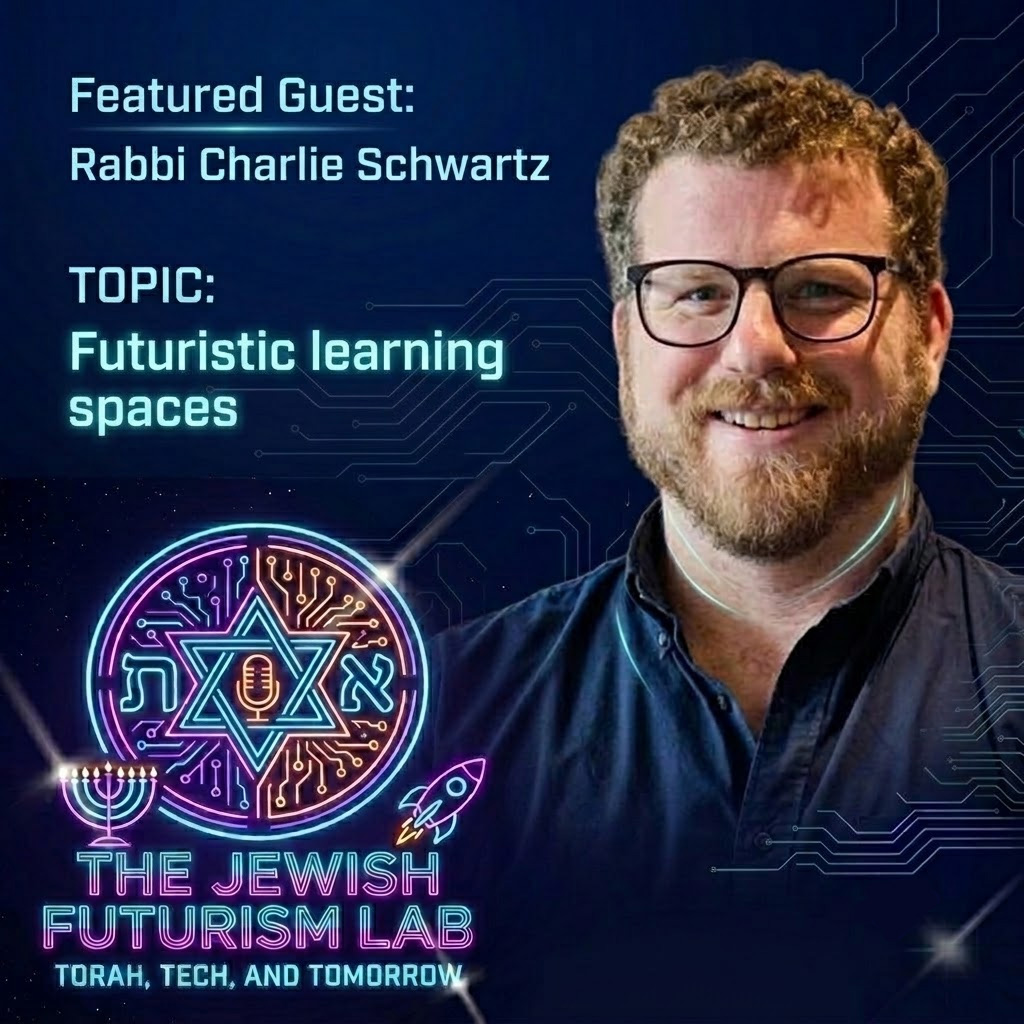
  • Episode 23: Jewish futurist Learning Spaces with Rabbi Charlie Schwartz

    Episode 23: Jewish futurist Learning Spaces with Rabbi Charlie Schwartz

    The Jewish futurism Lab
    The Jewish futurism Lab
    Episode 23: Jewish futurist Learning Spaces with Rabbi Charlie Schwartz
    Loading
    /

    In this episode, we sit on the patio at Lehrhaus, a Jewish tavern and house of learning in Somerville, in front of a mural by Boston based Jewish artist Chloe Rubinstein, and explore the story behind this unusual space. Rabbi Charlie Schwartz shares his Jewish origin story, how he and cofounder Joshua Foer first imagined Lehrhaus, and why they designed it so that every drink, dish, piece of wall art, book, classroom, and interaction can be a form of learning. We talk about his background in digital Jewish education, his passion for media and spaces, and how Lehrhaus aims to send people home with new habits, new ideas, and a sense of Jewish “third space” they can return to for a refuel. The conversation looks toward the future of Jewish life and asks what it means for a tavern to become both a beit midrash and how I plan to use Lehrhaus as my laboratory for Jewish ritual design.

    If you are in the Somerville,MA area, stop into Lehrhaus and have a drink, food, and learning. Lehrhaus is located at:

    425 Washington Street Somerville, MA 02143

  • Episode 22: Future Judaism on Campus with Rabbi Daniel Levine

    Episode 22: Future Judaism on Campus with Rabbi Daniel Levine

    The Jewish futurism Lab
    The Jewish futurism Lab
    Episode 22: Future Judaism on Campus with Rabbi Daniel Levine
    Loading
    /

    In this episode, Rabbi Daniel Levine, Hillel rabbi, podcast host, and Jewish history professor at UC Irvine, joins us for a wide ranging conversation about the future of Jewish life on campus and beyond. We talk about how October 7 has reshaped the emotional and spiritual landscape for students, the tensions he feels between pastoral care and intellectual honesty, and how his roles as rabbi, educator, and dad pull him in different directions.

    We move into the classroom to revisit moments when a student’s question permanently shifted how he understands Judaism and Jewish history. From there, we step into his home life to explore what his kids have taught him about God, practice, and the limits of inherited ideology. Along the way, we dig into the evolution of ritual, from Judah Halevi to Kabbalat Shabbat to modern siddur changes, and ask what it means to innovate responsibly in a community where many American Jews arrive with low Jewish literacy.

    We also touch on Ashkenazi and Sephardi experiences, denominational fluidity, and whether Jews can move beyond a Christian framing of “religion” toward a richer, more indigenous sense of peoplehood and diaspora culture. If you care about Jewish students, campus debates, or how to pass down a thick, living Judaism to the next generation, this conversation will give you a lot to think about.

    Follow Rabbi Daniel on Instagram

    Watch the Fifth Question Podcast

  • Episode 21: Psychology of the future with Shely Rachel Esses

    Episode 21: Psychology of the future with Shely Rachel Esses

    The Jewish futurism Lab
    The Jewish futurism Lab
    Episode 21: Psychology of the future with Shely Rachel Esses
    Loading
    /

    In this episode of The Jewish futurism Lab, host Mike Wirth sits down with therapist Shely Rachel Esses, LMFT, to explore the psychology of the future self and what it takes to imagine a life beyond survival mode. Shely brings together clinical psychology, nervous system science, embodied healing, and Jewish spiritual wisdom to show how trauma and chronic stress can shrink our sense of possibility, and how healing can reopen it.

    They talk about future thinking, how we project ourselves into the future, and what happens when we start to care not only about our own lives, but also about our impact on our descendants. Along the way, they connect these ideas to teshuvah as an ongoing process of transformation, and to the very practical question of how we begin building better futures in the present, in our relationships, communities, and inner lives.

    Check out Shely’s website.

  • Episode 19 -Designing Shabbat: A UX Approach to Jewish Ritual Design

    Episode 19 -Designing Shabbat: A UX Approach to Jewish Ritual Design

    The Jewish futurism Lab
    The Jewish futurism Lab
    Episode 19 -Designing Shabbat: A UX Approach to Jewish Ritual Design
    Loading
    /

    In this episode of The Jewish futurism Lab, host Mike Wirth shares the story behind a UX‑driven case study in Jewish ritual. Mike talks about creating the High and Low Ritual at the Greensboro Contemporary Jewish Museum’s Social Practice Institute, and how that work led to speculative ritual objects like a geodesic sukkah dome, an experimental mezuzah, and a reimagined tallit. From there, he introduces a three‑layer framework of halakha, minhag, and design space that gives Jews clear parameters for responsible experimentation: know what’s non‑negotiable, what’s inherited custom, and what’s open for thoughtful play. Mike reflects on teaching this framework at Judaism Unbound’s Shavuot Live and previews his upcoming Lehrhaus class on speculative ritual design, ethics, and boundaries. Throughout, he argues that accessibility is not an add‑on but a core part of the mitzvah, and unfolds his evolving idea of “hiddur olam” , beautifying not just individual commandments, but the systems and worlds our rituals create.

  • EP 14- Papayas on the Moon- My Chat with Alejandro Glatt

    EP 14- Papayas on the Moon- My Chat with Alejandro Glatt

    The Jewish futurism Lab
    The Jewish futurism Lab
    EP 14- Papayas on the Moon- My Chat with Alejandro Glatt
    Loading
    /

    In this episode of The Jewish futurism Lab, I sit down with Mexican artist and papaya visionary Alejandro Glatt, the first Mexican artist to send a papaya to the Moon as part of the Lunaprise art museum project connected to NASA’s Artemis missions. Recorded on the day of the Artemis II launch, our conversation weaves together Jewish futurism, space exploration, and the surprising holiness of fruit in my own evolving sense of contemporary Jewish life.

    Alejandro and I first met at the Jerusalem Biennale, and in this interview I explore how his “Papayas to the Moon” work merges art, ritual, and space technology, turning a simple papaya into a cosmic symbol of life, diaspora, and connection. I ask him about his “Feel the Fruit” experiences, his role as a community builder and trip leader to Israel, and how he imagines Jewish civilization carrying its stories, symbols, and sacred objects into orbit and beyond.

    As you listen, you’ll hear me probing how Alejandro’s art on the Artemis missions reshapes my own questions about Jewish presence in space, how beauty and tiferet might travel with us off‑planet, and why sending a papaya to the Moon could be a kind of blueprint for future Jewish creativity among the stars. You can explore more of Alejandro’s work at alejandroglatt.com and see how his papayas are expanding the conversation about Judaism, ecology, and interstellar imagination.

  • Episode 13: How a Jewish Immigrant Named Hugo Created Sci-Fi

    Episode 13: How a Jewish Immigrant Named Hugo Created Sci-Fi

    The Jewish futurism Lab
    The Jewish futurism Lab
    Episode 13: How a Jewish Immigrant Named Hugo Created Sci-Fi
    Loading
    /

    Before science fiction was a genre, Hugo Gernsback was already building the infrastructure for it: radio magazines, hobbyist communities, wild speculative stories, and the first publication devoted entirely to imagining tomorrow. A Jewish immigrant from Luxembourg, he launched Amazing Stories in 1926 and quietly trained a generation of readers and writers to think in futures, long timelines, and unintended consequences. His magazines hosted women in leadership roles, predicted computer dating, video calling, and the social costs of new technology, while also carrying the casual racism and sexism of their era. We place him alongside Einstein, the artists of Vitebsk, and Fritz Lang’s Metropolis to ask what it meant for Jewish creators to be building the future from the cultural margins. And we end with the question he would have loved most: who is building that kind of futures literacy today?

    (more…)
  • Episode 12:  Professors, Dads, and the Jewish future with Shai Davidai

    Episode 12: Professors, Dads, and the Jewish future with Shai Davidai

    The Jewish futurism Lab
    The Jewish futurism Lab
    Episode 12: Professors, Dads, and the Jewish future with Shai Davidai
    Loading
    /

    In this episode of The Jewish Futurism Lab, Mike Wirth sits down with Shai Davidai, the Israeli‑born social psychologist and former Columbia Business School professor who became a prominent voice for Jewish students after October 7. Together they trace Shai’s journey from secular Israeli kid to public Jewish advocate, unpack what really happened for him on campus, and explore how his training as a social psychologist shapes the way he reads our power, our responsibility today, and the continuity of our legacies tomorrow. They talk about fatherhood, professorship, and podcasting, and ask what kinds of institutions, communities, and narratives the Jewish future will need.

    (more…)